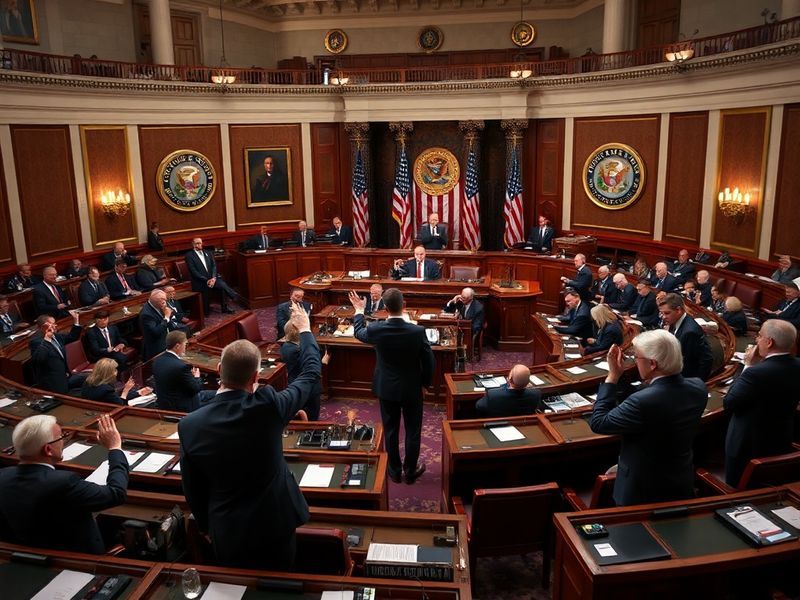
The U.S. House of Representatives recently voted on the Homeland Security budget, a decision that has exposed sharp ideological splits between parties. The proposed funding levels for immigration enforcement, border security, and cybersecurity measures have become a focal point of contention. With midterm elections looming, lawmakers are under intense pressure to balance fiscal responsibility with political priorities.
Key Provisions in the Proposed Homeland Security Budget
The draft budget allocates $56.7 billion for the Department of Homeland Security (DHS), a slight increase from the previous fiscal year. However, the allocation breakdown reveals the contentious issues:
- Border Security: $16.4 billion, including $5.6 billion for border wall construction—a priority for Republicans but a non-starter for Democrats.
- Immigration Enforcement: $8.3 billion, with expanded funding for ICE (Immigration and Customs Enforcement) and CBP (Customs and Border Protection).
- Cybersecurity: $2.6 billion, aimed at modernizing systems and countering foreign threats.
- Disaster Relief: $2.5 billion, a rare area of bipartisan agreement following recent hurricanes and wildfires.
Bipartisan Tensions Over Immigration Enforcement
Republicans argue that increased funding for ICE and CBP is necessary to curb illegal border crossings, citing record-high migrant apprehensions in recent months. Representative John Katko (R-NY), ranking member of the House Homeland Security Committee, stated, “This budget prioritizes real solutions to secure our borders and protect American communities.”
Democrats, however, have criticized the proposed enforcement levels as excessive and inhumane. Representative Bennie Thompson (D-MS), chairman of the committee, countered, “We cannot ignore the humanitarian crisis at our borders. This budget doubles down on failed policies instead of addressing root causes.” The divide reflects broader disagreements over immigration reform, with Democrats pushing for pathways to citizenship and Republicans emphasizing stricter enforcement.
Cybersecurity Funding: A Rare Point of Agreement
One area where both parties have found common ground is cybersecurity. The budget includes $2.6 billion for the Cybersecurity and Infrastructure Security Agency (CISA), a 12% increase from last year. This funding aims to bolster defenses against ransomware attacks, foreign election interference, and critical infrastructure vulnerabilities.
Representative Elissa Slotkin (D-MI), a former CIA analyst, emphasized the urgency: “Cyber threats don’t discriminate between red and blue states. This investment is about national security, not politics.” The bipartisan support for cybersecurity reflects growing concerns over recent high-profile breaches, including the Colonial Pipeline hack and the SolarWinds espionage campaign.
Impact on Federal Agencies and Local Communities
The budget’s passage would have tangible effects on federal agencies and local governments. For DHS agencies like FEMA and TSA, increased funding could mean faster disaster response times and improved airport security. However, critics warn that prioritizing enforcement over humanitarian aid could strain resources at the southern border.
Local law enforcement agencies, which often collaborate with CBP and ICE, would also feel the impact. In border states like Texas and Arizona, sheriffs’ departments rely on federal grants to manage migrant surges. Representative Henry Cuellar (D-TX) noted, “Without adequate funding, local governments bear the burden of failed federal policies.”
Political Fallout and the Path Forward
The House vote on the Homeland Security budget is just the first step in a contentious legislative process. The Senate is expected to propose its own version, likely with significant differences. Senate Majority Leader Chuck Schumer (D-NY) has already signaled that immigration enforcement funding will face scrutiny in the upper chamber.
Analysts suggest that the budget’s fate may hinge on broader negotiations, including potential compromises on immigration reform. A recent Dave’s Locker politics article highlighted how budget talks are increasingly tied to election-year messaging. With midterms approaching, lawmakers may prioritize messaging over substantive changes.
Regardless of the outcome, the debate underscores deeper divisions over the role of DHS in modern governance. Should it focus on enforcement, humanitarian aid, or a balance of both? The answer remains elusive, but the budget vote has brought these questions into sharp relief.
What’s Next for the Homeland Security Budget?
The House is expected to vote on the final budget in early April, but passage is far from guaranteed. Key sticking points include:
- Border Wall Funding: Republicans insist on $5.6 billion for wall construction, while Democrats propose redirecting those funds to technology and personnel.
- ICE Funding: Democrats seek to limit ICE’s ability to detain migrants, while Republicans argue for expanded enforcement powers.
- Disaster Relief: Bipartisan support exists, but disagreements remain over how funds should be allocated between states.
If the House and Senate fail to reconcile their versions, a continuing resolution may be necessary to avoid a government shutdown. However, with midterms looming, both parties may use the budget as a campaign tool rather than a governance tool.
Conclusion: A Budget Reflecting Broader National Divides
The Homeland Security budget vote is more than a fiscal exercise—it’s a microcosm of America’s fractured political landscape. From immigration to cybersecurity, the debates reveal fundamental disagreements over the government’s role in protecting citizens. While some areas, like disaster relief, offer glimmers of bipartisanship, the broader budget reflects the polarization that defines modern governance.
As lawmakers prepare for the final vote, the outcome remains uncertain. What is clear, however, is that the budget’s provisions will have lasting implications for DHS operations, local communities, and the 2024 elections. For now, the House’s decision will set the stage for further negotiations—and perhaps, further divisions.
For more analysis on political trends, visit our Politics section.