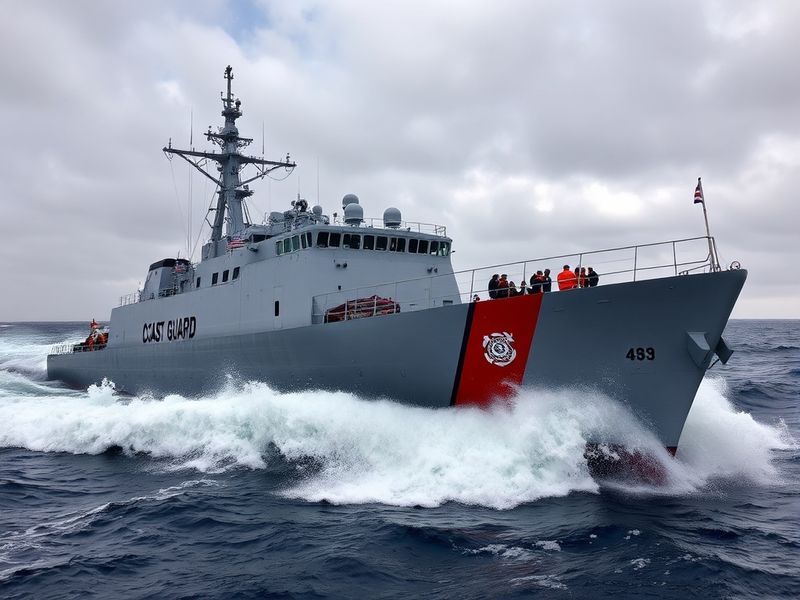
The United States Coast Guard (USCG) operates one of the most versatile and vital fleets in the world, with its cutters serving as the backbone of maritime law enforcement, search and rescue, and national defense. These vessels—ranging from the iconic Hamilton-class to the newer Legend-class national security cutters—are more than just ships. They are floating symbols of sovereignty, guardians of American waters, and first responders in times of crisis.
Unlike the broader mission sets of the Navy or the commercial focus of the Merchant Marine, the USCG’s cutters operate at the intersection of security, safety, and stewardship. Their duties span from interdicting drug smugglers in the Caribbean to rescuing fishermen off the coast of Alaska during winter storms. This dual role makes them unique among federal agencies and essential to the nation’s maritime strategy.
The Evolution of Coast Guard Cutters: From Wooden Hulls to Modern Marvels
The lineage of USCG cutters traces back to the Revenue Cutter Service established in 1790. Early vessels were small, wooden-hulled ships designed for customs enforcement. Over two centuries, the fleet evolved dramatically in response to technological advances and shifting geopolitical realities. By the mid-20th century, the service introduced steel-hulled cutters with greater endurance and capability, such as the Famous-class high-endurance cutters.
Today’s fleet includes several classes of cutters, each tailored to specific missions:
- National Security Cutters (NSCs): The Legend-class represents the Coast Guard’s most advanced surface assets. Ships like the USCGC Hamilton displace over 4,500 tons, carry a crew of 120, and are equipped with advanced sensors, a helicopter deck, and space for interceptor boats. Their primary mission is to conduct long-range maritime security operations, including counter-narcotics and defense readiness.
- Offshore Patrol Cutters (OPCs): The Argus-class, currently under construction, will replace the aging Medium Endurance Cutter fleet. These 360-foot vessels are designed for multi-mission operations, including law enforcement, search and rescue, and environmental response. Their modular design allows for future upgrades in sensors and weapons systems.
- Fast Response Cutters (FRCs): The Sentinel-class FRCs are the Coast Guard’s workhorses for coastal security. At 154 feet long, these vessels can reach speeds of 28 knots and deploy in rough seas. Their compact size allows them to operate in shallow waters, making them ideal for interdiction missions in the Caribbean and Pacific.
The modernization of the cutter fleet reflects broader trends in naval architecture and operational doctrine. The shift toward multi-mission platforms aligns with the Coast Guard’s expanding role in an era of great power competition. While traditionally focused on domestic missions, today’s cutters are increasingly called upon to support global operations, from counter-piracy in the Gulf of Aden to freedom of navigation patrols in the South China Sea.
Mission Profiles: What Do Coast Guard Cutters Actually Do?
The operational tempo of a Coast Guard cutter is as varied as the seas they patrol. Each class of cutter is designed with specific mission sets in mind, but all share a common ethos: “Always Ready.”
One of the most visible roles of cutters is search and rescue (SAR). Coast Guard cutters respond to hundreds of distress calls annually, whether it’s a sinking fishing vessel off the coast of Maine or a capsized sailboat in the Gulf of Mexico. The Healy, a polar icebreaker, even conducts SAR operations in the Arctic, where commercial traffic is increasing and environmental conditions are increasingly hazardous.
Another critical function is drug interdiction. The USCG is the lead federal agency for maritime drug enforcement, and cutters play a central role in this mission. In fiscal year 2023, Coast Guard cutters seized over 460,000 pounds of cocaine and marijuana, valued at more than $10 billion. These operations often involve coordination with partner nations, intelligence agencies, and naval forces. For example, the USCGC Stratton seized over 30,000 pounds of cocaine in a single 2022 deployment, working alongside U.S. Navy ships and allied coast guards.
Cutters also serve as platforms for maritime law enforcement. This includes enforcing fisheries regulations to protect endangered species, intercepting illegal migrants attempting to enter the U.S. by sea, and deterring smuggling operations. The Polar-class icebreakers, such as the USCGC Polar Star, are critical to maintaining a U.S. presence in the Arctic, where melting ice is opening new shipping lanes and resource exploitation is on the rise.
Beyond these traditional roles, cutters are increasingly involved in national defense and global security. The Coast Guard operates under the Department of Homeland Security but can be transferred to the Department of the Navy during wartime. During major conflicts, cutters have escorted convoys, conducted port security operations, and even engaged enemy vessels. Today, their role in great power competition is more nuanced. Cutters like the NSCs are being upgraded to support anti-submarine warfare and electronic intelligence gathering, reflecting the Coast Guard’s growing importance in the Pentagon’s maritime strategy.
Challenges and the Future of the Coast Guard Cutter Fleet
The USCG faces significant challenges in maintaining and modernizing its cutter fleet. One of the most pressing is aging infrastructure. Many of the older cutters, such as the Hamilton-class high-endurance cutters commissioned in the 1960s, are nearing the end of their service lives. While the introduction of the OPC and FRC programs is a step forward, delays in production and budget constraints have slowed the transition.
Another challenge is geopolitical pressure. The Coast Guard’s role in the Arctic is expanding as Russia and China increase their activities in the region. The USCG’s icebreaker fleet, currently consisting of only two operational vessels (the Polar Star and Healy), is woefully inadequate to meet growing demands. The planned acquisition of new heavy and medium icebreakers is a positive development, but funding and construction timelines remain uncertain.
Environmental concerns also loom large. Cutters must adapt to stricter emissions standards while operating in increasingly fragile ecosystems. The Coast Guard has begun testing alternative fuels and hybrid propulsion systems, but widespread adoption is still years away. Additionally, the service is grappling with the impacts of climate change, from rising sea levels threatening coastal bases to more frequent and intense storms requiring rapid response.
Looking ahead, the future of Coast Guard cutters will be shaped by three key trends:
- Technological Integration: The next generation of cutters will feature advanced automation, artificial intelligence for threat detection, and unmanned systems for surveillance and interdiction. The Coast Guard is already experimenting with autonomous surface vessels to augment its fleet.
- Global Engagement: As maritime trade routes expand and geopolitical tensions rise, the Coast Guard’s role in international operations will grow. This includes partnerships with allied coast guards, joint exercises with foreign navies, and participation in multinational task forces.
- Sustainability and Resilience: The service is under pressure to reduce its carbon footprint while maintaining operational readiness. Innovations in ship design, energy efficiency, and waste management will be critical to meeting these goals.
Why Coast Guard Cutters Matter More Than Ever
In an era dominated by headlines about aircraft carriers and nuclear submarines, the Coast Guard’s cutters often operate in the background. Yet their contributions are indispensable to national security and public safety. They are the first line of defense against transnational threats, the last hope for mariners in distress, and a visible reminder of American presence in some of the world’s most remote waters.
The cutter fleet embodies the Coast Guard’s dual mission: “Semper Paratus”—always ready—and “Semper Fidelis”—always faithful. Whether patrolling the Straits of Florida, breaking ice in the Arctic, or responding to a hurricane off the coast of Louisiana, these vessels and their crews demonstrate the enduring value of a service that operates where others cannot.
For policymakers, the lesson is clear: investing in the Coast Guard cutter fleet is not just about maritime security. It’s about safeguarding the nation’s economy, protecting its environment, and projecting its values across the globe. As the seas grow busier and more contested, the cutters of the U.S. Coast Guard will remain the guardians of America’s maritime future.
“The Coast Guard is the only military service that has a role in every facet of the maritime domain—from the Arctic to the Caribbean, from the ports to the open ocean. Our cutters are the tools that make that possible.”
— Admiral Linda L. Fagan, Commandant of the U.S. Coast Guard
For those interested in maritime security and the evolving role of the Coast Guard, explore more on Dave’s Locker News and Dave’s Locker Analysis.