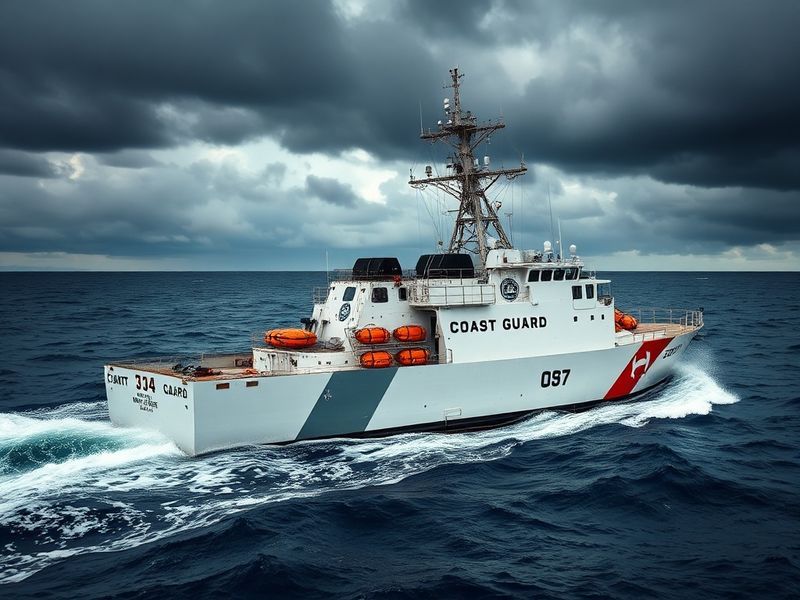
Why U.S. Coast Guard Cutters Are Vital to National Security
“`html
U.S. Coast Guard Cutter: The Unsung Heroes of America’s Shores
The U.S. Coast Guard Cutter (USCGC) fleet operates as a critical but often overlooked component of American maritime security. These vessels serve as the sharp end of a spear that stretches from Alaska’s icy waters to the Caribbean’s turquoise shallows, enforcing laws, saving lives, and protecting the nation’s economic lifelines. While aircraft carriers and destroyers dominate headlines, cutters quietly execute missions that define national sovereignty and security.
The Role of Coast Guard Cutters in National Security
Cutters are not merely ships—they are floating platforms for law enforcement, search and rescue, environmental response, and defense readiness. The Coast Guard, a branch of the U.S. Armed Forces, deploys cutters of various sizes and capabilities to patrol over 12,000 miles of coastline and 95,000 miles of inland waterways. These vessels are uniquely equipped to respond to crises that span civil, criminal, and military domains, often within hours.
Among the most recognizable cutters are the Legend-class National Security Cutters (NSCs), the largest and most technologically advanced in the fleet. These 418-foot ships displace 4,300 tons and carry a crew of 120. Their missions range from interdicting drug smuggling in the Eastern Pacific to conducting sovereignty patrols in the Arctic. Their endurance—capable of 60-day deployments—reflects the Coast Guard’s global reach and operational flexibility.
Key Missions of Coast Guard Cutters
- Drug Interdiction: Cutters like the USCGC Hamilton and USCGC James have seized tons of cocaine and disrupted transnational criminal networks operating in international waters.
- Search and Rescue (SAR): During hurricanes and maritime disasters, cutters conduct mass evacuations and rescue operations, often under extreme conditions.
- Ice Operations: In the Arctic, cutters like the USCGC Healy break ice to support scientific research and ensure safe passage for commercial vessels.
- Port Security: Cutters patrol harbors and coastal approaches to deter terrorism and smuggling, working closely with Customs and Border Protection.
- Environmental Protection: After oil spills or chemical discharges, cutters deploy containment booms and conduct cleanup operations to safeguard marine ecosystems.
The operational diversity of cutters underscores their value. Unlike Navy ships, which focus on high-intensity combat, cutters are designed for persistent presence and adaptable response. This makes them indispensable in an era where threats are increasingly asymmetric and geographically dispersed.
A Look Inside the Modern Cutter Fleet
The Coast Guard maintains a fleet of approximately 243 cutters, divided into several classes based on size and capability. The backbone of the fleet includes:
- National Security Cutters (NSCs): 11 planned, 10 in service. These are the most advanced, equipped with advanced radar, helicopters, and command centers.
- Offshore Patrol Cutters (OPCs): Replacing aging medium endurance cutters, these 360-foot vessels will enhance patrol capacity and capability.
- Sentinel-class Fast Response Cutters (FRCs): 65 planned, 60 delivered. These 154-foot ships are optimized for rapid response in coastal waters.
- Icebreakers: Only two operational heavy icebreakers exist—the Polar Star and the Healy—supporting Arctic strategy and scientific missions.
- Patrol Boats: 49 Sentinel-class FRCs and smaller boats support day-to-day law enforcement and SAR in inshore waters.
The fleet’s modernization is essential. Many cutters, including the 40-year-old Hamilton-class high endurance cutters, are being phased out in favor of more capable and sustainable platforms. The introduction of the OPC program, valued at $10.5 billion, represents the largest acquisition effort in Coast Guard history and signals a long-term commitment to maritime security.
Cutters and the Arctic: A Frontier of Strategic Importance
Nowhere is the cutter’s role more consequential than in the Arctic. As melting ice opens new shipping lanes and exposes vast natural resources, the U.S. must assert sovereignty and protect its interests. Yet, the Coast Guard’s icebreaker fleet remains critically under-resourced. The Polar Star, commissioned in 1976, is the only operational heavy icebreaker, and it is nearing the end of its service life.
Cutters like the Healy conduct Arctic patrols, support scientific research, and enforce U.S. maritime law in a region where boundaries are still being defined. The cutter’s presence in the Arctic is not just symbolic—it’s a deterrent against encroachment by foreign vessels and a safeguard for future economic exploitation. Without adequate icebreaking capacity, the U.S. risks ceding influence to Russia and China, both of which are rapidly expanding their Arctic fleets.
“The Arctic is not a future challenge—it’s a current reality. Coast Guard cutters are our eyes, ears, and hands in a region where every mile of water is contested, and every action has strategic weight.”
The cutter’s role in the Arctic exemplifies a broader truth: these vessels are not relics of a bygone era. They are evolving tools of national power, adapting to climate change, technological innovation, and geopolitical shifts.
The Future of Coast Guard Cutters: Challenges and Opportunities
Despite their importance, cutters face significant challenges. Aging hulls, budget constraints, and industrial base limitations threaten the fleet’s readiness. The Coast Guard’s annual budget—approximately $13 billion—is dwarfed by the Navy’s $250 billion, yet it must fulfill missions across all domains.
Technological innovation offers a path forward. The integration of unmanned aerial systems (UAS) and autonomous surface vessels with cutters could extend their reach and enhance situational awareness. Cutters like the USCGC Kimball have already deployed UAS to monitor illegal fishing and smuggling in the Pacific. Artificial intelligence is being tested to improve route planning, fuel efficiency, and threat detection.
Another opportunity lies in international cooperation. The Coast Guard regularly partners with allies through joint patrols, training exercises, and information-sharing agreements. These partnerships amplify the impact of individual cutters and foster interoperability in crisis response.
Yet, the cutter’s future also hinges on political will. The Arctic requires investment. The Southern Border demands persistent presence. Cyber threats to maritime infrastructure are growing. The Coast Guard cannot fulfill its missions without sustained funding and public support.
What Lies Ahead for Coast Guard Cutters
- Fleet Expansion: Delivery of the remaining OPCs and potential acquisition of new icebreakers will redefine the fleet’s capabilities.
- Technology Integration: Cutters will increasingly rely on AI, automation, and data analytics to improve efficiency and response times.
- Climate Adaptation: As sea levels rise and storms intensify, cutters must be equipped to operate in more extreme conditions.
- Workforce Development: Retaining skilled crews and attracting new talent is critical to sustaining cutter operations.
Ultimately, the U.S. Coast Guard Cutter is more than a ship. It is a symbol of resilience, a guardian of the seas, and a testament to America’s commitment to protecting its people and interests at home and abroad. In an era of great power competition and environmental change, the cutter’s role will only grow in significance.
Conclusion: Why Coast Guard Cutters Matter Now More Than Ever
In the shadow of larger naval vessels and the glare of global conflicts, it’s easy to overlook the enduring value of the Coast Guard Cutter. Yet, these ships and their crews are on the front lines of America’s most pressing maritime challenges—from drug trafficking and illegal migration to climate disasters and Arctic sovereignty. They are the embodiment of the Coast Guard’s dual mandate: “Always Ready, Always There.”
As the world becomes more interconnected and the oceans more contested, the cutter fleet must evolve. That evolution will require investment, innovation, and a recognition that maritime security is national security. The men and women who serve aboard cutters deserve no less. Their work, often conducted far from the public eye, ensures that the lights stay on, the seas stay safe, and the nation remains secure.
Next time you see a cutter slicing through coastal waters or hear of a daring rescue in a storm, remember: these vessels are not just part of America’s maritime heritage. They are the future of it.