Airbus A380: The Rise and Fall of Aviation’s Giant
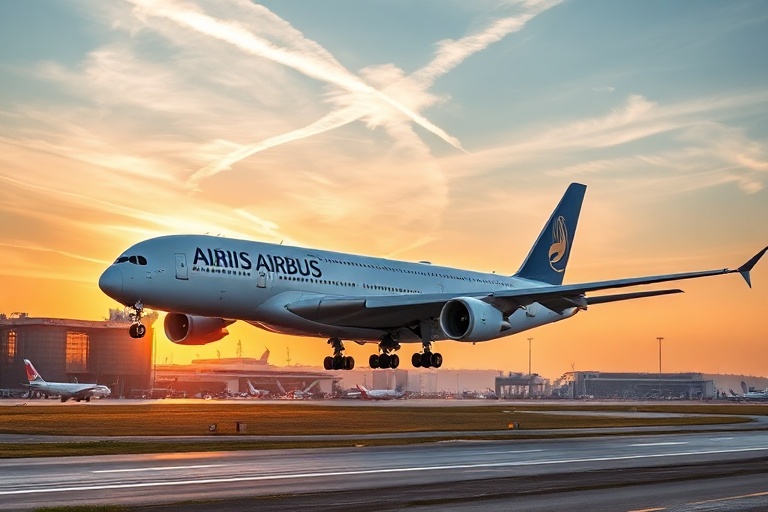
The Airbus A380, once hailed as the pinnacle of aviation innovation, remains one of the most ambitious aircraft ever built. With its double-deck design and unmatched passenger capacity, it promised to redefine long-haul travel. Yet its story is as much about engineering brilliance as it is about the shifting priorities of the airline industry.
The Rise of a Colossus
Development of the A380 began in the late 1980s, driven by Airbus’ ambition to challenge Boeing’s dominance in the wide-body market. Airlines sought larger aircraft to reduce per-seat costs on high-demand routes, and the A380 seemed the perfect solution. Its first flight in 2005 marked a triumph of European aerospace engineering, showcasing innovations like advanced materials and state-of-the-art avionics.
By 2007, the A380 entered commercial service with Singapore Airlines. Its sheer size—capable of seating up to 853 passengers in a high-density configuration—made it a marvel of modern aviation. Airports scrambled to adapt, expanding terminals and boarding gates to accommodate the behemoth. The aircraft quickly became a symbol of prestige, with carriers like Emirates, Qantas, and Lufthansa eagerly adopting it.
Challenges and Shifting Priorities
Despite its groundbreaking design, the A380 faced significant hurdles. The global financial crisis of 2008 dampened demand for new aircraft, while airlines began favoring smaller, more fuel-efficient jets like the Boeing 787 and Airbus A350. The rise of twin-engine long-haul flights reduced the need for four-engine giants, and the A380’s voracious appetite for fuel became a liability in an era of rising oil prices.
Operational challenges also emerged. Not all airports could handle the A380’s wingspan or weight, limiting its flexibility. Maintenance costs soared due to its complexity, and its sheer size often led to longer turnaround times at gates. By the mid-2010s, Airbus faced a stark reality: the A380’s future was uncertain.
Key Factors Behind the A380’s Decline
- Fuel Efficiency: The A380’s four engines consumed significantly more fuel than twin-engine alternatives.
- Operational Flexibility: Its size restricted its use to a handful of high-capacity routes.
- Airline Preferences: Carriers shifted toward smaller, more adaptable aircraft for cost savings.
- Market Timing: The rise of low-cost long-haul flights diminished demand for premium, high-capacity planes.
The End of an Era
In February 2019, Airbus announced the end of A380 production, with the final aircraft delivered to Emirates in 2021. The decision was a blow to aviation enthusiasts who marveled at the A380’s engineering. Yet it also reflected the industry’s evolution. Airlines now prioritize efficiency, sustainability, and route flexibility over sheer passenger capacity.
The A380’s legacy, however, endures. It remains a favorite among passengers for its spacious cabins, quiet ride, and sheer presence. Some airlines continue to fly the A380, particularly on routes where its size and comfort justify the operational costs. Emirates, for example, still operates a fleet of A380s, proving that there remains a niche for the giant of the skies.
Broader Implications for Aviation
The A380’s story is a case study in innovation and adaptation. It demonstrated the risks of betting on a single aircraft type in a volatile industry. Yet it also highlighted the importance of pushing boundaries. The lessons learned from the A380’s development have influenced modern aircraft design, particularly in areas like composite materials and fuel efficiency.
Looking ahead, the aviation industry faces new challenges: sustainability, rising fuel costs, and the need to reduce carbon emissions. The A380’s failure to adapt to these priorities underscores the importance of agility in engineering and business strategy. While the A380 itself may be a relic of a bygone era, its impact on aviation will be felt for decades.
For enthusiasts and industry observers, the A380 remains a symbol of what aviation can achieve when ambition meets innovation. Its story reminds us that even the grandest visions must evolve to survive.
Where to Learn More
If you’re interested in the latest trends in aviation technology, explore our Technology section. For deeper analysis on the business side of aerospace, visit our Business category.