Assassin’s Creed at 15: How the Franchise Changed Gaming Forever
The Assassin’s Creed series stands as one of the most ambitious and enduring franchises in gaming history. Since its debut in 2007, the franchise has expanded beyond its original scope, blending historical fiction with open-world exploration. What began as a stealth-action title set during the Third Crusade has transformed into a multimedia empire spanning novels, comics, and even a 2016 feature film.
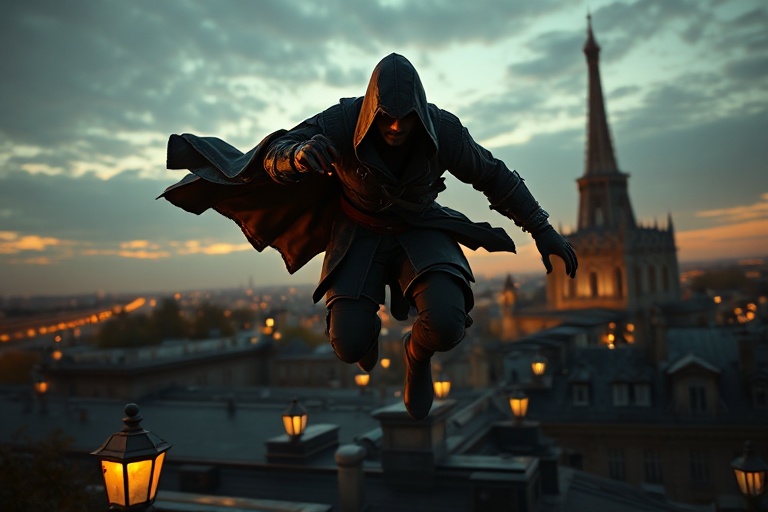
At its core, the series explores the eternal conflict between the Assassins and the Templars—a timeless struggle for control over humanity’s destiny. This narrative framework has allowed developers at Ubisoft to craft stories across different eras, from Renaissance Italy to the American Revolution. Yet, the franchise’s true strength lies in its ability to adapt, introducing new mechanics, settings, and gameplay innovations with each installment.
The Origins: A Bold Experiment in Historical Storytelling
The first Assassin’s Creed game emerged from Ubisoft’s Montreal studio as a radical departure from traditional action titles. Rather than focusing solely on combat, the game emphasized free-running, social stealth, and immersive historical environments. Players stepped into the sandals of Altaïr Ibn-La’Ahad, a master Assassin navigating the streets of Acre and Jerusalem during the 12th century.
What set Assassin’s Creed apart was its use of the Animus device—a fictional machine that allowed players to relive genetic memories. This narrative device justified the game’s historical setting while introducing a layer of sci-fi intrigue. The game’s parkour system, though rudimentary by today’s standards, revolutionized movement in open-world games, influencing titles like Prince of Persia and later Batman: Arkham series.
The original game’s success came from its commitment to authenticity. Ubisoft employed historians to ensure architectural and cultural accuracy in its recreations of Middle Eastern cities. This attention to detail made the world feel alive, a trend that would define the franchise moving forward.
Evolution Through the Years: Innovation and Experimentation
As the series progressed, Ubisoft took bold risks, refining mechanics while occasionally stumbling. Assassin’s Creed II (2009) introduced Ezio Auditore da Firenze, a charismatic protagonist whose journey through Renaissance Italy remains a fan favorite. The game expanded the formula with improved combat, more interactive environments, and a richer narrative. It also marked the franchise’s first foray into multiplayer with Assassin’s Creed: Brotherhood.
The series’ evolution can be broken down into distinct phases:
- Historical Sandbox Era (AC1-AC3): Focused on parkour, stealth, and narrative-driven missions in meticulously recreated historical settings.
- Open-World Experimentation (AC4-Black Flag): Introduced naval combat and larger maps, blending exploration with piracy themes.
- Sci-Fi Shift (AC Origins, Odyssey, Valhalla): Moved toward RPG mechanics, loot systems, and mythological storytelling.
- Modern-Day Revival (AC Mirage, AC Red): Returned to roots with tighter narratives and improved gameplay loops.
The shift to RPG mechanics with Assassin’s Creed Origins (2017) was particularly controversial. By adopting a Discovery Tour mode and open-ended progression, Ubisoft catered to a broader audience. While some purists lamented the departure from core Assassin gameplay, the changes attracted new players and revitalized the franchise.
Cultural Impact and Legacy: More Than Just a Game
Beyond its gameplay innovations, Assassin’s Creed has left a lasting mark on popular culture. The franchise’s exploration of real-world history has sparked interest in lesser-known eras, from the Ptolemaic Egypt of Origins to the Viking Age in Valhalla. Educational institutions have even used the games as teaching tools, demonstrating how interactive media can complement traditional learning.
The series has also faced criticism, particularly regarding its portrayal of historical figures. Some historians argue that the games simplify complex events for dramatic effect. Others point to the franchise’s occasional reliance on repetitive open-world tropes, such as tower climbs and fetch quests. Yet, these critiques have not diminished its influence.
Assassin’s Creed has also played a role in gaming’s broader cultural acceptance. Its cinematic storytelling and high production values helped legitimize video games as a serious art form. The franchise’s success paved the way for other historical action games, including Ghost of Tsushima and The Witcher 3.
Moreover, the series has expanded into other media, including a 2016 film starring Michael Fassbender. While the movie underperformed critically, it demonstrated the franchise’s multimedia potential. Ubisoft continues to explore new formats, from VR experiences to animated series, ensuring that the Assassin’s Creed universe remains relevant.
The Future: What’s Next for the Brotherhood?
As Assassin’s Creed approaches its 17th anniversary, Ubisoft faces a critical juncture. The franchise’s recent entries, Mirage (2023) and Red (2024), signal a return to form, blending modern gameplay with classic Assassin mechanics. These games emphasize tighter narratives, improved stealth systems, and a renewed focus on parkour.
Looking ahead, several trends could shape the franchise’s future:
- AI Integration: Ubisoft has hinted at using AI to create more dynamic worlds, with NPCs reacting to player actions in real-time.
- Expanded Lore: The modern-day storyline, which has taken a backseat in recent years, may see a revival, particularly with the return of Layla Hassan as a protagonist.
- New Historical Settings: Rumors suggest future games could explore ancient civilizations like the Maya or the Indus Valley.
- Virtual Reality: With the success of Assassin’s Creed Nexus VR, full VR experiences could become a staple of the franchise.
The challenge for Ubisoft will be balancing innovation with tradition. Fans crave the series’ signature blend of stealth and exploration, but the gaming landscape has evolved. Free-to-play titles, live-service games, and emerging technologies like cloud gaming present both opportunities and risks.
A Lasting Legacy
Assassin’s Creed is more than just a game series—it’s a testament to the power of interactive storytelling. Over the past decade, it has evolved from a niche action title into a cultural phenomenon that spans multiple platforms and genres. While its journey hasn’t been without missteps, the franchise continues to redefine what it means to explore history through gaming.
As Ubisoft prepares for the next chapter, one thing is clear: the Brotherhood’s legacy will endure. Whether through a return to its roots or another bold experiment, Assassin’s Creed will continue to shape the future of gaming for years to come.
For fans looking to dive deeper into the franchise, check out our Gaming and Entertainment sections for the latest news, reviews, and analysis.