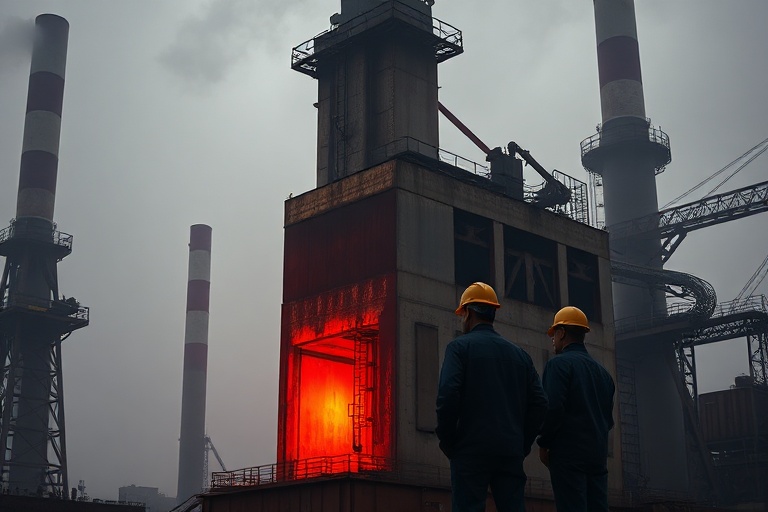
In late 2019, the British government made a decisive move to nationalise British Steel, placing the troubled manufacturer into temporary public ownership. The decision followed the company’s collapse into insolvency, leaving thousands of jobs at risk and raising urgent questions about industrial policy, economic strategy, and national resilience. More than four years later, the implications of this intervention continue to reverberate through the UK’s manufacturing sector and political discourse.
British Steel’s troubles were not isolated. They reflected broader challenges facing traditional industries in an economy increasingly shaped by globalisation, decarbonisation pressures, and shifting supply chains. The decision to nationalise—rather than let the company fail—was framed as a safeguard for jobs and skills, but it also reignited debates about state intervention in strategic sectors. The episode offers a case study in how governments balance economic pragmatism with long-term industrial ambition.
The Context: Why British Steel Needed Rescue
British Steel, once a cornerstone of British industrial might, had been privately owned since 2016 when it was acquired by the Chinese conglomerate Jingye. Despite initial optimism, the company struggled under heavy debt, high energy costs, and intense global competition. The onset of the COVID-19 pandemic in 2020 further disrupted supply chains and dampened demand, pushing the firm to the brink.
Its insolvency in May 2019 triggered a frantic search for a buyer. When no credible private rescue emerged, the government stepped in, citing the risk to 3,200 jobs—primarily in Scunthorpe—and the potential collapse of a critical supplier to sectors like rail and construction. The nationalisation was not a full-scale bailout in the traditional sense; it was a controlled administration under the Insolvency Act, designed to stabilise operations while a long-term solution was sought.
Critics argued that the move rewarded poor management and failed to address structural weaknesses. Supporters countered that it preserved vital industrial capacity at a time when the UK was preparing to leave the European Union, where trade barriers threatened to isolate domestic producers.
A Timeline of Key Events
- May 2019: British Steel enters compulsory liquidation after failing to secure emergency funding.
- June 2019: The government places the company into public ownership under the Official Receiver.
- July 2019: Jingye submits a takeover bid, later approved, ending public ownership by March 2020.
- 2020–2023: British Steel operates under Jingye with government support for decarbonisation projects.
- 2024: Growing calls for renewed state involvement amid rising energy costs and green transition pressures.
Was Nationalisation the Right Move?
The nationalisation of British Steel was unprecedented in modern UK industrial history—not because the state had bailed out a failing company, but because it did so without offering a long-term stake in the business. Instead, the government acted as a caretaker, maintaining operations until a private buyer could be found. This approach minimised taxpayer risk while buying time to assess the company’s viability.
Economically, the intervention cost the public purse an estimated £50 million in direct support, according to the National Audit Office. While this was far less than the multi-billion-pound rescues seen during the 2008 financial crisis, it raised questions about value for money. Was this a justified investment in preserving strategic assets, or a short-term fix that delayed inevitable restructuring?
From a political perspective, the move reflected a broader shift in industrial policy. The Conservative government, traditionally sceptical of state intervention, justified its actions by highlighting the “special circumstances” of British Steel—its role in national supply chains and the risk of foreign ownership without adequate safeguards. This pragmatic stance contrasted with earlier rhetoric about “free markets” and signalled a more flexible approach to industrial strategy.
Broader Implications for UK Industry and Policy
The British Steel case is not an isolated incident. It sits within a wider pattern of government involvement in strategic industries, from the rescue of Sheffield Forgemasters in 2021 to ongoing discussions about the future of the UK’s steel sector amid net-zero targets. The steel industry is carbon-intensive, and the transition to green steel—using hydrogen or carbon capture—requires significant investment. Without coordinated public and private support, many firms risk falling behind global competitors.
Moreover, the episode underscores the vulnerability of regions like Scunthorpe, which have relied on steel for generations. The loss of such industries can trigger economic decline, outmigration, and social dislocation. Nationalisation, even temporary, can act as a circuit breaker—preventing immediate collapse and allowing communities to adapt.
Yet the long-term sustainability of this model remains untested. Can the UK afford repeated interventions without a coherent industrial strategy? And how does nationalisation sit alongside commitments to deregulation and private sector-led growth? These questions go to the heart of the UK’s economic identity post-Brexit and in the shadow of climate change.
Looking Ahead: What’s Next for British Steel?
Today, British Steel remains in private hands under Jingye, but its future is closely tied to government policy. The company has received funding to develop low-carbon steelmaking, aligning with the UK’s net-zero ambitions. However, with global steel prices volatile and energy costs still high, the road to profitability is uncertain.
There have been renewed calls from unions and local MPs for the government to consider a more permanent stake in the company, particularly as the UK seeks to rebuild domestic manufacturing capacity. Some analysts suggest a public-private partnership model could offer a middle ground—leveraging private efficiency with public oversight to ensure strategic objectives are met.
What is clear is that the 2019 nationalisation was not just about saving a company; it was about saving a capability. In an era of geopolitical tension and supply chain fragility, the UK may need to rethink its approach to critical industries. The British Steel case could serve as a blueprint—or a cautionary tale—for future interventions.
Key Takeaways from the British Steel Nationalisation
- Strategic Necessity: The government intervened to protect jobs and supply chains, not just profits.
- Cost vs. Benefit: The nationalisation cost taxpayers around £50 million—a relatively small sum compared to potential economic damage.
- Temporary Solution: The rescue was designed as a stopgap, not a permanent nationalisation, reflecting a pragmatic rather than ideological approach.
- Green Transition Link: The company’s future now depends on its ability to adopt low-carbon technologies, with government support.
- Policy Precedent: The case sets a precedent for future interventions in strategically important but struggling industries.
The nationalisation of British Steel remains a defining moment in recent UK industrial history. It challenged orthodoxies about state intervention, highlighted the fragility of traditional industries, and forced a reckoning with the realities of a post-Brexit, net-zero economy. Whether it was a one-off emergency response or the first step toward a new industrial settlement is a question that will shape economic policy for years to come.
One thing is certain: in an era of uncertainty, the story of British Steel reminds us that some industries are too important to fail—and that sometimes, the market needs a helping hand from the state.
For more on UK industrial policy and economic interventions, visit our News and Business sections.