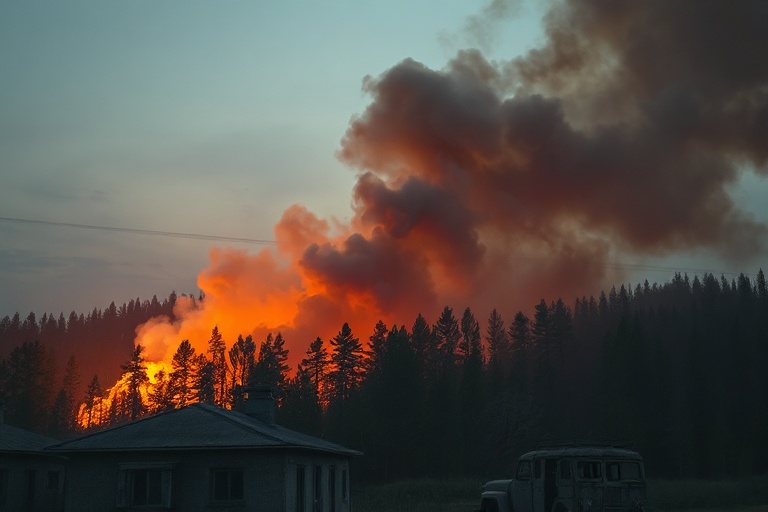
The Chernobyl Exclusion Zone, a 2,600-square-kilometer area in northern Ukraine, remains one of the most contaminated places on Earth. Decades after the 1986 nuclear disaster, the region continues to face new challenges, including wildfires that threaten to release radioactive particles into the atmosphere. The most recent significant fire occurred in April 2020, scorching over 500 hectares and reigniting concerns about the long-term risks of the abandoned reactor site.
These fires are not isolated incidents. They occur with alarming regularity, particularly during dry seasons, when dry grass and forest litter easily ignite. The 2020 fire was the largest in the exclusion zone since 2015, when another blaze burned nearly 10,000 hectares. The proximity of these fires to the Chernobyl Nuclear Power Plant and the radioactive waste storage facilities makes their potential environmental impact particularly concerning.
The Science Behind Chernobyl’s Fires
Wildfires in the Chernobyl Exclusion Zone behave differently from typical forest fires due to the unique conditions of the area. The soil in the exclusion zone remains heavily contaminated with radionuclides like cesium-137, strontium-90, and plutonium isotopes. When these fires burn, they can aerosolize radioactive particles, dispersing them over large distances through smoke plumes.
Researchers have documented how these fires can redistribute radioactive material. A 2015 study published in the journal Environmental Science & Technology found that wildfires in the exclusion zone could release up to 10% of the cesium-137 stored in the upper soil layer. This redistribution poses risks not only to Ukraine but also to neighboring countries like Belarus and parts of Europe.
- Cesium-137: A radioactive isotope with a half-life of 30 years, capable of contaminating food supplies and water sources.
- Strontium-90: Accumulates in bones and teeth, increasing the risk of leukemia and bone cancer.
- Plutonium isotopes: Highly toxic and carcinogenic, with long-term environmental persistence.
The 2020 fire highlighted the urgency of this issue. Satellite imagery showed smoke plumes stretching hundreds of kilometers, carrying radioactive particles across Ukraine and into Belarus. While authorities downplayed the health risks, scientists warned that even low-level exposure could pose long-term threats to local wildlife and human populations.
The Role of Human Activity and Climate Change
Human activity and climate change are exacerbating the frequency and intensity of wildfires in the Chernobyl Exclusion Zone. Abandoned villages and overgrown forests create ideal conditions for fires to spread rapidly. Additionally, climate change has led to longer dry seasons and hotter temperatures, increasing the likelihood of ignition.
Illegal logging and the presence of scavengers who set fires to clear land for foraging have also contributed to the problem. In some cases, these fires are started intentionally, either out of ignorance or negligence. The Ukrainian government has struggled to enforce fire safety regulations in the exclusion zone due to limited resources and the vast, inaccessible terrain.
The New Safe Confinement (NSC) structure, completed in 2016, was designed to contain the radioactive remains of the Chernobyl reactor for the next 100 years. However, the NSC does not address the risks posed by wildfires. The structure’s ventilation system could potentially draw in smoke and radioactive particles, posing a threat to workers maintaining the facility.
Environmental and Health Consequences
The environmental consequences of Chernobyl’s fires extend beyond the immediate exclusion zone. Radioactive particles released into the atmosphere can travel hundreds of kilometers, contaminating agricultural land and water supplies. In 2020, elevated levels of cesium-137 were detected in milk produced in parts of Belarus, a direct result of the fires.
Wildlife in the exclusion zone has also been affected. Studies have shown increased mutation rates in plants and animals exposed to radiation. For example, researchers have observed higher rates of cataracts and tumors in birds nesting in contaminated areas. While some species, like wolves and wild boars, have thrived in the absence of humans, their long-term health remains uncertain.
Human health risks are harder to quantify but no less concerning. The 1986 disaster exposed millions to radiation, leading to a spike in thyroid cancer cases. While modern fires release smaller quantities of radiation, chronic exposure to low levels could still pose risks, particularly for firefighters and cleanup workers who operate in the exclusion zone.
Mitigation Efforts and Future Challenges
Efforts to mitigate the risks of wildfires in the Chernobyl Exclusion Zone have been slow and inconsistent. The Ukrainian government, with support from international organizations like the European Union and the International Atomic Energy Agency (IAEA), has implemented several measures:
- Firebreaks: Clearing wide strips of land to prevent the spread of fires.
- Monitoring systems: Installing sensors and cameras to detect fires early.
- Controlled burns: Deliberately burning small areas to reduce fuel loads.
- Public awareness campaigns: Educating local communities about fire safety.
Despite these efforts, challenges remain. The exclusion zone is vast and difficult to patrol, particularly during the dry season. Corruption and lack of funding have hindered long-term solutions. Additionally, the ongoing conflict in Ukraine has diverted attention and resources away from environmental concerns, leaving the exclusion zone vulnerable to neglect.
International cooperation is crucial to addressing this issue. The News section on Dave’s Locker covers similar environmental crises around the world, highlighting the need for global action. For those interested in the intersection of technology and environmental safety, the Technology section offers insights into innovative solutions being developed to monitor and mitigate such threats.
Conclusion: A Legacy That Won’t Burn Out
The Chernobyl fire is more than a recurring ecological crisis; it is a stark reminder of the long-term consequences of nuclear disasters. The fires that sweep through the exclusion zone each year serve as a warning that the risks of Chernobyl are far from over. Without sustained effort and investment, the radioactive legacy of 1986 will continue to haunt Europe for generations.
The international community must prioritize funding for fire prevention, monitoring, and cleanup efforts in the exclusion zone. Governments and organizations should also invest in research to better understand the health impacts of low-level radiation exposure. Only through proactive measures can we hope to prevent the next Chernobyl fire from becoming a full-blown catastrophe.
As climate change intensifies and human activity encroaches further into abandoned landscapes, the lessons of Chernobyl must not be forgotten. The fires burning in the exclusion zone today are a testament to the enduring dangers of nuclear energy gone wrong—and a call to action for a safer, more responsible future.