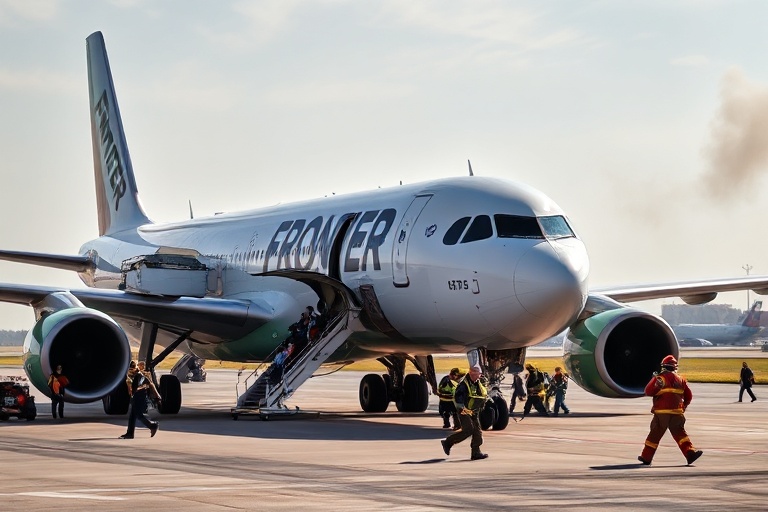
Frontier Airlines Ground Crew Death: Causes and Industry Impact
On a routine Tuesday morning at Denver International Airport, Frontier Airlines found itself at the center of an unusual and tragic incident. A ground crew member was struck by an aircraft during pushback procedures, an event that has since raised questions about safety protocols in the aviation industry. While such accidents are rare, they underscore the inherent risks faced by ground personnel who operate in close proximity to massive, moving machinery.
The Incident Unfolded in Minutes
According to preliminary reports from the Denver Department of Aviation, the incident occurred around 9:45 AM local time. The ground crew member, whose identity has not been released, was performing standard pushback duties for a Frontier Airlines flight preparing for departure. Witnesses described a sudden movement of the aircraft, which resulted in the crew member being struck. Emergency services arrived quickly, but the individual was pronounced dead at the scene.
Frontier Airlines released a statement expressing deep sorrow and promising a full investigation. “The safety of our employees and passengers is our top priority,” the airline noted. “We are cooperating fully with authorities to determine the exact circumstances of this tragic event.” The Federal Aviation Administration (FAA) has also launched an inquiry to assess whether any regulatory violations occurred.
Understanding the Risks of Ground Operations
While commercial aviation remains one of the safest modes of transportation, ground operations present unique hazards. Unlike in-flight incidents, ground accidents often involve close contact between personnel and heavy equipment. The pushback procedure, where an aircraft is maneuvered away from the gate by a specialized tow vehicle, requires precise coordination between ground crews and pilots.
Common risks in ground operations include:
- Human error: Miscommunication between ground crew and pilots can lead to accidents.
- Equipment failure: Malfunctioning tow tractors or aircraft systems can cause unexpected movements.
- Environmental factors: Poor visibility, wet conditions, or uneven surfaces increase risk.
- Time pressure: Airlines often prioritize quick turnarounds, which can compromise safety margins.
Industry data shows that ground accidents account for a small but persistent share of aviation incidents. According to the FAA, there were 231 ground-related accidents in the U.S. in 2022, resulting in 12 fatalities. While the majority of these incidents involve minor injuries, the Frontier Airlines case highlights the potential for catastrophic outcomes.
Broader Implications for the Aviation Industry
This tragedy comes at a time when airlines are under increasing pressure to balance efficiency with safety. The post-pandemic surge in air travel has led to a rise in flight volumes, straining ground operations teams. Meanwhile, labor shortages in the aviation sector have forced many airlines to rely on less experienced workers, raising concerns about training and preparedness.
Experts suggest that the incident could prompt a reevaluation of safety protocols across the industry. Some potential changes include:
- Enhanced training programs: Ground crews may receive more rigorous instruction on hazard awareness and emergency response.
- Technology adoption: The use of sensors and automated systems could reduce reliance on human judgment in high-risk scenarios.
- Regulatory scrutiny: The FAA may impose stricter oversight of ground operations, particularly during pushback and taxiing.
- Cultural shifts: Airlines could prioritize safety culture over operational speed, even when schedules are tight.
Aviation safety consultant Dr. Lisa Chen noted, “The Frontier Airlines incident is a stark reminder that ground operations are just as critical as in-flight safety. While airlines focus heavily on preventing mid-air incidents, we must not overlook the risks faced by those working on the tarmac.”
What’s Next for Frontier Airlines and the Industry?
In the immediate aftermath, Frontier Airlines has grounded the aircraft involved in the incident and suspended the ground crew supervisor pending the investigation. The airline has also pledged to review its safety training programs and implement additional safeguards for ground personnel.
For the broader industry, this event may serve as a catalyst for change. The FAA has already announced plans to review ground safety protocols at Denver International Airport, with potential expansions to other high-traffic hubs. Meanwhile, labor unions representing airline workers have called for stronger protections, including mandatory rest periods and improved communication tools.
As the investigation continues, one thing is clear: the Frontier Airlines incident is more than an isolated tragedy. It is a wake-up call for an industry that must constantly evolve to protect its most vulnerable workers. Whether through technological innovation, regulatory reform, or cultural shifts, the lessons from this event will shape the future of aviation safety.
For now, the aviation community mourns the loss of a dedicated professional whose final moments were spent ensuring the smooth operation of a flight that would never take off.
To learn more about aviation safety and industry trends, visit our Trending and Travel sections.