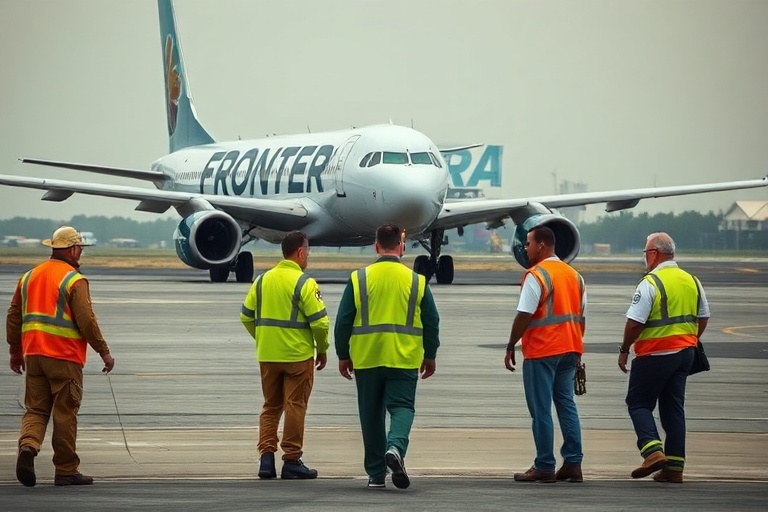
Frontier Airlines Incident Raises Alarms Over Airport Ground Safety
Frontier Airlines Incident Highlights Growing Concerns Over Ground Safety
An unusual and tragic incident involving Frontier Airlines has drawn international attention, raising questions about airport ground safety procedures and the human cost of operational oversights. Reports confirm that a ground crew member was struck by an aircraft at Denver International Airport, an event that has since triggered investigations and public scrutiny.
While such accidents remain rare compared to in-flight incidents, they underscore the persistent risks faced by airport personnel worldwide. This case reflects broader challenges in aviation safety, where human error and mechanical failures can intersect with devastating consequences. The incident has prompted calls for stricter enforcement of safety protocols across the industry.
How Did This Happen? The Mechanics Behind the Accident
According to preliminary findings from the National Transportation Safety Board (NTSB), the incident occurred during routine taxiing procedures. Eyewitness accounts suggest the aircraft was moving at low speed when it made contact with ground personnel, who were positioned too close to the moving aircraft. The crew member was rushed to a nearby hospital, where they later succumbed to injuries sustained in the collision.
Investigators are examining several potential factors:
- Visibility conditions at the time of the accident
- Compliance with ground crew positioning protocols
- Training records for the flight and ground operations teams
- Mechanical functionality of the aircraft’s braking and warning systems
This tragedy highlights the importance of maintaining clear communication between flight crews and ground staff. In high-pressure environments like airports, even minor lapses in coordination can lead to catastrophic outcomes.
Frontier Airlines Under the Microscope: A Pattern of Concerns?
Frontier Airlines, known for its budget-friendly approach to air travel, has faced scrutiny in recent years over safety and operational standards. While the airline maintains a strong safety record overall, this incident adds to a growing list of concerns raised by aviation watchdogs. In 2022, the Federal Aviation Administration (FAA) issued a warning to Frontier regarding pilot training deficiencies, and in 2023, the airline was fined for maintenance violations.
Industry experts argue that Frontier’s rapid expansion may have stretched its operational capacity thin. With a fleet of over 100 aircraft and more than 1,000 daily flights, ensuring consistent adherence to safety protocols becomes increasingly complex. Yet, the company has defended its practices, emphasizing its commitment to passenger and crew safety.
Globally, budget airlines face similar challenges. In Europe, low-cost carriers like Ryanair and easyJet have also encountered scrutiny over ground operations and safety compliance. The rise of ultra-low-cost airlines has intensified competition, sometimes pushing companies to prioritize efficiency over meticulous safety measures.
Global Implications: Airport Safety in an Era of Rapid Expansion
The incident at Denver International Airport is not an isolated case. Ground accidents involving aircraft and personnel occur with alarming regularity worldwide, often due to a combination of human error, inadequate training, and systemic pressures. According to the International Civil Aviation Organization (ICAO), ground accidents account for approximately 10% of all aviation-related fatalities annually.
In Asia, where air travel demand has surged in recent years, airports in China and India have reported multiple ground safety incidents. The rapid expansion of aviation infrastructure has outpaced the development of comprehensive safety frameworks in some regions. Meanwhile, in the Middle East, where airports like Dubai International serve as global hubs, ground operations are often highly regulated to mitigate risks.
Cultural attitudes toward safety also play a role. In some countries, there is a stronger emphasis on hierarchical workplace dynamics, which can discourage ground crew from speaking up about potential hazards. In contrast, Western airports often prioritize a collaborative safety culture, where employees are encouraged to report concerns without fear of repercussions.
As aviation continues to grow, the need for standardized global safety protocols becomes more urgent. Organizations like ICAO and the International Air Transport Association (IATA) are working to implement universal guidelines, but enforcement remains inconsistent across regions.
What’s Next for Frontier Airlines and Aviation Safety?
The fallout from this incident will likely include intensified regulatory oversight for Frontier Airlines. The NTSB’s final report could lead to new safety mandates, including stricter ground crew training requirements and enhanced aircraft warning systems. For the airline itself, the reputational damage may accelerate efforts to rebuild public trust through transparency and corrective action.
Beyond Frontier, the broader aviation industry must address systemic issues that contribute to ground accidents. This includes investing in advanced technologies like automated ground surveillance systems and improving real-time communication tools for crews. While no system is foolproof, these measures can significantly reduce the likelihood of tragic errors.
For travelers, the incident serves as a reminder of the intricate and high-stakes nature of air travel. While flying remains one of the safest modes of transportation, the risks associated with ground operations highlight the need for constant vigilance. Passengers can advocate for safety by supporting airlines with strong track records and reporting any concerns they observe during their journeys.
As investigations continue, the aviation community will closely watch how Frontier Airlines and regulatory bodies respond. The lessons learned from this tragedy could shape the future of airport safety worldwide, ensuring that the skies remain as secure as possible for everyone involved.