Frontier Airlines Incident Raises Global Aviation Safety Questions
An unexpected and alarming incident involving Frontier Airlines has once again focused attention on aviation safety protocols and their enforcement across global air travel systems. The event, which occurred during a routine departure, has raised questions about emergency procedures, crew training, and the psychological pressures faced by airline personnel in high-stress situations.
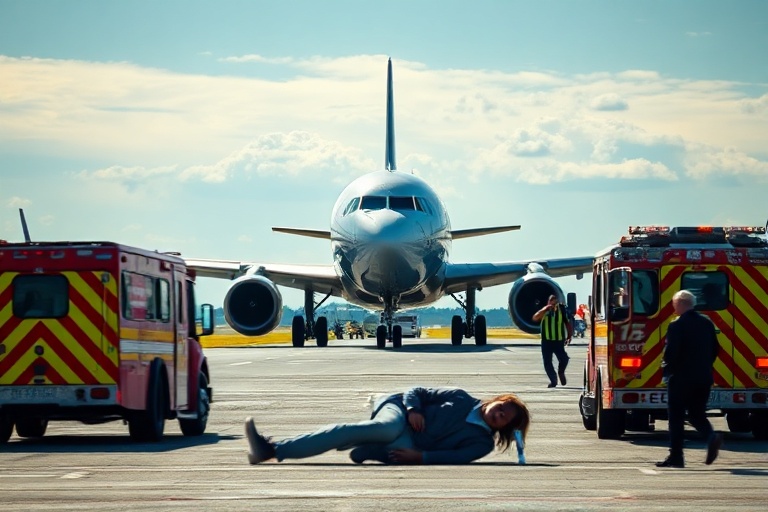
The incident unfolded on a clear afternoon at Denver International Airport, where a Frontier Airlines aircraft was preparing for takeoff. According to multiple eyewitness accounts and preliminary reports from the Federal Aviation Administration (FAA), a ground crew member inadvertently walked into the path of the moving aircraft. The individual suffered minor injuries and was immediately attended to by emergency medical personnel on-site.
What Happened: Timeline and Response
Security footage reviewed by aviation authorities shows the ground crew member stepping onto the tarmac just as the aircraft began taxiing. The plane’s pilot, adhering to standard operating procedures, initiated an emergency stop within seconds. Air traffic control confirmed the sequence, noting that the crew followed protocol by declaring an emergency and coordinating with airport rescue teams.
- Emergency stop initiated within 15 seconds of detection
- Ground crew member received immediate medical attention
- Flight was delayed for two hours while authorities assessed the runway
- No damage to the aircraft reported
While the outcome could have been far more severe, the incident has triggered a broader conversation about situational awareness and communication breakdowns in high-pressure airport environments. Similar events have occurred globally, from busy hubs in Asia to smaller airports in Europe, underscoring a universal challenge in aviation safety management.
Aviation Safety Culture: A Global Perspective
Aviation safety is not confined by national borders. Every year, thousands of flights take off and land safely, but when incidents occur, they often reveal systemic vulnerabilities. The Frontier Airlines event echoes a 2022 incident at London Heathrow, where a ground worker was struck by an aircraft during pushback. In that case, poor visibility and miscommunication contributed to the accident.
In Japan, where aviation safety standards are among the highest in the world, a 2021 incident at Tokyo Haneda involved a collision between a Japan Airlines aircraft and a Japan Coast Guard plane on the runway. Although no one was injured, the accident prompted a review of runway safety systems and the implementation of advanced ground radar at major airports.
These examples illustrate a shared reality: even in nations with robust regulatory frameworks, human error and procedural gaps can lead to dangerous situations. The International Civil Aviation Organization (ICAO) has long emphasized the importance of Safety Management Systems (SMS), but implementation varies widely across countries due to differences in resources, training, and cultural attitudes toward risk.
In some regions, rapid expansion of air travel has outpaced the development of safety infrastructure. For instance, in parts of Africa and South America, where air travel demand is growing faster than regulatory oversight, incidents like the one involving Frontier Airlines serve as cautionary tales about the need for investment in training, technology, and enforcement.
Psychological and Operational Pressures on Crew
Beyond the mechanical and procedural aspects, the incident raises concerns about the mental and emotional toll on aviation professionals. Pilots, cabin crew, and ground staff operate under intense pressure to maintain precision while managing fatigue, time constraints, and communication challenges.
A 2023 report by the International Federation of Air Line Pilots’ Associations (IFALPA) highlighted rising levels of stress and burnout among pilots, particularly in low-cost airline sectors where cost-cutting measures can reduce support systems. The report noted that fatigue-related errors are a leading cause of aviation incidents, with sleep deprivation and irregular schedules contributing to impaired decision-making.
The ground crew member involved in the Frontier Airlines incident was reportedly working an extended shift without a mandated break. While the FAA mandates rest periods for pilots and flight attendants, ground crew regulations are less standardized, leaving many workers vulnerable to exhaustion.
This disparity reflects a broader issue in the aviation industry: the uneven prioritization of safety across different roles. While pilots and flight attendants receive rigorous training in emergency response, ground personnel often receive on-the-job training with minimal oversight, leaving room for critical gaps in communication and situational awareness.
Regulatory Responses and Industry Accountability
In the wake of the incident, Frontier Airlines released a statement reaffirming its commitment to safety and announcing a review of its ground operations training programs. The airline also pledged to enhance communication protocols between flight crews and ground staff, including the use of digital checklists and real-time location tracking for personnel on the tarmac.
The FAA has launched an investigation into the incident, focusing on whether existing safety guidelines were followed and whether additional measures are needed to prevent similar occurrences. This includes evaluating the effectiveness of runway incursion warning systems and the role of human factors in aviation safety.
Globally, aviation authorities are taking note. The European Union Aviation Safety Agency (EASA) has called for a unified approach to ground safety training, while the Civil Aviation Authority of Singapore has introduced mandatory fatigue management programs for all airport personnel.
Industry experts argue that while technological solutions like AI-powered surveillance and automated alert systems can reduce risks, they must be complemented by a cultural shift toward prioritizing safety over operational speed. This includes fostering an environment where crew members feel empowered to speak up about fatigue, stress, or concerns about safety protocols without fear of retaliation.
Lessons for Travelers and the Future of Aviation
For passengers, incidents like this can be unsettling, but they also serve as reminders of the complex systems that keep air travel safe. While rare, such events prompt airlines and regulators to reassess and improve their practices. Travelers can take comfort in knowing that aviation remains one of the safest modes of transportation, with incidents often leading to enhanced safety measures rather than systemic failures.
Looking ahead, the aviation industry faces the dual challenge of accommodating growing demand while maintaining rigorous safety standards. Innovations such as remote-controlled aircraft operations, advanced collision avoidance systems, and AI-driven predictive maintenance are expected to play a larger role in reducing risks.
However, technology alone cannot eliminate human error. A holistic approach—combining advanced training, mental health support, and transparent communication—will be essential in shaping the future of aviation safety.
How to Stay Informed About Aviation Safety
For those interested in aviation safety trends and updates, following regulatory bodies like the FAA, EASA, and ICAO can provide valuable insights. Additionally, aviation news platforms such as Dave’s Locker Travel offer in-depth reporting on industry developments, safety protocols, and emerging technologies.
Passengers can also contribute to aviation safety by reporting any concerns about airline operations or airport conditions to relevant authorities or through airline feedback channels.