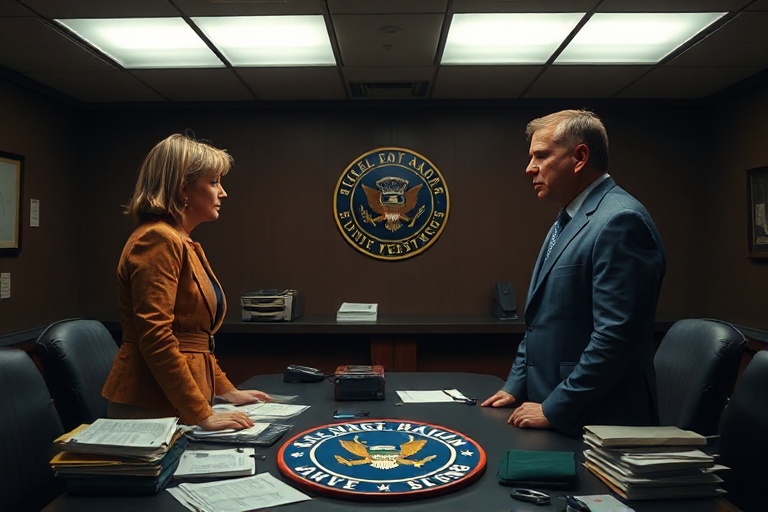
The dispute between Pete Hegseth and Mark Kelly over Pentagon stockpile policies has escalated into a broader conversation about military preparedness and resource allocation. Both figures have brought distinct perspectives to the table, framing the issue as a matter of national security versus fiscal responsibility. Their disagreement highlights tensions within defense strategy that extend beyond partisan lines.
Hegseth, a former military officer and Fox News contributor, has argued that the Pentagon’s stockpile levels are dangerously low, leaving the U.S. vulnerable to supply chain disruptions or sudden conflicts. Kelly, a U.S. Senator and retired astronaut, counters that the current stockpile management prioritizes efficiency over excess, ensuring funds are directed toward modernization rather than warehousing outdated materials.
The Core of the Disagreement
Their debate centers on three primary areas: inventory levels, procurement timelines, and modernization priorities. Hegseth contends that the Pentagon’s stockpile—ranging from critical minerals to ammunition—has dwindled to levels not seen since the Cold War, risking supply shortages in a prolonged conflict. Kelly, meanwhile, emphasizes that blindly restocking old stockpiles diverts resources from high-tech defense systems like hypersonic weapons and AI-driven logistics.
Key differences emerge in their proposed solutions:
- Hegseth’s Approach: Immediate bulk purchasing of critical materials, even at premium prices, to rebuild stockpiles to Cold War-era levels.
- Kelly’s Approach: Phased investments in next-gen defense tech, arguing that stockpiles of obsolete items are a poor substitute for advanced capabilities.
- Shared Ground: Both agree on the need for transparent audits, though they differ on what constitutes “excess” inventory.
Broader Implications for Defense Strategy
The Hegseth-Kelly dispute reflects deeper philosophical divides in military planning. Hegseth’s stance aligns with a traditionalist view, where overwhelming stockpiles act as a deterrent and insurance policy. Kelly’s position mirrors the Pentagon’s own 2022 National Defense Strategy, which prioritizes agility and technological superiority over sheer volume.
Critics of Hegseth’s approach warn that hoarding materials could lead to waste, as outdated stockpiles degrade or become obsolete before use. Supporters, however, argue that Kelly’s reliance on just-in-time logistics risks catastrophic shortages if supply chains are disrupted—whether by war, sanctions, or cyberattacks.
This debate also intersects with broader economic concerns. The U.S. defense budget faces scrutiny as inflation and national debt grow. Rebuilding stockpiles at scale would require billions, while Kelly’s tech-focused approach could justify higher R&D spending but delay immediate readiness gains.
Historical Context and Lessons
Stockpile debates are nothing new. During the 1990s, post-Cold War drawdowns left the U.S. with shrinking reserves, a gamble that proved costly when the Iraq War revealed shortages in body armor and vehicle armor plating. Conversely, the 2008 financial crisis saw stockpile levels plummet again, forcing emergency purchases at inflated prices.
Kelly’s argument draws from these lessons, advocating for a “smart stockpile” that balances readiness with innovation. Hegseth counters that such an approach assumes no major conflicts will arise in the interim—a gamble with national security at stake.
One overlooked factor is the role of private contractors. The Pentagon increasingly relies on corporations like Lockheed Martin and Raytheon to maintain surge production capacity. If stockpiles are depleted, these firms can ramp up—but only if contracts are pre-negotiated, a process Kelly supports through long-term defense planning.
Where Do We Go From Here?
The resolution may lie in a hybrid model, combining Hegseth’s urgency for critical materials with Kelly’s emphasis on technological edge. Congress could mandate stockpile replenishments for irreplaceable items (e.g., rare earth minerals) while redirecting budgets toward AI-driven supply chain resilience.
For now, the dispute remains unresolved, but its implications extend beyond Capitol Hill. Military leaders, defense contractors, and even allies like NATO are watching closely. A prolonged stalemate could delay modernization efforts, while an aggressive stockpile buildup might strain the budget without guaranteeing security.
The Pentagon’s next budget proposal, expected in early 2025, could be the first test of which vision prevails. Until then, the debate underscores a fundamental question: In an era of great-power competition, is it better to have more hardware on the shelf—or more cutting-edge tools in the arsenal?
For deeper analysis on defense policy trends, explore our News and Analysis sections.