Europe’s Single Market: A Foundation for Global Economic Integration
The European Single Market remains one of the most ambitious experiments in economic integration the world has ever seen. Since its formal establishment in 1993, it has dismantled barriers to trade, labor mobility, and capital flows across 27 member states, creating a unified economic zone larger than the United States in both population and economic output. While often praised for its efficiency and scale, the Single Market also faces persistent challenges—geopolitical fragmentation, technological disruption, and widening disparities between regions. Understanding its structure, impact, and future trajectory is essential not just for Europeans, but for global businesses, policymakers, and consumers navigating an increasingly interconnected world.
The roots of the Single Market trace back to the Treaty of Rome in 1957, which envisioned a common market free of internal trade barriers. However, it wasn’t until the late 1980s and early 1990s—under the leadership of Jacques Delors and the Single European Act—that the vision began to take concrete shape. The removal of border controls, harmonization of standards, and mutual recognition of qualifications transformed Europe into a seamless space where goods, services, people, and capital could move freely. This wasn’t merely a technical adjustment; it was a cultural and economic reorientation, reshaping how millions of people live, work, and consume.
The Four Freedoms: The Engine of Integration
The Single Market operates on four core principles—often called the “Four Freedoms”—that define its legal and economic framework:
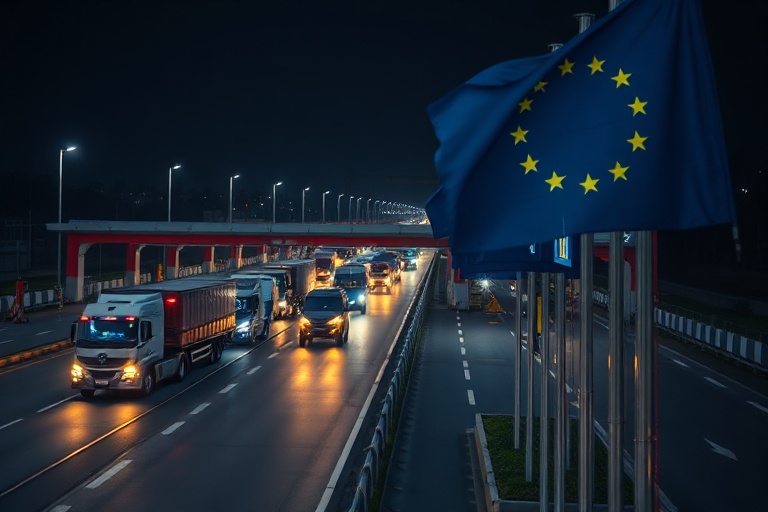
- Free Movement of Goods: Tariffs, quotas, and technical standards that once fragmented national markets have been largely eliminated. Products legally sold in one country can be sold anywhere in the EU without additional certification, provided they meet essential health and safety requirements. This has fostered competition, innovation, and lower prices for consumers.
- Free Movement of Services: Professionals—from architects to accountants—can offer their services across borders without needing to establish a physical presence. Digital platforms now enable services like banking, insurance, and consulting to operate seamlessly across national lines, though regulatory fragmentation persists in areas like professional licensing.
- Free Movement of Persons: EU citizens can live, work, study, or retire in any member state. Over 17 million EU citizens currently reside in another member state, creating a dynamic labor market and enriching cultural exchange. Yet, language barriers, credential recognition hurdles, and social integration challenges remain real obstacles.
- Free Movement of Capital: Investors and businesses can move funds across borders with minimal restrictions. This has fueled cross-border mergers, venture capital flows, and real estate investment, though it has also raised concerns about capital flight from less competitive regions.
These freedoms have not evolved in isolation. They reflect a broader global trend toward economic openness—a counterbalance to the protectionist impulses seen in the United States and parts of Asia. Yet, the Single Market’s success is not guaranteed. The rise of digital services, the energy crisis spurred by geopolitical conflict, and the uneven recovery from the COVID-19 pandemic have all tested its resilience.
The Cultural and Social Ripple Effects
Beyond economics, the Single Market has profoundly influenced European society and identity. The ability to study abroad through programs like Erasmus+ has fostered a generation of multilingual, culturally aware professionals. Cities like Berlin, Amsterdam, and Barcelona have become magnets for young talent, transforming urban economies and cultural scenes. Meanwhile, rural and post-industrial regions in Eastern and Southern Europe often struggle to retain their youth, creating demographic imbalances that strain social cohesion.
Cultural exchange has also extended to consumer behavior. The availability of diverse products—from Italian pasta to German cars to Greek olive oil—has shaped everyday life, influencing tastes and expectations. Streaming services, e-commerce giants like Amazon, and digital payment systems have accelerated this convergence, making the Single Market not just an economic construct, but a lived experience for millions. Yet, this cultural homogenization has sparked backlash in some quarters, where local traditions and identities feel threatened by globalized commerce.
Moreover, the Single Market has played a quiet but pivotal role in global diplomacy. By presenting a unified regulatory front, the EU has negotiated trade agreements with countries like Canada, Japan, and soon, potentially, the United Kingdom. Its standards in data privacy (GDPR), environmental protection, and digital markets have become de facto global benchmarks, influencing legislation from Brazil to India. In a world divided by trade wars and sanctions, the EU’s ability to act as a single bloc remains a rare source of stability.
Challenges and the Path Ahead
Despite its achievements, the Single Market is under pressure. Supply chain disruptions during the pandemic exposed vulnerabilities in just-in-time production and cross-border logistics. The war in Ukraine has underscored Europe’s dependence on foreign energy and raised urgent questions about strategic autonomy. Meanwhile, digital giants from the U.S. and China increasingly dominate sectors like cloud computing and fintech, challenging Europe’s ability to innovate within its own market.
Another critical issue is convergence—or the lack thereof. While countries like Ireland and the Netherlands thrive, others in the Balkans and Southern Europe face high unemployment and brain drain. The EU’s cohesion funds aim to address these disparities, but their effectiveness is often debated. The rise of populist movements in Poland, Hungary, and beyond has also raised concerns about rule-of-law compliance, particularly in areas like judicial independence and media freedom—factors that directly impact investor confidence.
Looking forward, the Single Market must evolve to meet new realities. The European Green Deal, for instance, seeks to align the market with climate goals by 2050, but this requires massive investment in green technology and infrastructure. Similarly, the push for a Digital Single Market aims to harmonize rules on data, AI, and cybersecurity—key areas where Europe risks falling behind. These initiatives are not just economic; they are existential, shaping Europe’s role in a multipolar world.
A Model with Global Implications
The Single Market’s story is one of ambition, adaptation, and occasional setback. It offers a compelling alternative to both hyper-globalization and isolationism, proving that deep integration can coexist with democratic governance and social welfare. Yet, its future depends on Europe’s ability to address internal divisions, embrace technological change, and project unity on the global stage.
For businesses, the message is clear: the Single Market remains a gateway to over 440 million consumers, but success requires agility, compliance, and cultural sensitivity. For policymakers, the challenge is to balance openness with protection, innovation with equity. And for citizens, the Single Market is more than a policy—it is a daily reality, shaping where they work, what they buy, and how they see the world.
As geopolitical tensions rise and technology reshapes economies, the European Single Market stands as both a beacon and a cautionary tale. It demonstrates what can be achieved when nations choose collaboration over division. But it also reminds us that integration is not a destination—it is an ongoing process, one that demands constant renewal and vigilance.