How Traffic Shapes Cities and Impacts Daily Life
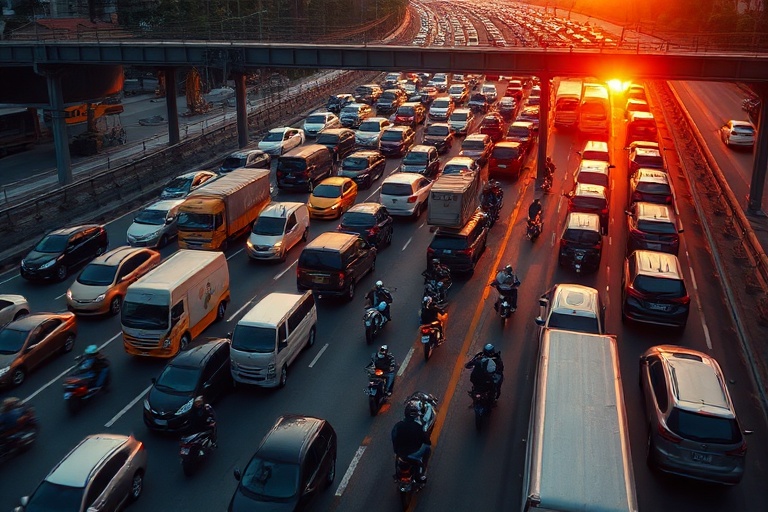
The daily commute has become a defining feature of urban existence. Gridlock doesn’t just slow vehicles—it shapes economies, influences mental health, and tests the limits of urban infrastructure. Cities worldwide grapple with congestion that costs billions annually while frustrating residents and visitors alike.
The Hidden Costs of Gridlock
Traffic isn’t merely an inconvenience; it’s an economic drain. According to the Texas A&M Transportation Institute, American commuters wasted 3.1 billion gallons of fuel and 8 billion hours sitting in traffic in 2022. This congestion cost the U.S. economy $147 billion in lost productivity and fuel expenses.
Beyond financial impacts, traffic exacts a human toll. Studies from the American Psychological Association link long commutes to increased stress, sleep deprivation, and even higher divorce rates. The frustration of bumper-to-bumper traffic triggers measurable spikes in cortisol levels, illustrating how transportation patterns affect personal wellbeing.
Environmental consequences compound these issues. Idling vehicles contribute significantly to urban air pollution, with transportation accounting for 29% of U.S. greenhouse gas emissions. Cities like Los Angeles and Beijing experience measurable increases in particulate matter during rush hours, exacerbating respiratory conditions.
The Psychology Behind Traffic Frustration
Why does traffic provoke such intense emotional responses? Psychologists point to several factors. The loss of control proves particularly stressful—drivers feel trapped in a situation where they can’t influence their environment. Time becomes the enemy as precious hours disappear into the ether of brake lights and stop-and-go patterns.
Research from the University of California, Irvine reveals that the stress from traffic lingers long after the commute ends. Participants in their study showed elevated stress markers for up to two hours after arriving at their destinations. This phenomenon explains why some drivers exhibit road rage even after exiting congested highways.
- Sensory overload: Constant braking, honking, and lane changes overwhelm the nervous system
- Violation of expectations: Drivers anticipate smooth traffic flow but encounter unpredictable delays
- Loss of autonomy: Being part of a slow-moving mass contradicts our need for personal agency
These psychological factors explain why traffic jams trigger disproportionate anger compared to other delays. The helplessness of being stuck in traffic translates into frustration that often spills over into other life domains.
Technological Solutions and Their Limitations
In response to congestion, cities have deployed various technological fixes. Adaptive traffic signals, which adjust timing based on real-time vehicle flow, have reduced wait times by up to 30% in pilot programs. Navigation apps like Waze and Google Maps leverage crowd-sourced data to suggest alternate routes, though these systems create new problems by redirecting traffic into residential neighborhoods.
Ride-sharing services were initially hailed as congestion solutions, but studies show they’ve increased vehicle miles traveled in major cities. The phenomenon of “deadheading”—drivers moving between fares without passengers—adds to overall traffic volume. Cities like New York now impose congestion pricing to discourage unnecessary trips during peak hours.
Emerging technologies offer more radical solutions. Electric vertical takeoff and landing (eVTOL) vehicles promise to bypass ground traffic entirely, with companies like Joby Aviation and Archer Aviation developing air taxi networks. However, regulatory hurdles and infrastructure requirements mean these solutions remain years away from widespread implementation.
The Future of Urban Mobility
Cities worldwide are experimenting with different approaches to reduce congestion. Amsterdam’s “car-free” zones have revitalized city centers while reducing pollution. Singapore’s electronic road pricing system charges drivers based on time of day and location, successfully cutting peak-hour traffic by 24%.
Public transportation emerges as the most viable solution in dense urban areas. Cities like Tokyo and Hong Kong demonstrate how efficient rail systems can move millions daily while reducing per-capita traffic congestion. Yet American cities struggle with underfunded transit systems and cultural preferences for personal vehicles.
The shift toward remote work offers another potential solution. Research from Global Workplace Analytics suggests that widespread telecommuting could reduce traffic by 11% nationwide. However, the return-to-office trend threatens to reverse these gains as companies mandate in-person attendance.
Ultimately, solving traffic requires addressing fundamental urban design flaws. The 20th-century prioritization of car infrastructure created cities where essential services require automobile travel. Modern urban planning focuses on creating “15-minute cities” where residents can access daily needs within walking distance.
Traffic represents more than just slow movement—it’s a symptom of deeper urban planning decisions. The solutions lie not in adding more lanes or smarter apps, but in reimagining how cities function at their most basic level. Until then, the daily crawl through gridlock will remain an inescapable ritual of urban life.