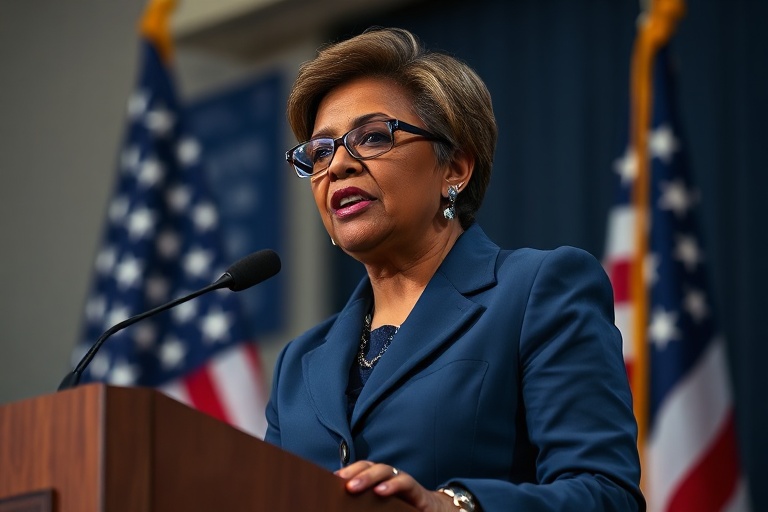
Karen Bass: How Her Political Journey Shapes LA’s Future
Karen Bass’s political career has been marked by persistence and a willingness to tackle some of America’s most challenging issues. As she transitioned from representing California’s 37th congressional district to becoming Los Angeles’ first female mayor, her trajectory reflected both personal evolution and broader shifts in urban leadership. Bass’s journey offers a case study in how local governance adapts to crises, from homelessness to public safety, while maintaining a focus on equity and community voices.
Early Life and Political Beginnings
Born in 1953 in Los Angeles, Karen Bass’s upbringing in the city’s working-class neighborhoods shaped her lifelong commitment to social justice. After studying philosophy at San Diego State University, she worked as a physician assistant and later as a clinical instructor, gaining firsthand insight into healthcare disparities. Her entry into politics began in the 1990s, when she co-founded the Community Coalition, a South Los Angeles nonprofit focused on addressing gang violence and poverty.
Bass’s grassroots organizing laid the foundation for her political ascent. In 2004, she was elected to the California State Assembly, where she quickly became known for her advocacy on healthcare reform and criminal justice. By 2008, she had risen to Assembly Speaker, the first African American woman in U.S. history to hold that position. Her leadership during California’s budget crisis demonstrated her ability to navigate partisan divides while prioritizing vulnerable populations.
Congressional Tenure and National Influence
Bass served in the U.S. House of Representatives from 2011 to 2022, representing a district that included Hollywood and parts of South Los Angeles. During her time in Congress, she focused on foreign policy, co-founding the bipartisan Congressional Caucus on Black Women and Girls and serving on the House Foreign Affairs Committee. Her work on U.S.-Africa relations earned her recognition as a leading voice on international development.
One of her most notable achievements was co-authoring the George Floyd Justice in Policing Act, a sweeping reform bill aimed at addressing police brutality and racial profiling. The legislation reflected her long-standing critique of systemic inequities in law enforcement and criminal justice. Bass’s ability to bridge ideological gaps—even on contentious issues—solidified her reputation as a pragmatic yet principled leader.
Key Policy Positions During Her Congressional Career
- Criminal Justice Reform: Championed legislation to end mandatory minimums and expand rehabilitation programs.
- Healthcare Access: Advocated for expanding Medicaid and reducing healthcare disparities in underserved communities.
- Foreign Policy: Focused on strengthening U.S. relationships with African nations and promoting global health initiatives.
- Economic Equity: Supported policies like the Raise the Wage Act to address income inequality.
Mayoral Campaign and Transition to City Hall
Bass’s decision to run for Los Angeles mayor in 2022 was driven by her belief that the city needed a leader who could unite its fractured communities. Her campaign emphasized housing affordability, public safety, and economic recovery—issues that had intensified during the COVID-19 pandemic. Despite facing a crowded field, she secured the endorsement of key labor unions and progressive organizations, positioning herself as the establishment candidate.
Her victory in the November 2022 runoff election made her the first woman and second Black mayor in Los Angeles history. The transition to office was not without challenges. Rising crime rates, a growing homelessness crisis, and tensions between police and communities demanded immediate attention. Bass’s approach has blended short-term solutions, such as deploying additional law enforcement resources, with long-term strategies like supportive housing initiatives.
Broader Implications of Her Leadership
Bass’s tenure as mayor is being watched closely as a bellwether for urban governance in the 2020s. Her administration’s handling of homelessness—particularly in a city with one of the nation’s largest unsheltered populations—could influence national housing policy. Similarly, her efforts to reform the Los Angeles Police Department while maintaining public trust will be scrutinized as cities across the country grapple with similar challenges.
Her leadership also highlights the evolving role of Black women in American politics. Bass’s career reflects a shift toward more inclusive leadership styles, where community engagement and data-driven policymaking intersect. This approach contrasts with traditional top-down governance, offering a model for mayors and governors navigating complex urban landscapes.
Moreover, Bass’s success underscores the importance of local leadership in addressing national crises. While federal and state governments often dominate headlines, mayors like Bass are on the front lines of issues like climate change, public health, and economic inequality. Her ability to mobilize resources and build coalitions could serve as a template for other cities facing similar pressures.
Challenges Ahead for Mayor Bass’s Administration
- Homelessness: Balancing compassionate housing solutions with community concerns about encampments.
- Public Safety: Reconciling progressive reform with pressure to address rising crime rates.
- Economic Recovery: Revitalizing small businesses and addressing wage gaps post-pandemic.
- Infrastructure: Modernizing transit and utilities while managing budget constraints.
Conclusion
Karen Bass’s political career is a testament to the power of persistence and adaptability in public service. From her early days as a community organizer to her historic tenure as Los Angeles mayor, she has consistently prioritized equity and pragmatic solutions. Her leadership during a period of profound urban challenges offers valuable lessons for policymakers at all levels.
As Bass navigates the complexities of governing America’s second-largest city, her approach will likely shape not only Los Angeles’ future but also the broader discourse on urban governance. Whether through her housing initiatives, police reforms, or economic strategies, her tenure will be a case study in how cities can confront 21st-century crises with vision and resilience.
For those interested in the intersection of politics and urban development, Bass’s story is far from over. Her ability to balance idealism with pragmatism will determine whether Los Angeles can emerge as a model for inclusive governance—or remain a cautionary tale of unmet challenges.
To explore more on political leadership and urban policy, visit Dave’s Locker Politics or Dave’s Locker News for ongoing coverage.