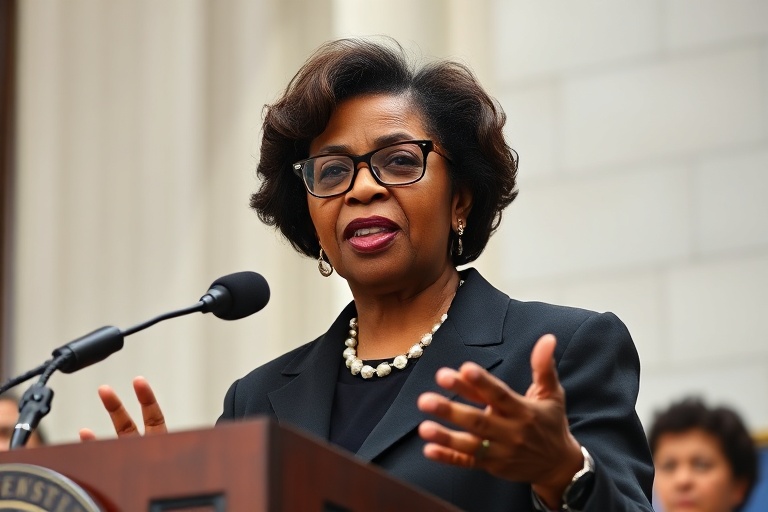
Karen Bass: How Los Angeles’ First Black Woman Mayor is Redefining Leadership
Karen Bass’s political career has been defined by her commitment to social justice and community empowerment. As the first Black woman to serve as mayor of Los Angeles, her journey reflects decades of advocacy, leadership, and resilience in American politics.
Early Life and Political Foundations
Born in Los Angeles in 1953, Bass grew up in the Venice-Fairfax neighborhood during a time of significant social upheaval. Her experiences as a young woman in a rapidly changing city shaped her perspective on inequality and opportunity. After studying philosophy at San Diego State University, she worked as a physician assistant, a role that deepened her understanding of healthcare disparities in underserved communities.
Bass’s entry into politics began in the 1990s when she co-founded the Community Coalition, an organization dedicated to improving the quality of life in South Los Angeles. This grassroots work laid the groundwork for her later political campaigns. By 2004, she had transitioned from activism to elected office, winning a seat in the California State Assembly.
Key Milestones in Her Early Career
- 1990: Co-founded the Community Coalition to address poverty and violence in South LA
- 2004: Elected to the California State Assembly
- 2008: Became the first Black woman to lead a state legislative caucus in the U.S.
- 2010: Elected to the U.S. House of Representatives
Legislative Impact and National Influence
During her 11 years in Congress, Bass became a prominent voice on issues such as criminal justice reform, healthcare access, and economic equity. She played a key role in advocating for the George Floyd Justice in Policing Act and worked to expand resources for underserved communities. Her leadership in the Congressional Black Caucus further solidified her reputation as a strategic and principled lawmaker.
One of her most significant achievements was securing federal funding for community-based violence intervention programs. These initiatives prioritized prevention over punishment, addressing root causes of crime in urban neighborhoods. Her approach blended legislative action with on-the-ground advocacy, a strategy that resonated with voters across Los Angeles.
Bass’s Policy Priorities in Congress
- Advancing police reform and accountability
- Expanding healthcare access through Medicaid and community clinics
- Supporting small businesses in low-income communities
- Investing in education and workforce development
Mayoral Campaign and Leadership Challenges
Bass’s decision to run for Los Angeles mayor in 2022 marked a turning point in her career. The race was one of the most closely watched in recent memory, pitting her against billionaire developer Rick Caruso in a contest that highlighted deep divisions in the city. Her campaign emphasized unity, economic recovery, and addressing homelessness—a crisis that had reached unprecedented levels.
Despite facing criticism from opponents who questioned her lack of executive experience, Bass framed her leadership style as collaborative and community-driven. Her ability to connect with voters across racial, economic, and geographic lines proved decisive. On December 1, 2022, she was sworn in as the 44th mayor of Los Angeles, making history as the first Black woman to hold the office.
Immediate Priorities Upon Taking Office
- Reducing homelessness through emergency housing solutions
- Reforming the city’s permit and licensing processes to support small businesses
- Expanding youth employment programs to combat poverty
- Strengthening public safety through community policing initiatives
Broader Implications of Her Leadership
Bass’s election carries significance beyond Los Angeles. It signals a shift in how cities nationwide are addressing systemic inequities. Her administration’s focus on housing and economic mobility reflects a growing recognition that urban centers must prioritize vulnerable populations to remain viable and inclusive.
At the same time, her leadership has drawn scrutiny. Critics argue that her policies have not yet delivered the transformative change she promised. Homelessness remains a critical issue, and economic recovery efforts face opposition from business groups and labor unions alike. Yet Bass’s resilience in navigating these challenges underscores her political acumen.
Her story also highlights the evolving role of Black women in American politics. Bass joins a legacy of leaders like Shirley Chisholm and Maxine Waters, whose careers demonstrate the power of perseverance in a field often resistant to change. Her journey offers a model for future generations of women of color seeking public office.
Why Her Leadership Matters
Bass’s ascent to power represents more than a personal achievement. It reflects a broader demand for leadership that prioritizes equity and accountability. In a city—and a country—grappling with deepening divides, her administration’s success or failure will shape conversations about governance for years to come.
For those interested in the intersection of politics and community activism, Bass’s career offers valuable lessons in turning advocacy into action. Her ability to mobilize diverse coalitions while maintaining a clear moral compass sets a standard for future leaders.
As Los Angeles navigates its next chapter, Karen Bass stands at the helm—a symbol of progress and a reminder of the work still left to do.
To explore more on political leadership and social change, visit our Politics and News sections.