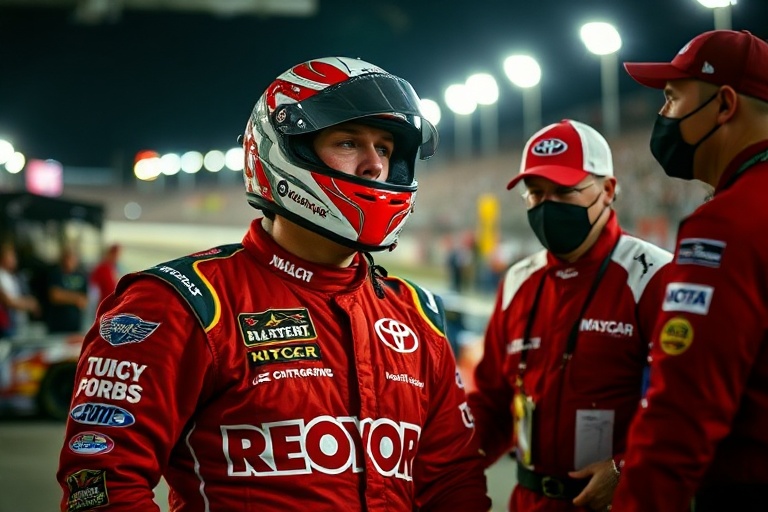
Kyle Busch Seeks Medical Attention After Watkins Glen Race
Kyle Busch’s latest NASCAR outing at Watkins Glen International ended with an unexpected twist, as the veteran driver requested medical attention following a multi-car incident on the final lap. The incident marked the second consecutive race where Busch’s performance was overshadowed by on-track chaos, raising questions about the physical toll of high-speed racing and the evolving safety standards in motorsports.
The Incident at Watkins Glen
The race concluded under caution after a collision involving multiple cars sent debris across the frontstretch. Busch, who had been running in the top five, was caught up in the pileup and required assistance exiting his No. 45 Chevrolet. Initial reports from track officials indicated Busch was conscious and alert but appeared disoriented as he was helped from his vehicle.
Emergency medical personnel evaluated Busch on scene before transporting him to a nearby medical facility for precautionary checks. NASCAR later confirmed Busch was cleared with minor bruising and no signs of concussion, though the episode reignited discussions about driver safety in the sport’s most grueling circuits.
A Season of Near-Misses for Busch
This wasn’t the first time Busch has faced adversity this season. Earlier in the year, a violent crash at Daytona forced him to miss several races due to rib and back injuries. His return to competition has been met with both admiration and scrutiny, as fans and analysts debate whether the 43-year-old’s aggressive driving style is sustainable given the physical demands of modern NASCAR.
Busch’s resilience has long been a hallmark of his career, earning him the nickname “Rowdy.” Yet even his most ardent supporters acknowledge the cumulative toll of nearly two decades in the sport. The Watkins Glen incident serves as a reminder that even the most decorated drivers are not immune to the risks inherent in high-stakes racing.
Global Perspectives on Driver Safety
Motorsports safety has evolved dramatically since Busch’s debut in 2004, yet the sport remains inherently dangerous. While NASCAR has implemented stricter helmet standards, improved barrier designs, and mandatory concussion protocols, incidents like the one at Watkins Glen highlight the need for continued innovation. The global motorsports community, including Formula 1 and IndyCar, has faced similar challenges, with recent rule changes aimed at reducing speeds and minimizing contact.
In Europe, where motorsports safety regulations are often more stringent, drivers frequently undergo rigorous medical evaluations after crashes. The contrast between NASCAR’s approach and those of international circuits has sparked debate among fans and insiders alike. Some argue that Busch’s situation underscores the need for even greater oversight, while others believe the sport must balance safety with the thrill that draws audiences worldwide.
The Business of Racing and Athlete Longevity
Beyond the track, Busch’s recent struggles raise broader questions about athlete longevity in professional sports. NASCAR, like other leagues, relies heavily on star power to maintain fan engagement. Busch’s ability to bounce back from injury has been a selling point for sponsors and teams, but repeated incidents could impact his marketability.
Sponsorship deals in motorsports often hinge on a driver’s perceived durability. Busch’s recent medical evaluations may prompt partners to reassess their commitments, particularly as younger drivers gain prominence. This dynamic reflects a larger trend in professional sports, where aging athletes face increasing pressure to perform at elite levels while managing their long-term health.
The incident at Watkins Glen also serves as a case study in crisis management for NASCAR teams. Busch’s No. 45 team, operated by Legacy Motor Club, must now navigate the delicate balance between supporting their driver’s recovery and maintaining competitive momentum. The team’s response to this situation could influence how other organizations handle similar crises in the future.
Looking Ahead: What’s Next for Kyle Busch?
For now, Busch’s immediate future remains uncertain. While he was cleared to return to competition, his participation in the next race will depend on further evaluations. The sport’s governing body has indicated it will continue monitoring Busch’s condition, though no timeline has been set for his return.
Fans and analysts will be watching closely to see how this incident shapes Busch’s approach to the remainder of the season. Will he adjust his driving style to prioritize safety over aggression? Or will he push forward, determined to prove his resilience once again? The answers to these questions could redefine the latter stages of his storied career.
Regardless of the outcome, Busch’s experience at Watkins Glen serves as a stark reminder of the risks that come with high-speed competition. As NASCAR continues to evolve, the sport must grapple with the dual challenges of preserving its thrilling nature while safeguarding the athletes who make it possible.
For more insights into NASCAR’s evolving safety standards and driver health initiatives, visit our Sports section, where we regularly cover the intersection of competition and well-being in motorsports.