The conclusion of the NASCAR race at Watkins Glen International on Sunday was not just another checkered flag ceremony. Kyle Busch, a driver with a reputation for resilience and intensity, found himself seeking medical attention after a high-speed crash on the final lap. The incident has sent ripples through the motorsports community, raising questions about safety protocols and the physical toll of professional racing.
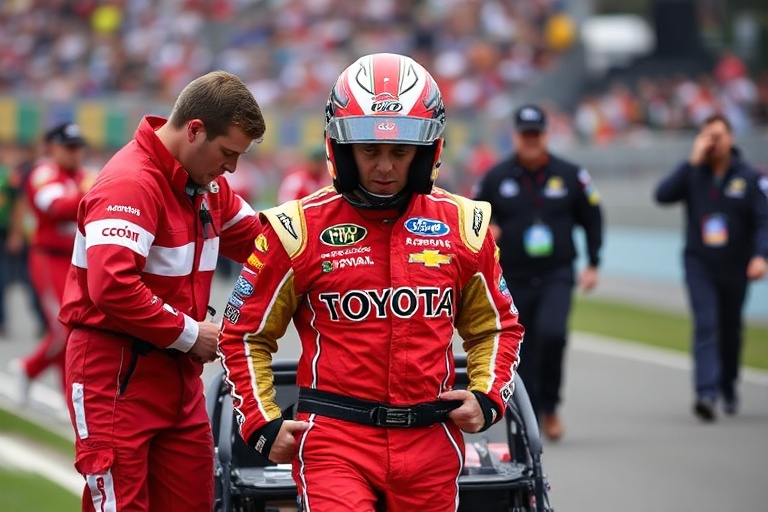
Busch’s accident occurred as he battled for position in the closing stages of the race. Witnesses reported a violent impact with the Turn 5 wall, a section of the track known for its unforgiving nature. The impact was severe enough to trigger immediate medical response protocols. Busch was extracted from his car and transported to a local medical facility for evaluation, where he underwent preliminary scans to assess potential injuries.
Immediate Aftermath: Safety Protocols in the Spotlight
The incident at Watkins Glen has once again brought NASCAR’s safety measures into the spotlight. While the sport has made significant strides in improving driver protection—most notably with the introduction of the HANS device, SAFER barriers, and reinforced cockpits—high-speed crashes still pose extreme risks. Busch’s crash was a stark reminder of how quickly fortunes can change in motorsports.
NASCAR officials confirmed that Busch was conscious and alert immediately after the crash, a critical factor in the rapid response. The medical team on-site performed a thorough assessment before deciding on further evaluation. This protocol aligns with the sport’s evolving safety standards, which prioritize immediate care and long-term health monitoring for drivers.
In a statement released by his team, Busch expressed gratitude for the quick response from medical personnel. “I’m just glad everyone did their jobs the way they’re supposed to,” he said. “These guys are professionals, and I appreciate their work.” His words underscored the trust drivers place in the systems designed to protect them, even as they push the limits of speed and competition.
A Global Perspective: How Other Motorsports Handle Driver Safety
While NASCAR continues to refine its safety measures, it’s worth examining how other motorsports leagues address similar challenges. Formula 1, for instance, has a long history of prioritizing driver safety, driven in part by tragic accidents in the past. The introduction of the halo device—a titanium structure protecting the driver’s head—has been credited with saving lives, including in high-profile incidents like Romain Grosjean’s 2021 Bahrain crash.
In MotoGP, riders wear extensive protective gear, and circuits are designed with runoff areas to minimize impact severity. The sport’s governing body, the FIM, regularly reviews and updates safety regulations based on real-world incidents. These adaptations reflect a broader trend in motorsports: a shift toward proactive safety measures rather than reactive ones.
Busch’s crash at Watkins Glen serves as a case study in how different leagues balance competition with safety. NASCAR’s protocols, while robust, are continually tested by the sport’s unique challenges, including its diverse track configurations and the sheer physicality of stock car racing. The global motorsports community watches closely, often adopting or adapting best practices from one another.
Cultural Impact: The Human Side of Racing
Beyond the technical and regulatory discussions, Busch’s incident highlights the human side of professional racing. Drivers like Busch are not just athletes; they are cultural icons whose careers are defined by moments of triumph and adversity. His request for medical attention, though brief, has already sparked conversations about the mental and emotional toll of racing.
Motorsports fans worldwide have rallied around Busch, reflecting the deep emotional connections formed between drivers and their audiences. Social media platforms erupted with messages of support, a testament to Busch’s status as one of NASCAR’s most recognizable figures. His willingness to share his experiences—both victories and setbacks—has endeared him to a global fanbase.
This incident also opens a dialogue about the pressures faced by professional athletes in high-stakes environments. Racing demands not only physical endurance but also mental resilience. Drivers must maintain focus under extreme conditions, knowing that a single mistake can have life-altering consequences. Busch’s transparency about his health sends a powerful message about prioritizing well-being over competition.
Looking Ahead: What’s Next for Kyle Busch and NASCAR?
As Busch recovers, the NASCAR community turns its attention to the future. Will he return to the track for the next race? How will this incident influence safety regulations in the sport? These questions will dominate discussions in the coming weeks, but one thing is certain: Busch’s legacy as a fearless competitor remains intact.
For now, Busch’s focus is on healing. His team has reiterated its commitment to his safety and long-term health, a priority that extends beyond any single race or championship. This approach aligns with the broader evolution of motorsports, where the well-being of drivers is increasingly seen as non-negotiable.
The aftermath of the Watkins Glen race serves as a reminder that even the most seasoned athletes are vulnerable. It also underscores the importance of continuous improvement in safety standards, not just for Busch but for every driver who takes to the track. As NASCAR and other motorsports leagues move forward, Busch’s experience will undoubtedly shape the conversation around safety, resilience, and the future of racing.
For fans and analysts alike, the story of Kyle Busch’s crash and its aftermath is far from over. It’s a narrative that intertwines competition, safety, and human resilience—a story that resonates far beyond the confines of the racetrack.
For more updates on NASCAR and motorsports, visit our Sports section.