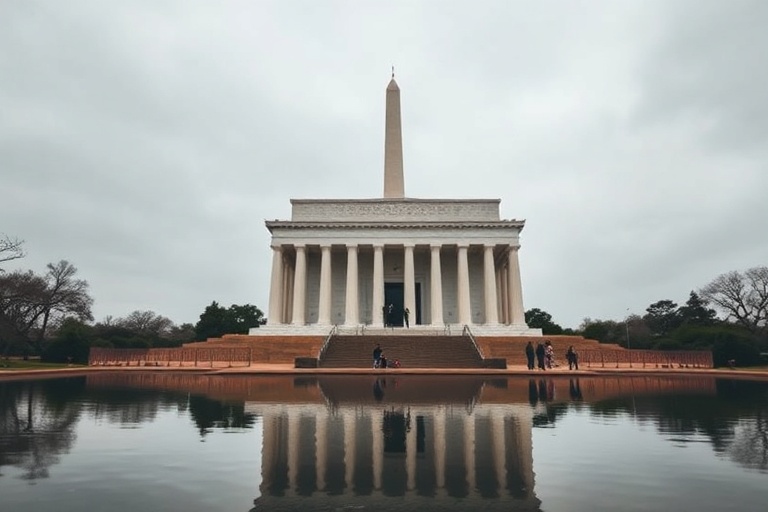
For decades, the Lincoln Memorial Reflecting Pool has stood as a symbol of American democracy and architectural elegance. Its iconic presence in Washington, D.C., draws millions of visitors annually, blending history, art, and civic pride. Yet beneath its serene surface, tensions have simmered over maintenance, access, and environmental impact. The recent lawsuit filed against the National Park Service (NPS) has thrust these issues into the national spotlight, raising questions about who truly controls America’s most hallowed public spaces.
The Roots of the Controversy
The Lincoln Memorial Reflecting Pool, designed by architect Henry Bacon and completed in 1922, was envisioned as a grand water feature that would complement the memorial while offering a place of reflection for visitors. Over time, however, the pool’s upkeep has become a contentious issue. Cracks, algae blooms, and structural concerns have plagued the 2,000-foot-long basin, prompting calls for renovation. Yet the NPS’s approach to addressing these problems has drawn criticism from preservationists, disability advocates, and environmental groups alike.
The lawsuit, filed by the National Parks Conservation Association (NPCA) and several local organizations, argues that the NPS’s planned repairs—including the use of heavy machinery and potential dredging—could irreparably damage the pool’s historic integrity. The plaintiffs contend that the agency has failed to conduct adequate environmental reviews under the National Environmental Policy Act (NEPA) and has ignored input from the public. Meanwhile, the NPS maintains that the renovations are necessary to prevent further deterioration and ensure accessibility for all visitors.
This legal battle is more than a dispute over infrastructure. It reflects broader debates about how public spaces should be managed in an era of climate change, urbanization, and heightened civic engagement. The Reflecting Pool is not just a feature of Washington’s landscape; it is a microcosm of America’s evolving relationship with its built heritage.
A Global Lens: Public Space Disputes Beyond Washington
Washington, D.C., is not alone in grappling with the challenges of maintaining historic public spaces. Cities worldwide have faced similar conflicts, often with high stakes. Consider the case of Venice’s iconic canals, where mass tourism and rising water levels have forced authorities to implement strict regulations on water traffic. Or London’s Trafalgar Square, where debates over pedestrianization and public art have sparked years of controversy.
In each of these examples, the tension lies between preservation and progress. Historic sites are not static relics; they must adapt to modern needs, whether that means accommodating more visitors, addressing environmental concerns, or updating infrastructure. Yet adaptation often comes at a cost—culturally, financially, and socially. The Lincoln Memorial Reflecting Pool lawsuit forces us to ask: Who gets to decide how these spaces evolve? Is it the stewards of history, the government agencies tasked with their care, or the communities who use them daily?
Globally, the trend has been toward greater public involvement in decision-making. Cities like Barcelona and Paris have embraced participatory urban planning, inviting residents to weigh in on changes to public spaces. The Reflecting Pool lawsuit could set a precedent for how such disputes are resolved in the United States, potentially influencing similar battles from national parks to urban landmarks.
Key Players and Their Stakes
The lawsuit has drawn together a diverse coalition of stakeholders, each with their own priorities and concerns.
- National Park Service (NPS): The federal agency responsible for the pool’s upkeep argues that immediate action is required to prevent further damage. They point to structural risks and accessibility issues as justifications for their intervention. However, critics accuse the NPS of prioritizing expediency over historic preservation.
- National Parks Conservation Association (NPCA): The lead plaintiff in the lawsuit, the NPCA advocates for the protection of America’s national parks and historic sites. They contend that the NPS’s plans lack transparency and could harm the pool’s historic features.
- Disability Advocates: Groups like the National Council on Independent Living have raised concerns that the NPS’s proposed repairs could disrupt accessibility features, such as ramps and pathways, for visitors with disabilities.
- Environmental Groups: Organizations such as the Potomac Riverkeeper Network have highlighted the potential ecological impact of dredging and construction, including harm to local wildlife and water quality.
- Local Residents and Visitors: Anchorage in the debate are the people who use the Reflecting Pool daily—tourists seeking a moment of quiet, locals jogging along its edges, and families gathering for photos. Their voices, though often unheard in legal proceedings, underscore the pool’s role as a communal space.
The lawsuit has also ignited discussions about the role of litigation in shaping public policy. Legal battles over historic sites can take years to resolve, leaving landmarks in limbo and communities frustrated. Yet they also serve as a check on government power, ensuring that decisions about shared heritage are not made behind closed doors.
What’s Next? The Path Forward
As the lawsuit unfolds, several potential outcomes could reshape the future of the Lincoln Memorial Reflecting Pool. One possibility is a court-ordered injunction, halting the NPS’s plans until further environmental reviews are completed. Another scenario could involve a negotiated settlement, where the NPS agrees to modify its approach in exchange for dropping the lawsuit.
Regardless of the outcome, the lawsuit has already accomplished something significant: it has forced a broader conversation about how America values its public spaces. The Reflecting Pool is more than a tourist attraction; it is a symbol of the nation’s ideals—a place where people from all walks of life come to reflect, celebrate, and connect. The question now is whether those ideals will guide its preservation or be overshadowed by bureaucracy and legal battles.
For now, the pool remains open to visitors, its waters still reflecting the Lincoln Memorial’s towering columns. But the lawsuit has cast a shadow over its future, reminding us that even the most iconic landmarks are not immune to the complexities of modern governance. As cities worldwide grapple with similar challenges, the Reflecting Pool’s story may well become a case study in the delicate balance between history and progress.
For more insights into how public spaces shape culture and politics, explore our Culture section. To stay updated on legal battles involving historic landmarks, visit our News page.