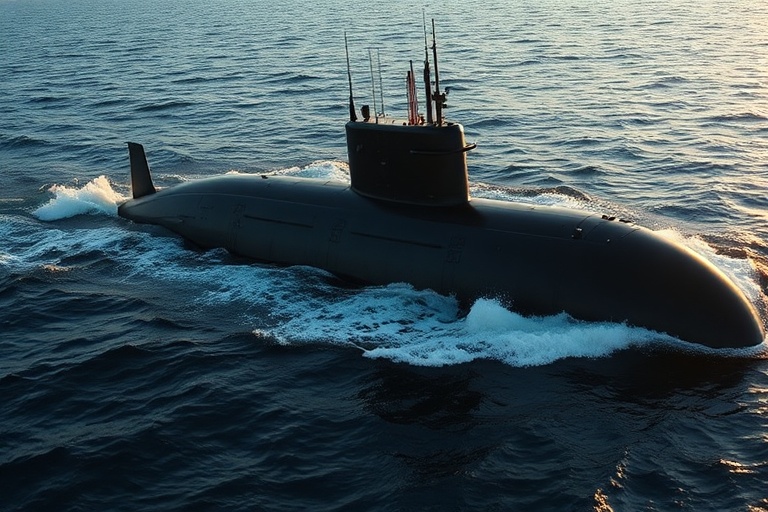
The Ohio-class submarine remains one of the most formidable and strategically significant assets in the United States Navy’s arsenal. Designed during the Cold War as a nuclear deterrent, these submarines have evolved into versatile platforms capable of deploying conventional cruise missiles and special operations forces. Their stealth, endurance, and firepower make them indispensable to modern naval warfare, ensuring American dominance beneath the waves.
With a service life spanning over four decades, the Ohio-class has proven its adaptability through continuous upgrades and modernization. These submarines are not just relics of a bygone era; they are the backbone of the U.S. Navy’s strategic deterrence and power projection capabilities. Understanding their design, mission sets, and broader implications provides insight into the enduring relevance of nuclear-powered submarines in an evolving global security landscape.
The Birth of a Naval Icon
The Ohio-class submarine was born out of necessity during the Cold War’s most tense years. In the early 1970s, the Soviet Union’s submarine fleet posed a significant threat to U.S. naval superiority. The U.S. Navy responded by developing a submarine capable of evading detection while carrying a devastating nuclear arsenal. The first Ohio-class submarine, USS Ohio (SSBN-726), entered service in 1981, marking the beginning of a new era in naval warfare.
These submarines were designed with two primary roles in mind: nuclear deterrence and ballistic missile deployment. Each Ohio-class boat carries up to 24 Trident II D5 submarine-launched ballistic missiles (SLBMs), each capable of delivering multiple independently targetable warheads. This made them a cornerstone of America’s nuclear triad, alongside land-based ICBMs and strategic bombers. The Ohio-class submarines ensured that any potential adversary faced an unwavering second-strike capability, a critical component of Cold War deterrence strategy.
Beyond their nuclear role, the Ohio-class submarines were later adapted to carry Tomahawk cruise missiles, expanding their mission profiles. This versatility allowed them to conduct precision strikes against land-based targets, further solidifying their place as multi-role platforms in the U.S. Navy’s fleet.
Design and Capabilities: Engineering Marvels
The Ohio-class submarines are marvels of naval engineering, combining stealth, endurance, and firepower into a single platform. At over 560 feet long and displacing nearly 19,000 tons submerged, these submarines are among the largest in the world. Their nuclear propulsion systems enable them to operate for decades without refueling, providing unparalleled operational flexibility.
Stealth is a defining feature of the Ohio-class. The submarines are coated with anechoic tiles that absorb sonar waves, making them extremely difficult to detect. Their quiet operation, achieved through advanced propulsion systems and vibration reduction technologies, ensures they can remain undetected in hostile waters for extended periods. This stealth capability is critical for both nuclear deterrence and covert missions.
The Ohio-class submarines are equipped with a range of advanced systems, including:
- Trident II D5 Missiles: Each submarine carries up to 24 of these SLBMs, each capable of delivering multiple warheads to targets thousands of miles away.
- Tomahawk Cruise Missiles: Adapted for land-attack missions, these missiles provide precision strike capabilities against high-value targets.
- Advanced Sonar and Sensors: State-of-the-art systems enable the submarines to detect and track potential threats with unmatched accuracy.
- Special Operations Capabilities: Modified Ohio-class submarines, known as SSGNs, can deploy Navy SEALs and other special forces personnel.
The endurance of these submarines is another key advantage. With a crew of approximately 155 personnel, they can remain submerged for up to 70 days without resurfacing. This extended operational range allows them to patrol distant waters and respond to global crises without the need for frequent port visits.
Mission Sets: From Deterrence to Power Projection
The Ohio-class submarines are uniquely equipped to perform a variety of missions, making them one of the most versatile assets in the U.S. Navy. While their primary role remains nuclear deterrence, their capabilities extend far beyond this singular focus.
One of the most significant adaptations of the Ohio-class was the conversion of four submarines into guided-missile submarines (SSGNs). These boats were stripped of their ballistic missile tubes and refitted to carry up to 154 Tomahawk cruise missiles, along with facilities for special operations forces. This transformation turned them into precision strike platforms capable of supporting a wide range of missions, from combat operations to humanitarian assistance.
The SSGNs have been deployed in conflicts such as the Gulf War, Operation Iraqi Freedom, and the fight against ISIS. Their ability to launch Tomahawk missiles from submerged positions provides a significant tactical advantage, allowing the U.S. to project power without risking the exposure of surface ships or aircraft.
In addition to their strike capabilities, the Ohio-class submarines play a crucial role in intelligence, surveillance, and reconnaissance (ISR) missions. Their stealth and endurance make them ideal platforms for gathering intelligence in denied or contested areas. They can monitor adversary movements, conduct underwater surveys, and provide real-time data to commanders without being detected.
The submarines are also integral to special operations. The SSGNs can deploy Navy SEALs and other special forces personnel directly to hostile shores, providing a clandestine insertion capability that is unmatched by other platforms. This role has become increasingly important in the global fight against terrorism and asymmetric threats.
Broader Implications: The Future of Submarine Warfare
The Ohio-class submarines have shaped the strategic landscape of naval warfare for decades. Their continued relevance in an era of shifting global power dynamics underscores the enduring importance of submarine technology. As new threats emerge and geopolitical tensions rise, the role of these silent giants is likely to expand even further.
One of the most pressing challenges facing the Ohio-class submarines is the proliferation of advanced anti-submarine warfare (ASW) technologies. Countries like Russia and China have invested heavily in developing sophisticated sonar systems, unmanned underwater vehicles, and long-range anti-ship missiles. These advancements pose a significant threat to the stealth and survivability of submarines, including the Ohio-class.
To counter these threats, the U.S. Navy is investing in next-generation submarine technologies. Programs like the Columbia-class submarine, slated to replace the Ohio-class starting in the 2030s, aim to incorporate cutting-edge stealth, propulsion, and sensor systems. These new submarines will build on the legacy of the Ohio-class while addressing emerging challenges.
The Ohio-class submarines also play a critical role in maintaining America’s nuclear deterrence posture. In an era of great power competition, the ability to deploy a survivable second-strike capability remains a cornerstone of strategic stability. The Ohio-class ensures that any potential adversary faces a credible and devastating response to aggression, deterring conflict before it begins.
Beyond their military significance, the Ohio-class submarines have broader implications for global security. Their presence in key regions, such as the Pacific and the Arctic, serves as a reminder of America’s commitment to maintaining a free and open international order. By projecting power beneath the waves, the U.S. Navy reinforces its role as a stabilizing force in an increasingly complex world.
The legacy of the Ohio-class submarines is one of innovation, adaptability, and unmatched capability. As they continue to serve alongside newer platforms, their contributions to naval warfare and strategic deterrence will remain indispensable. The silent giants of the U.S. Navy are far more than just machines; they are symbols of American technological prowess and unwavering commitment to global security.
For those interested in exploring more about naval technology and its broader implications, visit our Technology and News sections. These categories offer in-depth analysis and the latest updates on developments shaping the future of defense and technology.