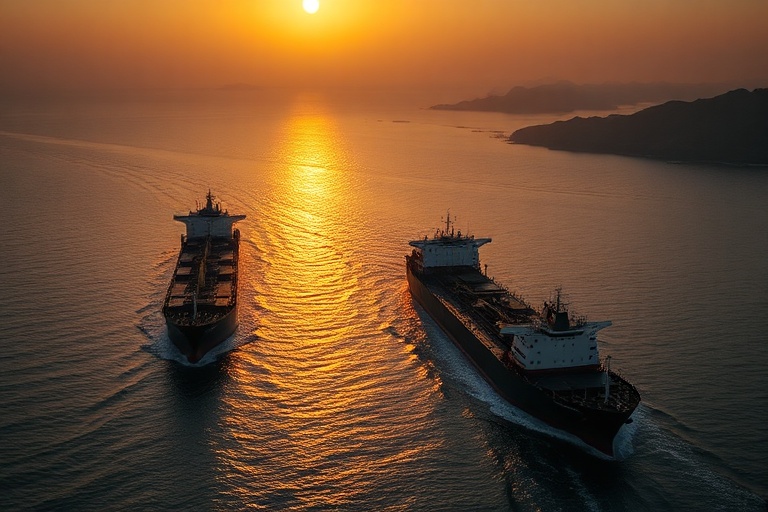
Strait of Hormuz: Why Oil Tankers Are Caught in Geopolitical Crossfire
The Strait of Hormuz is more than just a narrow waterway connecting the Persian Gulf to the Gulf of Oman—it is the world’s most critical chokepoint for oil transportation. Roughly one-fifth of the world’s oil passes through this 34-kilometer-wide passage daily, making it a focal point for international diplomacy, military strategy, and economic stability.
For decades, the Strait of Hormuz has been a flashpoint in global energy markets. Disruptions here, whether caused by political tensions, military incidents, or environmental risks, send ripple effects across economies. Understanding its role requires examining its geography, geopolitical significance, and the vulnerabilities it exposes in the global oil supply chain.
The Geography and Strategic Importance of the Strait
Located between Iran and Oman, the Strait of Hormuz is a mere 21 miles wide at its narrowest point. This constriction forces nearly all oil tankers from Saudi Arabia, Iraq, the UAE, Kuwait, and Iran to navigate a single, heavily trafficked lane. The strait’s shallow waters and narrow channels complicate safe passage, especially for the largest supertankers.
Two primary shipping routes exist through the strait:
- Inbound Route (Persian Gulf to Gulf of Oman): Used by tankers leaving major oil terminals such as Ras Tanura (Saudi Arabia) and Kharg Island (Iran).
- Outbound Route (Gulf of Oman to Persian Gulf): Followed by tankers entering the Persian Gulf to load crude from Kuwait and Iraq.
These routes are monitored closely by regional navies and international maritime organizations. The strait’s depth—averaging just 60 meters—limits vessel size, while its strategic depth amplifies its geopolitical weight. The proximity to Iran, a country with a history of asserting control over the strait during periods of tension, adds another layer of complexity.
Geopolitical Tensions and Recent Incidents
Tensions in the Strait of Hormuz have flared repeatedly over the past two decades. In 2019, attacks on oil tankers near Fujairah (UAE) and the shooting down of a U.S. drone by Iran heightened fears of a broader conflict. Earlier, in 2012, Iran threatened to close the strait in response to sanctions, temporarily disrupting oil flows.
Recent incidents have underscored the fragility of the situation. In 2021, an Israeli-linked tanker was attacked near Oman, killing two crew members. Iran denied involvement but was widely suspected. Such events highlight how proxy conflicts and regional rivalries can spill into critical shipping lanes.
These incidents are not isolated. They reflect a broader pattern of escalation where regional powers—Saudi Arabia, Iran, the UAE, and external actors like the U.S. and China—vie for influence. The strait’s closure, even temporarily, could remove up to 17 million barrels of oil from global markets per day, causing prices to spike and supply chains to falter.
The Broader Implications for Global Energy Markets
The Strait of Hormuz is often described as the world’s energy jugular. Its disruption doesn’t just affect oil prices—it reshapes global energy strategies. Countries dependent on Gulf oil, such as China, India, and Japan, have sought to diversify supply routes through pipelines and alternative ports to reduce reliance on the strait.
For example, Saudi Arabia has invested in the East-West Pipeline, which bypasses the strait by transporting oil from the Persian Gulf to the Red Sea. Similarly, the UAE has built the Habshan-Fujairah pipeline to move oil directly to its eastern coast. These efforts aim to mitigate risks but do not eliminate dependence on the strait entirely.
The economic stakes are immense. According to the U.S. Energy Information Administration, any prolonged closure could lead to a supply shortfall that triggers price surges, inflation, and even recessionary pressures in oil-importing nations. The 1979 Iranian Revolution and the 1980s Iran-Iraq War demonstrated how quickly disruptions can escalate into crises with global consequences.
Moreover, the strait’s role in natural gas transportation adds another dimension. Qatar, the world’s largest liquefied natural gas (LNG) exporter, relies on the strait to ship gas to Asia and Europe. A disruption here could destabilize energy markets beyond oil, affecting industries from plastics to heating.
Navigating the Future: Risks and Responses
The future of the Strait of Hormuz remains uncertain. Several factors could influence its stability:
- Diplomatic Efforts: The Iran nuclear deal (JCPOA) and ongoing negotiations could ease tensions, but regional distrust runs deep. Without trust-building measures, diplomatic breakthroughs remain fragile.
- Military Posturing: The U.S. Fifth Fleet, based in Bahrain, patrols the region, while Iran has demonstrated its ability to disrupt shipping with mines, drones, and fast-attack boats. The balance of deterrence is delicate.
- Technological Innovations: Drones, satellite surveillance, and AI-driven maritime security systems are being deployed to monitor the strait more effectively. However, these tools also raise concerns about escalation and miscalculation.
- Alternative Routes: Investment in pipelines, rail networks, and LNG terminals in East Africa and the Mediterranean could reduce reliance on the strait, but these projects require decades and billions in funding.
One potential game-changer is the shift toward renewable energy. As countries accelerate their transition away from fossil fuels, the strategic importance of oil chokepoints like Hormuz may diminish over time. Still, for the next decade, oil will remain central to global energy systems, ensuring that the strait retains its outsized influence.
Another critical factor is climate change. Rising sea levels and extreme weather events could alter shipping patterns, potentially increasing risks in the strait. The combination of geopolitical tension and environmental stress creates a volatile mix that demands proactive management.
A Path Forward: Cooperation or Conflict?
The Strait of Hormuz embodies the intersection of energy security, geopolitics, and environmental sustainability. While military presence and economic diversification offer partial solutions, long-term stability will require cooperation among regional and global actors. The 2022 maritime security talks in Muscat, Oman, offered a glimmer of hope, but trust remains in short supply.
For now, the world watches closely as tankers continue to navigate these treacherous waters. Each vessel passing through the strait carries not just oil, but the weight of global economic stability. The next incident—whether a miscalculation, an attack, or a diplomatic breakthrough—could redefine the future of energy and security for decades to come.
One thing is clear: the Strait of Hormuz will remain a defining feature of the 21st-century energy landscape, demanding attention, innovation, and, above all, caution.
For more on global energy dynamics, visit our News and Analysis sections.