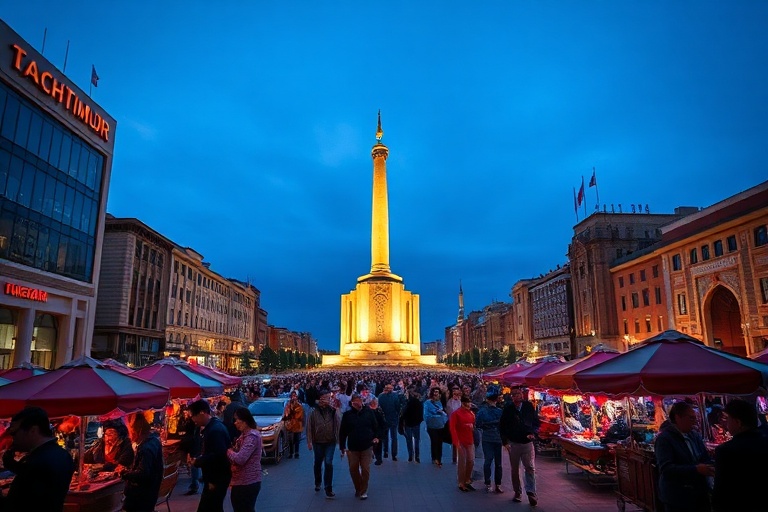
Nestled between the Tien Shan mountains and the vast Kyzylkum Desert, Tashkent stands as Uzbekistan’s beating heart—a city where ancient Silk Road traditions blend seamlessly with forward-thinking modernity. Unlike its more touristy counterparts in the region, Tashkent offers an authentic, less-commercialized experience, making it a compelling destination for travelers and culture enthusiasts alike. The city’s resilience is evident in its architecture, cuisine, and people, all of which have evolved through centuries of trade, conquest, and innovation.
The Historical Layers of Tashkent
Tashkent’s history stretches back over 2,000 years, with roots as a key stop on the Silk Road. The city has been shaped by Persian, Turkic, Mongol, and Russian influences, each leaving an indelible mark on its cultural landscape. Earthquakes have repeatedly reshaped the city, most notably in 1966 when a devastating tremor leveled much of the old town, leading to a modernist reconstruction under Soviet rule. Yet, Tashkent preserved its historical soul, particularly in its surviving madrasas, mosques, and bazaars.
The city’s most iconic landmark, the Kukeldash Madrasah, dates back to the 16th century and once served as a center of Islamic education. Nearby, the Barak-Khan Madrasah and the Tilla Sheikh Mosque complex offer a glimpse into Tashkent’s spiritual heritage. Meanwhile, the Chorsu Bazaar—one of Central Asia’s largest domed markets—remains a vibrant hub where merchants sell everything from fresh produce to handwoven textiles, echoing the city’s mercantile past.
Key Historical Sites in Tashkent
- Kukeldash Madrasah – A 16th-century Islamic school with stunning tilework.
- Chorsu Bazaar – A sprawling market under a massive blue dome.
- Amir Timur Museum – Dedicated to the Turco-Mongol conqueror who shaped Central Asian history.
- Tashkent Metro – Known as the “Palaces of the People,” these Soviet-era stations feature intricate mosaics and sculptures.
Cultural Renaissance and Modern Identity
In recent years, Tashkent has undergone a cultural renaissance, driven by Uzbekistan’s post-Soviet openness and economic reforms. The government has invested heavily in restoring historical sites, promoting the arts, and fostering tourism. The annual Tashkent International Film Festival, for example, has gained international acclaim, attracting filmmakers from across the globe. Meanwhile, the city’s contemporary art scene is thriving, with galleries like the Uzbekistan Museum of Arts showcasing both traditional and avant-garde works.
Cuisine is another area where Tashkent shines. Uzbek food is a sensory delight, characterized by hearty dishes like plov (a saffron-infused rice dish with meat), lagman (hand-pulled noodles in a rich broth), and samsa (flaky meat pies baked in a tandoor). The city’s tea houses, or “chaikhanas,” remain social epicenters where locals gather to sip green tea and discuss everything from politics to football. For those seeking a modern twist, Tashkent’s growing café culture offers artisanal coffee and fusion dishes, reflecting the city’s evolving palate.
Tashkent as a Hub of Innovation and Connectivity
Beyond its cultural riches, Tashkent is positioning itself as a regional hub for technology and business. The city’s strategic location—at the crossroads of Central Asia—makes it an ideal gateway for trade between Europe and Asia. In 2018, Uzbekistan launched a series of economic reforms aimed at attracting foreign investment, and Tashkent has been a primary beneficiary. The Tashkent City project, a $1.7 billion development, promises to transform the city center with skyscrapers, green spaces, and smart infrastructure.
Education is another area of growth. The city is home to several universities, including the University of World Economy and Diplomacy, which attracts students from across Central Asia. Meanwhile, initiatives like the Tashkent Tech Park are fostering startups in fields ranging from renewable energy to IT, positioning Uzbekistan as a rising player in the global tech landscape.
Why Tashkent Matters in the Broader Context
- Geopolitical Significance – Tashkent’s location makes it a critical player in regional trade and diplomacy, particularly as Central Asia strengthens ties with China, Russia, and the West.
- Cultural Diplomacy – By investing in its artistic and historical heritage, Uzbekistan is using soft power to enhance its global image and attract tourists.
- Economic Transformation – The city’s shift toward technology and innovation reflects broader trends in Central Asia, where governments are seeking to diversify economies beyond traditional industries.
- Urban Development – Tashkent’s modern infrastructure projects serve as a model for other Central Asian cities grappling with rapid urbanization.
Conclusion: Tashkent’s Place in the World
Tashkent is more than just a stop on the Silk Road; it is a city of contrasts, where the past and future coexist in dynamic harmony. Its resilience, creativity, and strategic importance make it a microcosm of Central Asia’s broader transformation. For travelers, it offers an unfiltered glimpse into a region often overlooked by mainstream tourism. For policymakers and investors, it represents a gateway to untapped potential in one of the world’s most strategically vital regions.
As Uzbekistan continues to open its doors to the world, Tashkent stands ready to welcome visitors with open arms—and an unforgettable experience. Whether you’re drawn by its history, its cuisine, or its ambition, the city leaves a lasting impression, proving that sometimes the most extraordinary destinations are those you least expect.
For those interested in exploring more about Central Asian culture and travel, visit our Travel and Culture sections for additional insights and guides.