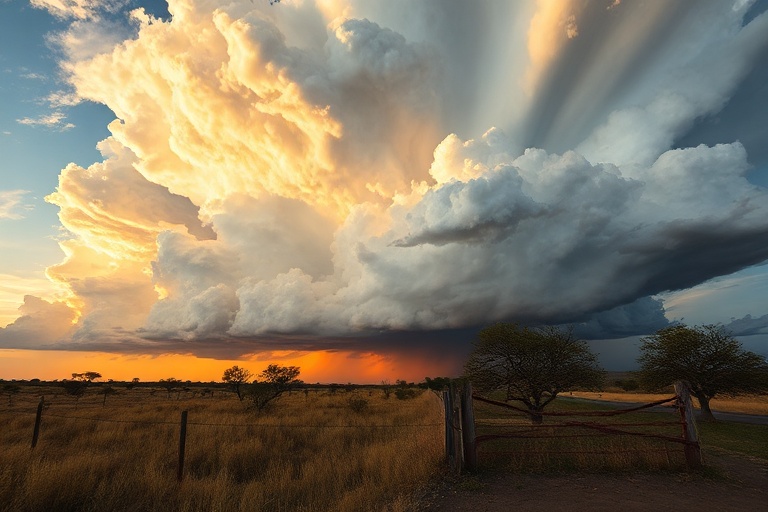
Texas Weather Forecast: Tracking Storms, Heat, and Climate Trends
Texas occupies a unique climatic crossroads where continental air masses, subtropical moisture, and coastal dynamics collide. The state’s weather forecast is rarely routine—whether it’s the violent squalls that roll off the High Plains, the punishing heat domes that bake the Rio Grande Valley, or the tropical cyclones that menace the Gulf Coast. For residents, emergency planners, and even distant industries, understanding these patterns isn’t just academic; it’s a matter of safety, economics, and resilience.
Across the Lone Star State, seasonal transitions can flip in a matter of days. A dry February in Amarillo can give way to a blizzard in March, while Houston’s June humidity can suddenly yield to the first tropical wave of the season. This volatility shapes everything from agricultural calendars to energy markets, making accurate, localized forecasting essential. Recent years have only intensified this need, with climate trends amplifying extremes and testing both infrastructure and public preparedness.
How Texas Weather Forecasts Are Built: Science, Satellites, and Local Knowledge
Modern weather forecasting in Texas blends global-scale modeling with hyperlocal observation. The National Weather Service operates a dense network of automated surface observing systems (ASOS), weather balloons, and Doppler radar installations across the state. These tools feed into supercomputers running advanced numerical models like the Global Forecast System (GFS) and the European Centre for Medium-Range Weather Forecasts (ECMWF).
But raw data alone doesn’t tell the full story. Texas forecasters rely heavily on local expertise—meteorologists who understand the subtle interactions between the Chihuahuan Desert, the Gulf of Mexico, and the Rocky Mountain lee trough. For instance, the “dryline” phenomenon, where warm, dry air from the west meets humid Gulf air, often triggers severe thunderstorms in North Texas. Recognizing its position and movement can mean the difference between a quiet afternoon and a tornado outbreak.
- Radar coverage: Texas hosts one of the densest radar networks in the U.S., with sites in Lubbock, Midland, Dallas, Houston, and Corpus Christi, all feeding real-time data into forecasting models.
- Storm spotters: The National Weather Service trains thousands of volunteer storm spotters—often emergency responders, teachers, and outdoor workers—who provide ground truth during severe events.
- Climate normals: Forecasters compare current conditions to 30-year averages, helping identify when a heat wave or cold snap falls outside historical bounds.
Private-sector platforms, including commercial weather services and apps, supplement public data with proprietary models and AI-driven pattern recognition. Companies like Weather Underground and AccuWeather integrate crowd-sourced reports with satellite imagery to refine forecasts down to the neighborhood level. In cities like San Antonio and Austin, microclimate effects—such as the urban heat island or the “funnel effect” of hill country valleys—require even higher resolution modeling.
Seasonal Extremes: From Arctic Blasts to Saharan Dust and Everything In Between
Texas experiences a climate that is, in many ways, a microcosm of global extremes. Winter can bring Arctic intrusions that plunge temperatures below zero in the Panhandle, while summer routinely pushes heat indices above 110°F in the Rio Grande Valley. Spring and fall serve as battlegrounds for severe storms and tropical systems, respectively.
Consider the winter of 2021, when a polar vortex collapse sent subzero air surging southward. Texas was not prepared for the scale of the event. Power grids failed, water lines froze, and hundreds died in the cold. The crisis exposed vulnerabilities in energy infrastructure and emergency planning, prompting reforms in grid reliability and cold-weather preparedness. It also became a global case study in how even advanced economies can be caught off guard by climate anomalies.
Contrast that with the summer of 2023, when a prolonged heat dome parked over the southern Plains pushed temperatures in Del Rio and Laredo into record territory. The extreme heat accelerated drought conditions, stressed the electrical grid, and contributed to a surge in heat-related illnesses. Such events are becoming more frequent, with studies showing that Texas is warming faster than the global average due to urbanization and greenhouse gas emissions.
Meanwhile, the Gulf Coast braces for hurricane season each year. While major hurricanes like Harvey (2017) and Ike (2008) dominate headlines, even weaker storms can cause catastrophic flooding in Houston’s sprawling metroplex. Forecasters now emphasize “compound flooding” risks—where storm surge combines with heavy rainfall and riverine flooding—to improve evacuation planning and infrastructure design.
Cultural and Economic Ripples: How Weather Shapes Texas Life
Weather in Texas isn’t just a scientific curiosity; it’s woven into the state’s identity and economy. Agriculture, which contributes over $24 billion annually to the state’s GDP, depends on seasonal forecasts for planting and harvesting decisions. Cotton farmers in the Rolling Plains, for instance, monitor soil moisture and frost dates to avoid yield losses. A delayed spring can mean the difference between profit and loss for an entire growing season.
The energy sector is equally weather-dependent. Oil and gas operations in the Permian Basin and Eagle Ford Shale are vulnerable to extreme heat, cold snaps, and hurricanes. A single Category 3 storm can shut down offshore platforms and refineries for weeks, disrupting global fuel markets. In 2020, Hurricane Laura forced the shutdown of nearly 90% of Gulf oil production, sending gasoline prices higher across the southern U.S.
Culturally, Texans have developed a distinct relationship with weather. The phrase “if you don’t like the weather in Texas, wait five minutes” reflects both the state’s size and its climatic diversity. From the annual State Fair of Texas in Dallas—where heat advisories are common—to the coastal festivals in Galveston that adapt to hurricane season, weather shapes social rhythms. Even sports culture reflects this. High school football season in West Texas begins under scorching late-summer heat, while coastal communities adjust game schedules during peak hurricane season.
Tourism is another sector deeply influenced by weather. The Texas Hill Country attracts visitors with mild winters and wildflower seasons, while South Padre Island draws crowds during spring break, often dodging early-season storms. Climate change is now prompting tourism boards to rethink marketing strategies, emphasizing shoulder seasons and indoor attractions during peak heat or storm risks.
Looking Ahead: Technology, Climate Change, and the Future of Texas Forecasting
The next frontier in Texas weather forecasting lies in precision, timing, and communication. Advances in machine learning are improving short-term severe weather prediction, helping forecasters issue warnings with greater lead time. Projects like NOAA’s Warn-on-Forecast system aim to provide neighborhood-level tornado warnings within minutes of development.
Climate change is altering the baseline for these forecasts. Warmer Gulf waters are fueling stronger hurricanes, while a more energetic atmosphere is increasing the frequency of extreme rainfall events. The 2023–2024 El Niño, for example, brought record rainfall to Central Texas, causing widespread flooding. These shifts demand updated infrastructure standards, including floodplain mapping, stormwater systems, and resilient power grids.
Public communication is also evolving. Social media platforms now serve as critical channels for real-time updates, with emergency managers using Twitter, Facebook, and Nextdoor to reach residents directly. However, misinformation remains a challenge, particularly during rapidly developing events. Forecasters and local leaders are increasingly partnering with community organizations to ensure accurate, culturally relevant messaging reaches diverse populations.
Looking further ahead, Texas may see the emergence of new forecasting tools tailored to its unique geography. Concepts like “nowcasting”—real-time forecasting over minutes to hours—are gaining traction, especially in urban centers like Dallas-Fort Worth and Houston, where flash flooding is a persistent threat. The integration of satellite data, drone observations, and citizen weather stations could soon make hyperlocal forecasting a reality.
For now, Texans continue to live with the state’s mercurial skies—celebrating bluebonnet season, bracing for ice storms, and watching the Gulf horizon during hurricane season. Weather forecasting in Texas is not just about predicting the next storm; it’s about preparing communities, protecting livelihoods, and preserving a way of life that has thrived under the state’s ever-changing climate.
As technology improves and climate patterns shift, one thing remains certain: the weather in Texas will always demand attention, respect, and a bit of that legendary Lone Star adaptability.