United States Customs and Border Protection: Balancing Security and Global Connectivity
Since its inception in 2003, United States Customs and Border Protection (CBP) has evolved into one of the world’s most complex border enforcement agencies. Operating under the Department of Homeland Security, CBP is tasked with a dual mandate: protecting the nation’s borders while facilitating legitimate trade and travel. This balance is increasingly tested in a globalized era where over 1 million people and $2 billion in goods cross U.S. borders daily. The agency’s work reflects broader tensions between sovereignty and connectivity, security and accessibility—issues that resonate far beyond American shores.
CBP’s origins trace back to the U.S. Customs Service, established in 1789 under the first Congress. Over centuries, its role expanded from collecting tariffs to combating smuggling, enforcing immigration laws, and eventually, countering terrorism. Today, the agency employs more than 60,000 personnel across land, air, and maritime environments. Its global footprint includes partnerships with customs authorities in over 100 countries through programs like the World Customs Organization (WCO). This international cooperation underscores CBP’s role not just as a domestic guardian, but as a key player in shaping global trade standards.
The Structure and Scope of CBP Operations
CBP’s responsibilities are divided among four major operational components: Border Patrol, Office of Field Operations, Air and Marine Operations, and Trade. Each unit addresses distinct challenges while contributing to the agency’s unified mission.
Border Patrol focuses on preventing illegal entry along 6,000 miles of land borders and 2,000 miles of coastal waters. With over 20,000 agents, it is one of the largest uniformed law enforcement organizations in the world. The unit deploys advanced surveillance technology, including drones and thermal imaging, and collaborates with Mexican and Canadian counterparts to disrupt human trafficking and drug cartels.
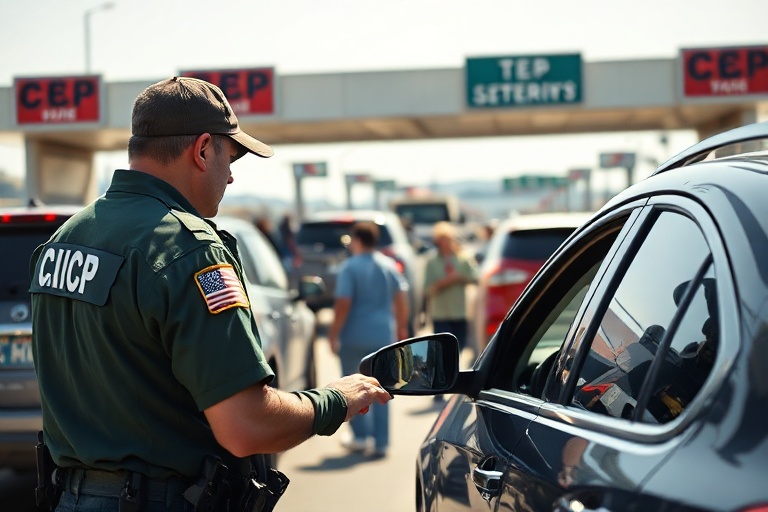
Office of Field Operations manages the flow of people and goods at 328 ports of entry, from major hubs like Los Angeles International Airport to remote land crossings in Alaska. Officers screen 300 million travelers and 30 million cargo containers annually. Their work involves biometric verification, risk assessment algorithms, and real-time intelligence sharing with Interpol and Europol.
Air and Marine Operations safeguards U.S. airspace and maritime zones using a fleet of aircraft, helicopters, and interceptor vessels. It intercepts unauthorized drones, drug-smuggling boats, and even potential airborne threats—such as those seen on September 11, 2001.
Trade oversees the entry of goods valued at over $2.7 trillion each year. CBP enforces trade laws that protect intellectual property, prevent illegal goods like counterfeit medicines, and ensure compliance with environmental and labor standards. Its Centers of Excellence and Expertise streamline inspections for high-risk shipments while accelerating clearance for trusted traders under programs like the Customs-Trade Partnership Against Terrorism (C-TPAT).
Cultural and Global Implications of CBP’s Work
The influence of CBP extends well beyond U.S. borders, shaping global perceptions of safety, fairness, and mobility. In many ways, the agency acts as a gatekeeper for the American Dream—a symbol both of opportunity and exclusion. Its policies influence migration flows from Central America, the Caribbean, and beyond, often sparking international debate.
For example, the agency’s role in family separation policies during the 2018 zero-tolerance initiative drew global condemnation. Images of children in detention facilities circulated worldwide, prompting protests in Europe, Latin America, and Africa. While the policy was later modified, the incident highlighted how CBP decisions reverberate across continents, affecting diplomatic relations and humanitarian narratives.
Conversely, CBP’s facilitation of global trade supports economies from Asia to Europe. Efficient clearance of goods at U.S. ports helps maintain just-in-time supply chains that power industries in Germany, Japan, and Mexico. The agency’s Trusted Trader programs have inspired similar initiatives in the European Union and Canada, fostering a culture of compliance and cooperation in international logistics.
Culturally, CBP serves as a symbol of American authority in an era of porous borders and digital connectivity. Its use of facial recognition technology at airports—now deployed in over 20 major U.S. airports—has sparked discussions about privacy and surveillance not only in the U.S. but in nations like the UK and Australia, which are adopting similar systems. The tension between security and civil liberties is not unique to America; it is a global conversation.
Challenges and the Future of Border Enforcement
CBP faces a rapidly evolving threat landscape. Climate change is altering migration patterns, with rising sea levels and droughts pushing people from Central America and the Pacific Islands toward the U.S. and Australia. Meanwhile, the rise of e-commerce and digital trade has created new avenues for smuggling synthetic drugs like fentanyl, which now accounts for over 70,000 overdose deaths annually in the U.S.
The agency is also adapting to technological disruption. Artificial intelligence is being integrated into cargo screening, drones are monitoring vast desert regions, and blockchain is being piloted to secure supply chains. Yet, these innovations raise ethical questions: How much surveillance is too much? Can AI reduce bias in inspections, or will it amplify existing inequalities?
Another pressing challenge is staffing. CBP has faced persistent criticism over hiring delays, training backlogs, and retention issues—particularly in remote posts like the U.S.-Canada border in North Dakota. The agency has responded by expanding recruitment efforts, including outreach to bilingual communities and veterans, and by improving training facilities with immersive simulations.
Looking ahead, CBP is likely to play an even larger role in climate adaptation and cybersecurity. As extreme weather events increase, the agency may need to manage climate-induced migration flows. Similarly, as global trade shifts online, CBP will need to monitor digital contraband, from counterfeit luxury goods to illicit wildlife products sold through dark web marketplaces.
A Delicate Balance
Ultimately, CBP embodies a paradox at the heart of modern nationhood: the desire to welcome the world while protecting it. Its officers are often the first and last faces travelers and traders encounter when crossing into the United States. In that role, they carry the weight of national identity—balancing hospitality with vigilance, openness with control.
As global migration continues to rise and digital commerce blurs traditional borders, the agency’s challenge will only intensify. Success will depend not just on technological prowess or enforcement tactics, but on the ability to maintain public trust and international cooperation. In an era of division, CBP’s work reminds us that borders are not just lines on a map—they are living systems of law, culture, and human aspiration.
For those interested in how border policies intersect with global culture, Travel offers a broader perspective on how nations manage movement and identity. Meanwhile, Politics provides deeper analysis into the legislative and ethical debates shaping enforcement worldwide.