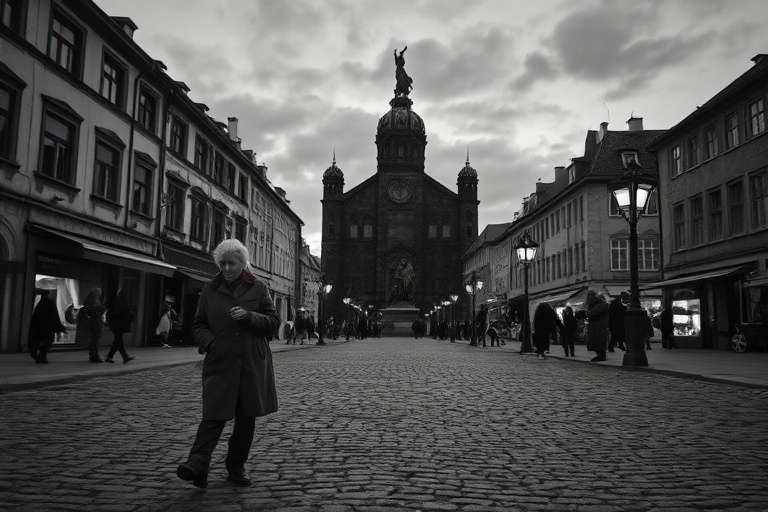
Nestled in the heart of Germany, the city of Weimar stands as a testament to artistic brilliance and intellectual fervor. Often overshadowed by Berlin’s modern dynamism, Weimar’s historical significance stretches back centuries, weaving together threads of literature, philosophy, and visual arts. Its golden age in the late 18th and early 19th centuries transformed it into a cultural epicenter that continues to inspire.
The city’s influence is not confined to its past. Weimar remains a living museum, where cobblestone streets echo with the footsteps of Goethe and Schiller, and Bauhaus architecture defines a revolutionary design movement. From the Weimar Republic’s turbulent years to its role in shaping modern aesthetics, the city’s legacy is both profound and multifaceted. This article explores Weimar’s historical significance, its cultural contributions, and its enduring impact on contemporary thought.
The Golden Age of Weimar Classicism
Weimar’s transformation into a cultural hub began in the late 1700s, when Duchess Anna Amalia invited prominent figures to court. This period, known as Weimar Classicism, saw the collaboration of Johann Wolfgang von Goethe and Friedrich Schiller, two titans of German literature. Their partnership produced some of the most enduring works in Western canon, including Goethe’s Faust and Schiller’s Wilhelm Tell.
Their work was not merely artistic; it was philosophical. Goethe’s fascination with nature and human experience, combined with Schiller’s focus on freedom and morality, created a synergy that defined an era. The Weimar Theater, established under Anna Amalia’s patronage, became a stage for these ideas, fostering a new kind of intellectual discourse.
This era also saw the rise of Johann Gottfried Herder, whose theories on cultural nationalism influenced thinkers across Europe. Herder’s belief in the uniqueness of each culture laid groundwork for modern anthropology and comparative literature. Together, these figures turned Weimar into a laboratory of ideas, where art and philosophy intersected in unprecedented ways.
Key Figures of Weimar Classicism
- Johann Wolfgang von Goethe – Poet, playwright, and statesman whose works bridged Romanticism and Enlightenment ideals.
- Friedrich Schiller – Dramatist and historian whose plays explored themes of freedom, justice, and human dignity.
- Johann Gottfried Herder – Philosopher and theologian who championed cultural diversity and the power of language.
- Anna Amalia of Brunswick-Wolfenbüttel – Duchess whose patronage transformed Weimar into a cultural magnet.
The Bauhaus Movement: Revolutionizing Design
Weimar’s cultural legacy extends beyond literature into the realm of design and architecture. In 1919, Walter Gropius founded the Bauhaus school in Weimar, marking a radical departure from traditional art education. The Bauhaus movement sought to unite craftsmanship with fine arts, emphasizing functionality, simplicity, and mass production.
Under Gropius’s leadership, the school attracted visionaries like Wassily Kandinsky, Paul Klee, and László Moholy-Nagy. Their experimental approaches challenged conventional aesthetics, blending art with industry. The Bauhaus aesthetic—characterized by clean lines, geometric forms, and an absence of ornamentation—would go on to influence modern architecture, furniture design, and even typography.
Despite its short tenure in Weimar (the school relocated to Dessau in 1925 due to political pressure), the Bauhaus’s principles endured. Its emphasis on interdisciplinary collaboration and problem-solving remains foundational in contemporary design education. Today, Weimar’s Bauhaus Museum preserves this legacy, showcasing artifacts that continue to inspire designers worldwide.
For those interested in exploring Weimar’s artistic heritage further, the Culture section on Dave’s Locker offers curated insights into similar movements.
Weimar and the Birth of the Republic
The name “Weimar” carries another layer of historical weight: the Weimar Republic (1919–1933), Germany’s first democratic experiment. Born in the aftermath of World War I, the republic was named after the city where its constitution was drafted. This period was marked by both innovation and instability, as Germany grappled with economic crisis, political extremism, and cultural upheaval.
Artistically, the Weimar Republic was a golden age for cinema, literature, and cabaret. Filmmakers like Fritz Lang and F.W. Murnau pushed boundaries with expressionist techniques, while writers such as Bertolt Brecht and Alfred Döblin explored social realism. The city’s nightlife flourished, with venues like the Weimarer Republik becoming hubs for avant-garde expression.
Yet this era was also fraught with turmoil. Hyperinflation in the early 1920s devastated the economy, and political factions—from communists to far-right groups—clashed in the streets. The republic’s fragility ultimately paved the way for the rise of the Nazi Party, which would later dismantle its democratic institutions. Weimar’s role in this history is a reminder of the delicate balance between progress and regression in any society.
Weimar Today: Preserving the Past, Inspiring the Future
Modern Weimar is a city of contrasts. Its historic center, a UNESCO World Heritage Site, draws visitors from around the world to landmarks like Goethe’s House and the Schiller Museum. Yet Weimar is also a city looking forward, hosting festivals that celebrate its cultural heritage while engaging with contemporary issues.
The annual Weimarer Zwiebelmarkt, one of Germany’s oldest street festivals, blends tradition with modernity. Held since the 17th century, the festival features local crafts, music, and culinary delights, reflecting Weimar’s enduring connection to its roots. Meanwhile, institutions like the Bauhaus University continue to foster innovation, blending art, technology, and sustainability.
For travelers seeking to immerse themselves in Weimar’s layered history, the city offers more than just museums. Its parks, such as the Ilm Park, provide tranquil spaces where visitors can reflect on the ideas that shaped modern Europe. The Travel section on Dave’s Locker provides additional resources for planning a visit.
Why Weimar Still Matters
Weimar’s story is one of resilience, creativity, and transformation. It challenges us to consider how cultural movements shape societies and how societies, in turn, shape culture. From the literary masterpieces of Goethe to the revolutionary designs of the Bauhaus, Weimar’s contributions are woven into the fabric of modernity.
In an age where art and politics often collide, Weimar serves as a case study in the power of ideas. Its lessons—about collaboration, experimentation, and the fragility of democracy—are as relevant today as they were centuries ago. Whether through its historic sites or its contemporary festivals, Weimar invites us to engage with the past while imagining the future.
As we walk its streets, we are reminded that greatness is not merely a relic of history but a living, evolving force. Weimar endures because it continues to inspire, challenge, and provoke thought. In a world that often prioritizes speed over substance, Weimar stands as a quiet but insistent call to slow down, reflect, and create.