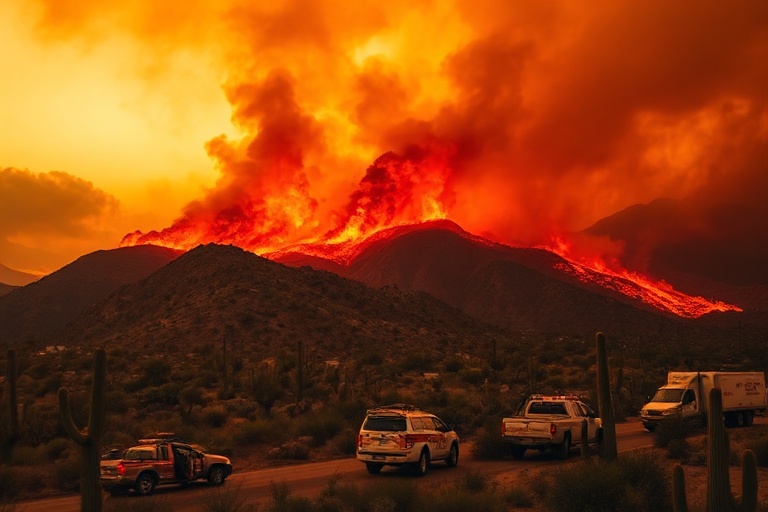
The Wickenburg Fire, which ignited in the early hours of June 12, 2024, quickly became one of the most challenging wildfires in Arizona’s recent history. Originating near the rugged outskirts of Wickenburg, a town known for its desert landscapes and rural charm, the fire spread with alarming speed due to dry conditions and gusty winds. Within 48 hours, it had consumed over 12,000 acres, prompting evacuations and straining local emergency resources.
Residents described the scene as surreal—a wall of flames advancing toward homes and businesses, illuminated by an eerie orange glow against the pre-dawn sky. Firefighters from multiple agencies, including the Arizona Department of Forestry and Fire Management, worked around the clock to contain the blaze. Their efforts were complicated by rugged terrain and limited access points, making ground operations difficult.
The Spark That Started It All
The fire’s ignition point was traced to a lightning strike in the Bradshaw Mountains, approximately five miles southwest of Wickenburg. Investigators ruled out human activity, though the cause remains under review for official classification. The strike occurred during a particularly dry spell, with humidity levels dropping below 10% and temperatures soaring above 100°F. These conditions created a tinderbox environment, where even a small spark could escalate into a full-blown wildfire.
Meteorologists noted that the region had experienced below-average rainfall for the past six months, leaving vegetation parched and highly flammable. The fire’s rapid growth was also attributed to erratic winds, which shifted direction unpredictably, pushing flames toward populated areas. By the afternoon of June 13, the fire had jumped containment lines, forcing authorities to issue mandatory evacuation orders for nearly 1,500 residents.
Evacuations and Emergency Response
The evacuation process unfolded with a mix of urgency and coordination. Local officials set up a temporary shelter at Wickenburg High School, where evacuees could receive food, water, and updates on the fire’s progress. The school, typically a hub for community events, became a makeshift command center, with volunteers distributing supplies and coordinating transportation for those without vehicles.
Emergency alerts were sent via the Emergency Alert System and social media platforms, urging residents to evacuate immediately. Some homeowners chose to stay behind, attempting to protect their properties with hoses and defensible space tactics. Firefighters, however, strongly discouraged this practice, citing the fire’s unpredictable behavior and the risks posed by falling embers.
Road closures complicated the evacuation, with State Route 93 and several county roads blocked due to thick smoke and active flames. The Arizona Department of Transportation worked to clear debris and reopen routes as safely as possible, but delays were inevitable. For many, the fire became a test of community resilience, as neighbors helped one another navigate the chaos.
The Firefighting Effort: Challenges and Innovations
Containing the Wickenburg Fire required a multi-agency response, with firefighters from as far as California and New Mexico joining local crews. Helicopters and air tankers dropped thousands of gallons of water and fire retardant, but the rugged terrain limited their effectiveness. In some areas, flames advanced at speeds of up to 15 miles per hour, outpacing ground crews.
One of the most innovative tactics employed was the use of drones equipped with thermal imaging cameras. These drones provided real-time data on the fire’s perimeter, helping commanders make critical decisions about where to deploy resources. The technology, though not new, proved invaluable in this scenario, where visibility was often obscured by smoke.
Despite these efforts, the fire’s spread highlighted the limitations of wildfire management in the American West. Agencies are increasingly turning to prescribed burns and forest thinning to reduce fuel loads, but funding and political will remain obstacles. The Wickenburg Fire underscored the need for proactive measures, rather than reactive ones, in the face of climate change and worsening wildfire seasons.
Environmental and Economic Impact
- Habitat Destruction: The fire scorched over 12,000 acres of desert and chaparral, home to species like the desert tortoise and Gila monster. Wildlife officials expressed concerns about long-term ecological damage, as many animals were unable to escape the flames.
- Agricultural Losses: Local ranchers reported damage to grazing lands, with some fences and water sources destroyed. The economic toll on the cattle industry, a cornerstone of Wickenburg’s economy, could take years to recover.
- Tourism Decline: Wickenburg’s tourism industry, which relies on outdoor recreation and events like the World’s Oldest Rodeo, faced setbacks as trails and campgrounds remained closed. Visitors canceled bookings, fearing lingering smoke or further closures.
- Air Quality Concerns: Smoke from the fire drifted as far as Phoenix, triggering air quality alerts and respiratory issues for sensitive individuals. Public health officials urged residents to limit outdoor activities and use air purifiers where possible.
Community Resilience and Recovery
In the aftermath of the fire, Wickenburg’s spirit shone through. Volunteers organized fundraisers to support displaced families, while local businesses donated supplies and services. The Wickenburg Chamber of Commerce launched a relief fund, with proceeds going toward rebuilding efforts and emergency assistance.
Psychologists noted that the fire’s psychological impact could be as lasting as the physical damage. Many residents experienced symptoms of post-traumatic stress, including anxiety and sleeplessness, particularly among children. Community leaders emphasized the importance of mental health resources, partnering with organizations like the American Red Cross to provide counseling services.
Recovery will be a long road. Rebuilding homes and infrastructure will require coordination between state agencies, insurance companies, and homeowners. Meanwhile, the fire’s scars serve as a reminder of the growing threat posed by wildfires in the era of climate change. For Wickenburg, the fight is far from over—but neither is the community’s determination.
Lessons Learned and Moving Forward
The Wickenburg Fire offers several key takeaways for communities across the West. First, the importance of preparedness cannot be overstated. Residents are encouraged to create defensible space around their properties, clear dry vegetation, and have an evacuation plan in place. Local governments, too, must invest in early warning systems and public education campaigns.
Second, the fire highlighted the need for interagency collaboration. Wildfires often cross jurisdictional boundaries, requiring seamless communication between federal, state, and local entities. The Wickenburg Fire demonstrated how shared resources and coordinated efforts can save lives and property.
Finally, the disaster underscored the role of climate change in intensifying wildfire seasons. Rising temperatures, prolonged droughts, and erratic weather patterns create conditions that favor large, destructive fires. Policymakers and scientists are now calling for a shift toward long-term solutions, such as forest restoration and carbon reduction strategies.
As Wickenburg begins to rebuild, the community’s resilience will be its greatest asset. The fire may have tested their resolve, but it has also revealed the strength of their bonds. In the face of adversity, they have shown that even the most daunting challenges can be overcome—one step at a time.