Volkswagen’s Wolfsburg: Europe’s Automotive Powerhouse
Nestled in the Lower Saxon plains of northern Germany, Wolfsburg stands as a city built by—and for—the automobile. Home to Volkswagen, one of the world’s largest car manufacturers, this planned industrial city is more than just an industrial hub; it’s a living testament to 20th-century urban design, labor movements, and global automotive influence. Unlike most European cities that evolved organically over centuries, Wolfsburg was constructed in the 1930s specifically to support a single industry: the production of the people’s car, the Volkswagen Beetle.
Today, Wolfsburg is a blend of modernist architecture, cultural innovation, and working-class heritage. It’s a place where the rhythms of factory shifts intersect with museum visits, where the scent of diesel lingers near high-tech research labs, and where a city of 130,000 people revolves around a single corporate giant. To understand Wolfsburg is to understand the soul of the modern automotive industry—and how one company shaped a nation’s identity and economy.
The Birth of a Company Town
Wolfsburg’s origins are inseparable from the vision of Ferdinand Porsche and the political ambitions of Nazi Germany. In 1938, the city was officially founded as Stadt des KdF-Wagens bei Fallersleben—“City of the Strength Through Joy Car near Fallersleben”—a propaganda-driven project aimed at producing an affordable automobile for the masses. The KdF-Wagen, later known as the Beetle, became a symbol of automotive accessibility, though its production was halted during World War II.
After the war, British occupation forces recognized the factory’s potential and helped restart production. Under British management, Volkswagen began exporting Beetles worldwide, transforming the car into a global icon. Wolfsburg, once a planned settlement for 90,000 workers, grew rapidly. By the 1960s, it had become a model of the post-war welfare state, with subsidized housing, schools, and recreational facilities—all designed to keep a loyal workforce close to the factory.
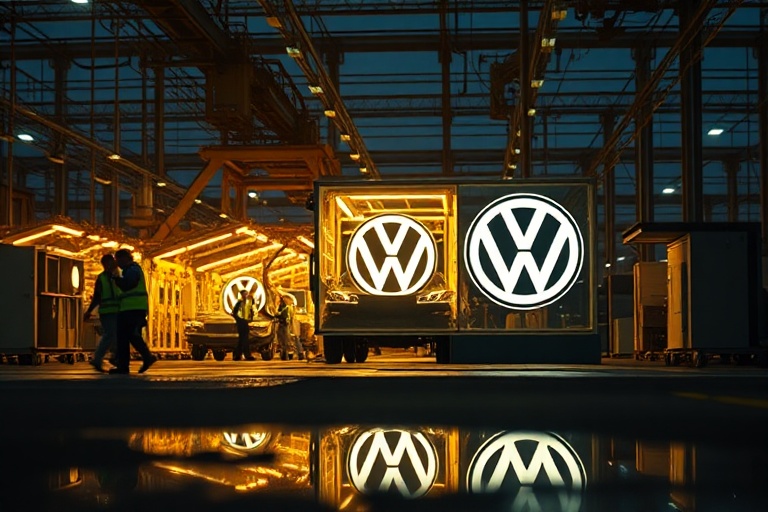
The city’s layout reflects its purpose. Wide boulevards, geometric housing blocks, and central plazas were built with efficiency in mind. The Volkswagen plant itself, one of the largest in the world, stretches over 6.5 million square meters and employs tens of thousands. This fusion of urban planning and industrial ambition makes Wolfsburg a unique case study in economic geography—and a city that exists primarily to serve the needs of a single corporation.
Beyond the Factory: Culture and Identity in Wolfsburg
For decades, Wolfsburg’s cultural identity revolved around Volkswagen. But in the 21st century, the city has sought to diversify its image. The opening of the Autostadt (Automobile City) in 2000 marked a turning point. This sprawling theme park and customer center celebrates car culture through interactive exhibits, brand pavilions, and even a museum dedicated to the Beetle’s legacy.
Autostadt attracts over two million visitors annually, drawing families and auto enthusiasts from across Europe. It’s not just a marketing tool; it’s a cultural institution. The complex includes a glass-walled customer delivery center, where new VW owners can pick up their cars in a celebratory, almost theatrical setting. This blend of commerce and spectacle redefines the relationship between consumer and brand.
Wolfsburg has also invested in arts and education to balance its industrial reputation. The Kunstmuseum Wolfsburg, opened in 1994, features contemporary art and has hosted exhibitions by artists like Andy Warhol and Gerhard Richter. The city’s university, founded in 1988, focuses on engineering and business, reinforcing its role as a knowledge hub for the automotive sector.
Yet, despite these efforts, Wolfsburg remains deeply tied to Volkswagen. When the company faced the Dieselgate scandal in 2015, the city’s economy and morale suffered. The scandal exposed the fragility of a city built on a single industry’s success—and underscored the challenges of diversification in a corporate monoculture.
A Global Model with Local Roots
Wolfsburg’s story is not unique in the world of company towns. From Detroit in the United States to Toyota City in Japan, cities built around a single industry face similar opportunities and vulnerabilities. Wolfsburg, however, stands out for its scale, its historical significance, and its ongoing transformation.
Today, the city is navigating a new era. With the rise of electric vehicles and autonomous driving, Volkswagen is investing billions in Wolfsburg as a center for innovation. The Future Pact, a long-term development plan, aims to modernize infrastructure, attract tech startups, and reduce the city’s dependence on combustion engines.
This shift reflects broader trends in Europe, where traditional industrial regions are grappling with decarbonization and digitalization. Wolfsburg’s ability to reinvent itself will determine whether it remains a vital node in the global automotive network—or becomes a cautionary tale of industrial decline.
Why Wolfsburg Matters Beyond the Assembly Line
Wolfsburg challenges the idea that cities must evolve gradually. Its entire existence is a planned response to economic and political forces. It raises important questions about the role of corporations in urban development: Can a city truly thrive when its fortunes are tied to one company? How does a workforce adapt when the industry it depends on changes overnight?
It also highlights the cultural power of the automobile. In Wolfsburg, cars aren’t just products; they’re symbols of progress, mobility, and social mobility. The city embodies the contradictions of modern industrial life: progress and pollution, prosperity and dependence, innovation and inertia.
As the world moves toward sustainable mobility, Wolfsburg finds itself at a crossroads. Its success in transitioning to clean energy will shape not only its future but also the future of automotive cities worldwide. For urban planners, economists, and car enthusiasts alike, Wolfsburg remains a compelling case study—one that goes far beyond the assembly line.
Visiting Wolfsburg: A Guide for the Curious Traveler
For those interested in exploring Wolfsburg, the city offers a mix of industrial tourism, cultural experiences, and modern architecture. Here are key attractions:
- Autostadt: The heart of Wolfsburg’s identity, featuring brand pavilions, test tracks, and a glass-walled delivery center.
- Volkswagen Factory Tour: A behind-the-scenes look at the production lines, including the iconic transparent factory where visitors can watch cars being assembled.
- Kunstmuseum Wolfsburg: A contemporary art museum with rotating exhibitions and a striking modernist design.
- Heilig-Geist-Kirche: A striking modern church designed by architect Gottfried Böhm, symbolizing the city’s post-war reconstruction.
- Allerpark: A large recreational area with lakes, walking trails, and an ice rink, offering a green escape in the industrial landscape.
The city is easily accessible by train from Berlin (about 90 minutes) or Hanover (30 minutes), making it a feasible day trip for travelers exploring northern Germany. While Wolfsburg may not have the historic charm of Munich or the cosmopolitan energy of Berlin, its unique character lies in its purpose-built identity—a city that exists, quite literally, to keep the wheels of industry turning.
As the automotive world evolves, Wolfsburg remains a place worth watching. It’s not just a city; it’s a living experiment in how industry, culture, and community intersect—and whether a planned city can outlast the corporation that built it.