Ali Khamenei: The Enduring Figure at the Helm of Iran
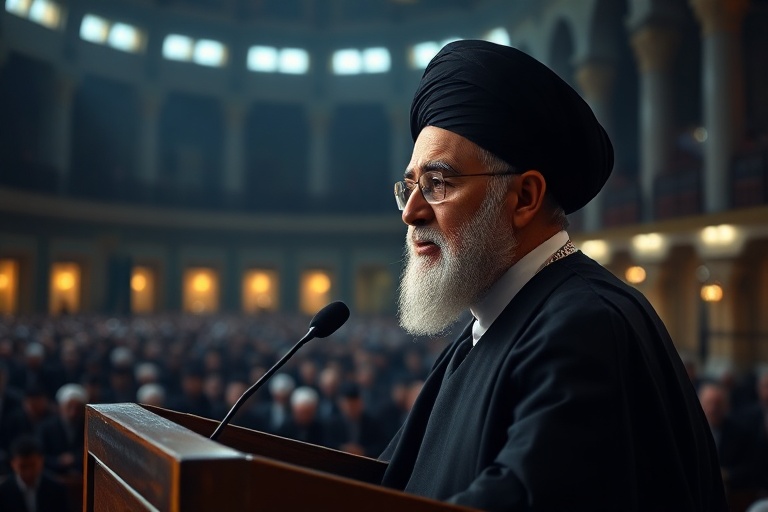
For over three decades, Ayatollah Ali Khamenei has shaped Iran’s political and religious landscape with unyielding authority. As the country’s second Supreme Leader since 1989, his influence extends beyond Iran’s borders, making him a pivotal figure in Middle Eastern geopolitics. Khamenei’s leadership is marked by a blend of ideological rigidity and pragmatic adaptation, a duality that has defined his tenure.
The Supreme Leader’s role in Iran is unique. Unlike a traditional head of state, Khamenei wields power that intertwines religion and governance. His decisions influence everything from foreign policy to domestic freedoms, often drawing international scrutiny. To understand his impact, one must examine his rise to power, his governance style, and the global reactions to his leadership.
The Path to Supreme Leadership
Khamenei’s ascent to the highest echelon of Iranian power was not immediate. Born in 1939 in Mashhad, he was exposed to religious teachings from an early age. His political activism began during the 1960s and 1970s, when he joined the opposition to the Shah’s regime. Imprisoned multiple times, Khamenei’s resilience solidified his reputation as a steadfast revolutionary.
After the 1979 Islamic Revolution, Khamenei held several key positions, including Speaker of Parliament and President of Iran from 1981 to 1989. His selection as Supreme Leader followed the death of Ayatollah Ruhollah Khomeini, a transition that surprised many observers. At the time, Khamenei was not a Grand Ayatollah, a traditional prerequisite for the role, but his political acumen secured his appointment.
Khamenei’s leadership philosophy blends Shiite Islamic principles with a centralized vision of governance. He has consistently emphasized the concept of velayat-e faqih (Guardianship of the Islamic Jurist), which posits that clerics must oversee all aspects of society to ensure adherence to divine law. This doctrine underpins his authority and justifies the Supreme Leader’s sweeping powers.
A Leadership Defined by Control and Caution
Under Khamenei’s rule, Iran’s political system has remained highly centralized. The Supreme Leader controls key institutions, including the judiciary, military, and state media. His influence over the Islamic Revolutionary Guard Corps (IRGC) ensures military loyalty, while the Guardian Council—a body vetting electoral candidates—reinforces his grip on power.
Domestically, Khamenei’s tenure has seen periods of both repression and cautious reform. The 2009 Green Movement protests, sparked by disputed election results, tested his authority. His government responded with a crackdown, reinforcing the regime’s intolerance for dissent. Yet, recent years have also witnessed incremental social changes, such as the loosening of some restrictions on women’s rights, albeit under strict conditions.
Internationally, Khamenei’s leadership has been defined by defiance against Western powers. His stance on nuclear development—once a flashpoint with the U.S. and EU—culminated in the 2015 Joint Comprehensive Plan of Action (JCPOA), though he later criticized the accord’s limitations. His rhetoric frequently targets American “arrogance” and Israeli policies, framing Iran as a resistance power against perceived global injustice.
The Global Perspective: Allies, Adversaries, and Ambivalence
Khamenei’s Iran maintains a complex web of relationships. In the Middle East, it aligns closely with groups like Hezbollah in Lebanon, the Assad regime in Syria, and factions in Iraq and Yemen. These alliances bolster Iran’s regional influence but also fuel tensions with Saudi Arabia and Gulf states, which view Tehran’s actions as destabilizing.
In Europe and Asia, Iran’s economic ties often clash with political disagreements. While countries like China and Russia engage Iran economically, Western nations frequently impose sanctions targeting its nuclear program and human rights record. Khamenei’s government has navigated these pressures by expanding trade with non-Western partners and developing domestic industries to reduce dependency.
Public perception of Khamenei varies widely. In Iran, his supporters revere him as a symbol of resistance against foreign interference. Critics, however, accuse him of authoritarianism and economic mismanagement. Abroad, he is often portrayed as a hardline ideologue, though some analysts argue his pragmatism has prevented outright conflict with global powers.
Key Moments in Khamenei’s Leadership
To grasp the scope of his influence, consider these defining moments:
- 1989: Becomes Supreme Leader following Khomeini’s death.
- 2003: Faces pressure over Iran’s nuclear program, leading to international negotiations.
- 2009: Survives post-election protests amid widespread crackdowns.
- 2015: Supports the JCPOA nuclear deal but later distances himself from its terms.
- 2022: Oversees a harsh response to nationwide protests sparked by the death of Mahsa Amini.
Looking Ahead: The Future of Khamenei’s Iran
As Khamenei approaches his ninth decade, questions about Iran’s political future intensify. His eventual departure could trigger a power struggle, given the Supreme Leader’s entrenched control over state institutions. Succession remains a tightly guarded secret, with debates already underway about potential candidates.
Economically, Iran faces challenges from sanctions, inflation, and unemployment. Khamenei’s government has promoted policies like the “Resistance Economy,” aimed at self-sufficiency, but results have been mixed. Meanwhile, societal pressures continue to mount, particularly among younger generations demanding greater freedoms.
Globally, Iran’s role in conflicts like Ukraine—where it has supplied drones to Russia—and its nuclear ambitions ensure Khamenei’s leadership remains a focal point. His ability to balance internal stability with external defiance will shape Iran’s trajectory for years to come.
Conclusion: A Legacy of Power and Paradox
Ayatollah Ali Khamenei’s nearly 35-year tenure as Supreme Leader is a testament to his adaptability and resolve. He has steered Iran through revolutions, wars, and economic crises, often defying expectations. His leadership reflects both the resilience of the Islamic Republic and the contradictions inherent in its system.
For observers, Khamenei embodies the paradox of Iran itself—a nation that is at once isolated and influential, traditional and evolving. His decisions will continue to reverberate across the Middle East and beyond, making him a figure worth watching as Iran navigates an uncertain future.