Antarctic Sea Ice Loss: Causes, Effects, and Global Impact
Antarctic sea ice, a critical component of Earth’s climate system, has drawn increasing attention in recent years. Unlike its Arctic counterpart, Antarctic sea ice has historically exhibited more stability, but recent data reveals unprecedented changes. These shifts are not isolated phenomena—they ripple across global weather patterns, marine ecosystems, and long-term climate projections.
The Current State of Antarctic Sea Ice
The Antarctic sea ice extent has fluctuated over decades, but the past few years have defied prior trends. In 2023, satellite observations recorded the lowest annual maximum sea ice coverage since measurements began in 1979. Scientists attribute this decline to a combination of rising ocean temperatures, shifting wind patterns, and potential feedback loops within the climate system.
While Antarctic sea ice naturally expands and contracts with the seasons, the rate of decline in recent years is alarming. Some researchers suggest that the continent’s ice shelves—floating extensions of glaciers—are melting faster than anticipated, contributing to a destabilization of sea ice formation. This process is particularly concerning because Antarctic sea ice plays a role in regulating global ocean currents and heat distribution.
Key Factors Influencing Antarctic Sea Ice
- Ocean Warming: Warmer ocean waters inhibit sea ice formation and accelerate melting from below.
- Wind Patterns: Changes in atmospheric circulation, possibly linked to climate change, can push ice away from the continent or prevent its formation.
- Ice Shelf Collapse: The disintegration of ice shelves releases freshwater, which can disrupt the salt balance needed for sea ice growth.
- Albedo Effect: Reduced sea ice cover means less sunlight is reflected back into space, further warming the ocean and exacerbating ice loss.
Broader Implications for the Planet
The consequences of Antarctic sea ice loss extend far beyond the Southern Ocean. One of the most immediate impacts is on global sea levels. While sea ice itself does not raise sea levels when it melts (since it already displaces water), the loss of ice shelves and land-based glaciers—accelerated by thinning sea ice—does contribute to rising oceans. This threatens coastal communities worldwide, from small island nations to major cities like Miami and Mumbai.
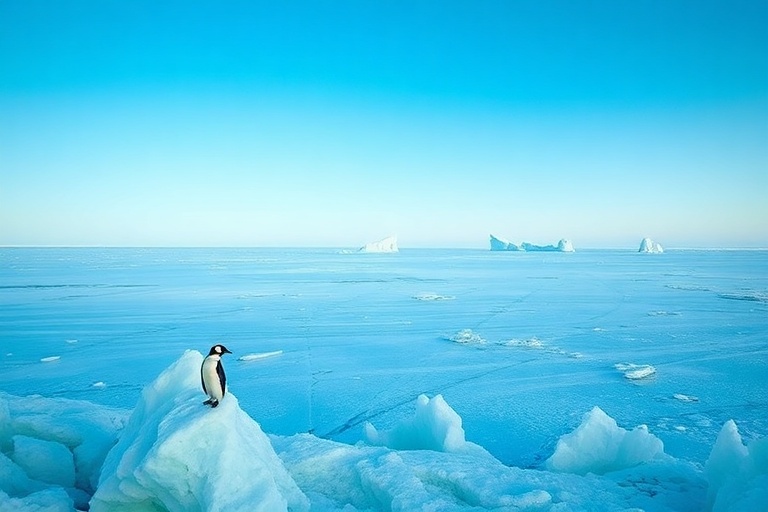
Antarctic sea ice also serves as a critical habitat for species like krill, penguins, and seals. A reduction in ice cover disrupts feeding grounds and breeding cycles, potentially leading to population declines. Krill, in particular, are a foundational species in the Southern Ocean food web, supporting whales, seals, and seabirds. Their decline could have cascading effects on marine biodiversity.
Furthermore, changes in Antarctic sea ice can influence weather patterns in the Southern Hemisphere and beyond. For example, reduced sea ice can alter the position and strength of the Southern Hemisphere jet stream, affecting rainfall patterns in South America, Australia, and southern Africa. This highlights how interconnected Earth’s climate systems truly are.
What’s Next? Research and Policy Responses
Scientists are working urgently to understand the drivers behind Antarctic sea ice decline. Some hypotheses suggest that natural variability may still play a role, but the consensus leans toward human-induced climate change as a dominant factor. Ongoing research, including data from satellites like NASA’s ICESat-2 and the European Space Agency’s CryoSat-2, is providing clearer insights into these changes.
Policy responses are also gaining momentum. International agreements, such as the Antarctic Treaty System and the Paris Agreement, aim to mitigate climate change and protect polar regions. However, enforcement and global cooperation remain challenges. Some scientists advocate for enhanced marine protected areas in the Southern Ocean to safeguard critical habitats as ice conditions shift.
How Individuals Can Engage
While large-scale action is necessary, individuals can contribute in meaningful ways. Reducing carbon footprints, supporting sustainable seafood choices, and advocating for climate policies are practical steps. Educating oneself and others about polar regions and their global connections can also drive collective action.
For those interested in further reading, Dave’s Locker Science section offers in-depth coverage of climate-related topics, while the Environment category provides updates on conservation efforts and policy developments.
Conclusion: A Call for Awareness and Action
Antarctic sea ice is more than a barometer of climate change—it is a linchpin of Earth’s climate system. The recent trends are a stark reminder of the urgency of addressing global warming. While the full extent of these changes is still unfolding, the scientific community agrees on one thing: the time to act is now.
The fate of Antarctic sea ice is intertwined with the future of the planet. By understanding its role and supporting sustainable practices, we can help preserve the delicate balance of our world’s ecosystems. The story of Antarctic sea ice is not just about ice and water—it is about the health of the entire planet.