ayatollah
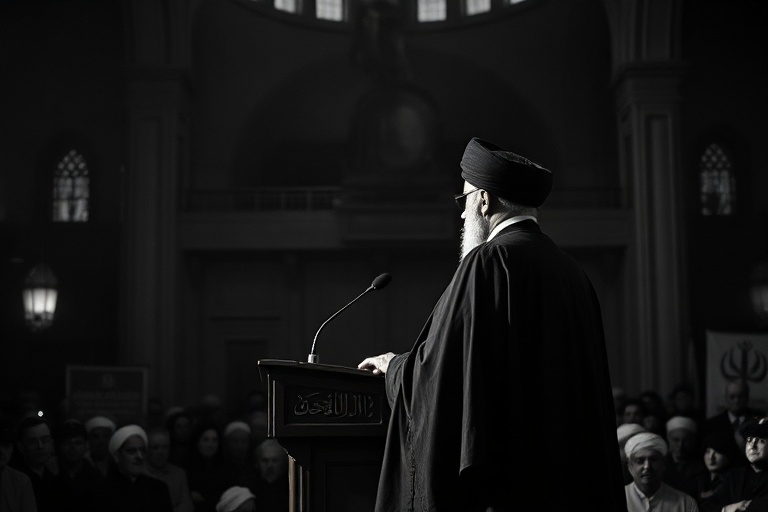
The title “Ayatollah” carries immense weight in the Islamic Republic of Iran, representing not just a religious scholar but a figure of ultimate authority. Derived from Arabic, the term translates to “sign of God,” denoting a high-ranking Shiite cleric who has achieved the status of mujtahid—someone capable of independent reasoning in Islamic law. Among these scholars, only a select few are designated as Marja’, or sources of emulation, whose legal rulings followers across the Shiite world adopt. The most prominent of these figures often wields political influence that shapes national and even regional policies.
The Historical Evolution of the Ayatollah Title
The concept of the Ayatollah emerged during the Safavid dynasty in the 16th century, when Shiite Islam became the state religion of Persia. The title itself gained prominence in the 19th century as Shiite scholars sought to distinguish themselves through rigorous religious education and jurisprudence. The 1979 Islamic Revolution in Iran transformed the Ayatollah from a spiritual leader into a political architect, with Grand Ayatollah Ruhollah Khomeini assuming the role of Supreme Leader and architect of the Islamic Republic.
Khomeini’s leadership demonstrated how the Ayatollah title could transcend religious boundaries to become a tool for statecraft. His concept of Velayat-e Faqih, or Guardianship of the Islamic Jurist, argued that supreme political authority should rest with a qualified Shiite jurist during the occultation of the Twelfth Imam. This doctrine became the foundation of Iran’s political system, enshrined in the country’s constitution.
Key Characteristics of Iran’s Current Supreme Leader
Since 1989, Ayatollah Ali Khamenei has served as Iran’s Supreme Leader, maintaining the position through a combination of religious authority and political maneuvering. Unlike his predecessor, Khamenei was not initially recognized as a Marja’ by the majority of Shiite scholars, a status he has since cultivated through strategic appointments and institutional control. His leadership style contrasts with Khomeini’s charismatic populism, favoring a more bureaucratic approach to governance while maintaining ironclad control over Iran’s military, judiciary, and media.
- Religious Authority: Khamenei holds the title of Ayatollah, though his marja’iyya status remains contested among some conservative clerics.
- Political Power: The constitution grants him control over the Islamic Revolutionary Guard Corps and the judiciary.
- Economic Influence: Through bonyads (religious foundations), he commands vast financial resources that sustain his political network.
- Cultural Custodianship: His office oversees religious institutions and cultural policies that shape Iranian society.
The Ayatollah’s Dual Role: Spiritual Guide and Political Architect
The Ayatollah’s authority in Iran operates on two distinct but interconnected levels. Religiously, he serves as a source of emulation whose fatwas (religious rulings) guide the personal and communal lives of millions of Shiites worldwide. Politically, his role as Supreme Leader grants him powers that extend beyond traditional religious leadership, including command of the armed forces and veto power over elected officials.
This dual role creates inherent tensions within Iran’s political system. While the constitution mandates that the Supreme Leader be a Marja’, the exigencies of governance often require pragmatic decisions that strain religious doctrine. For instance, Khamenei’s approval of nuclear negotiations with Western powers in 2015 required balancing religious prohibitions against nuclear weapons with national security imperatives.
The Process of Becoming an Ayatollah
The path to becoming an Ayatollah is arduous and requires decades of study in Islamic jurisprudence, known as fiqh. Candidates typically begin their religious education in seminaries (hawzas) in cities like Qom, Mashhad, or Najaf, where they master classical Islamic texts under renowned scholars. The journey to marja’iyya status often takes 30-40 years and involves:
- Foundational Studies: Mastery of Arabic grammar, logic, and the principles of jurisprudence (usul al-fiqh).
- Advanced Seminars: Participation in intensive courses (dars-e kharij) under established Ayatollahs.
- Independent Research: Development of original legal interpretations (ijtihad) that demonstrate scholarly innovation.
- Community Following: Accumulation of followers who adopt the scholar’s legal rulings as their own.
Not all Ayatollahs achieve the status of Marja’, and those who do often specialize in particular areas of jurisprudence. Some focus on financial transactions (mu’amalat), while others concentrate on personal status laws (ahwal al-shakhsiyya) or criminal law (jinayat). This specialization allows Ayatollahs to carve out distinct niches within the Shiite religious hierarchy.
Controversies and Challenges Facing the Ayatollah Institution
The concentration of religious and political authority in the hands of a single Ayatollah has generated significant controversy both within Iran and internationally. Critics argue that the system creates opportunities for corruption and nepotism, as seen in the accumulation of wealth by the Supreme Leader’s inner circle. The 2022 protests following the death of Mahsa Amini highlighted growing discontent with the religious establishment’s control over personal freedoms.
Internationally, the Ayatollah’s political interventions have drawn condemnation. Iran’s support for proxy groups like Hezbollah in Lebanon and the Houthi rebels in Yemen has been condemned by Western governments as destabilizing. Meanwhile, the Islamic Republic’s human rights record—particularly regarding women’s rights and political dissent—has drawn consistent criticism from international organizations.
Generational Shifts and the Future of the Ayatollah System
The next generation of Ayatollahs faces unprecedented challenges in maintaining the system’s legitimacy. Younger Iranians, particularly those in urban areas, increasingly view religious authority with skepticism, favoring pragmatic solutions over doctrinal purity. The regime’s response to these challenges has involved both repression and limited reforms, such as allowing slightly more diverse political participation in controlled elections.
Several potential successors to Khamenei have emerged within the clerical establishment, including:
- Ayatollah Mohammad Baqir Qalibaf: Speaker of Parliament and former commander of the IRGC, representing the regime’s hardline faction.
- Ayatollah Mojtaba Hosseini Tehrani: Son of a prominent cleric and a potential bridge between reformist and conservative factions.
- Ayatollah Alireza Arafi: Head of the Qom Seminary Center, overseeing religious education nationwide.
The selection process for the next Supreme Leader will likely involve intense behind-the-scenes maneuvering, with the Assembly of Experts—the body tasked with choosing the leader—playing a crucial role. The regime’s ability to maintain cohesion during this transition will determine whether the Ayatollah institution can survive into the next century.
Conclusion: The Ayatollah’s Enduring Legacy and Uncertain Future
The Ayatollah institution represents one of the most unique political-religious systems in the modern world. Born from the fusion of Shiite jurisprudence and revolutionary ideology, it has demonstrated remarkable resilience in the face of internal dissent and external pressure. Yet the system faces existential challenges from a population increasingly indifferent to religious authority and a global order that views its practices with growing alarm.
Whether the Ayatollah can adapt to these changes remains an open question. The regime’s ability to balance religious legitimacy with political pragmatism will determine whether this centuries-old institution can survive into its fifth century of existence. For now, the Ayatollah remains both a symbol of continuity and a lightning rod for controversy, embodying the complex intersection of faith and power in the Islamic Republic of Iran.
For those seeking to understand Iran’s complex political landscape, the role of the Ayatollah offers crucial insights into the country’s past, present, and future. As the Islamic Republic navigates an increasingly uncertain world, the decisions made by its religious and political leaders will continue to reverberate far beyond its borders.
To explore more about Iran’s political system, visit our Politics category. For deeper analysis of religious movements in the Middle East, check our Analysis section.