ayatollah
Ayatollah: The Spiritual and Political Authority in Shia Islam
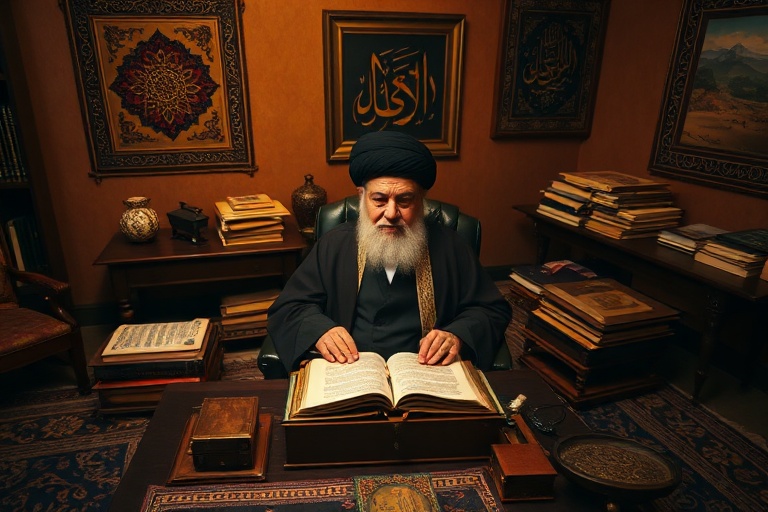
The term ayatollah carries significant weight in Shia Islam, representing a high-ranking religious leader and scholar. Derived from Arabic, it translates to “sign of God,” a title reserved for those who have achieved the highest levels of religious scholarship and moral authority. These figures are not only spiritual guides but also influential political and social leaders, particularly in countries with large Shia populations, such as Iran.
The role of an ayatollah extends beyond religious instruction. They often serve as arbiters of Islamic law, issuing fatwas—religious decrees—on matters ranging from personal conduct to national policy. Their influence can shape the lives of millions, making them central figures in both religious and political spheres. Understanding the ayatollah’s role requires examining the historical, theological, and geopolitical contexts that have shaped this institution.
The Historical Roots of the Ayatollah Title
The concept of the ayatollah emerged during the Safavid dynasty in Persia (1501–1736), a period when Shia Islam became the state religion. The title itself gained prominence in the 19th century, particularly through the work of scholars like Muhammad Hasan Najafi, whose legal rulings and teachings solidified the ayatollah’s authority. The title is not hereditary but earned through decades of rigorous study in Islamic jurisprudence, philosophy, and ethics.
One of the most pivotal figures in modern Shia history is Ayatollah Ruhollah Khomeini, whose leadership during the 1979 Iranian Revolution transformed the ayatollah’s role from a religious scholar to a head of state. Khomeini’s establishment of the Islamic Republic of Iran redefined the ayatollah’s position as both a spiritual and political leader. This dual role has since become a defining characteristic of the title in Iran and other Shia-majority regions.
Key Responsibilities and Influence of an Ayatollah
The authority of an ayatollah is built on a foundation of religious knowledge and moral integrity. Their responsibilities can be divided into several key areas:
- Theological Leadership: Ayatollahs are expected to provide guidance on matters of faith, interpreting religious texts and offering solutions to contemporary issues through the lens of Islamic law.
- Legal and Social Guidance: They issue fatwas that address both personal and communal concerns, from marriage and inheritance to economic policies and foreign relations.
- Political Influence: In countries like Iran, the Supreme Leader is an ayatollah, wielding significant political power. Even in non-state roles, ayatollahs can mobilize public opinion and influence government decisions.
- Educational Stewardship: Many ayatollahs oversee religious seminaries, shaping the next generation of Shia scholars and leaders through teaching and mentorship.
The influence of an ayatollah is not limited to their immediate followers. Their teachings and decrees can resonate across borders, particularly among Shia communities in Iraq, Lebanon, Bahrain, and beyond. This transnational reach underscores the ayatollah’s role as a unifying figure in Shia Islam, despite the political and sectarian divisions that exist within the Muslim world.
The Ayatollah’s Role in Modern Geopolitics
The intersection of religion and politics in the ayatollah’s role has far-reaching implications. In Iran, the Supreme Leader, currently Ayatollah Ali Khamenei, holds ultimate authority over the military, judiciary, and media. His decisions can determine the course of national policy, from nuclear negotiations to regional conflicts. This concentration of power has drawn both admiration and criticism, with some viewing the ayatollah as a stabilizing force and others as an obstacle to reform and democracy.
Beyond Iran, ayatollahs in Iraq, such as Ayatollah Ali al-Sistani, play crucial roles in shaping post-Saddam Hussein governance and mediating sectarian tensions. Al-Sistani’s influence extends to calls for national unity and political participation, demonstrating how religious authority can intersect with civic life in diverse ways. Similarly, in Lebanon, the Shia community looks to ayatollahs like Mohammad Hussein Fadlallah for spiritual and political guidance, particularly in times of crisis.
The geopolitical weight of the ayatollah extends to international relations as well. The Islamic Republic of Iran’s foreign policy, often driven by the Supreme Leader’s vision, has positioned the country as a key player in Middle Eastern conflicts, from Syria to Yemen. This has led to both alliances and adversarial relationships with global powers, further complicating the ayatollah’s role in the broader geopolitical landscape.
Challenges and Criticisms Facing Ayatollahs Today
Despite their revered status, ayatollahs face significant challenges in the modern era. One of the most pressing is the tension between tradition and modernity. As younger generations in Shia communities grow more exposed to global cultures and secular ideas, the authority of religious leaders is increasingly questioned. This generational divide poses a challenge to the ayatollah’s ability to maintain influence and relevance.
Another challenge is the politicalization of religious authority. In countries like Iran, the blending of religion and state has led to criticisms that ayatollahs are more concerned with preserving power than upholding spiritual values. This perception has fueled protests and calls for reform, particularly among those advocating for greater political freedoms and human rights.
Additionally, the rise of alternative religious voices, such as liberal or reformist scholars, has created competition for the traditional ayatollah’s authority. Social media and digital platforms have given these voices a global reach, allowing them to challenge established religious hierarchies and offer new interpretations of Islamic teachings.
Conclusion: The Enduring Legacy and Future of the Ayatollah
The ayatollah remains a pivotal figure in Shia Islam, embodying the intersection of faith, law, and politics. While their authority is rooted in centuries of tradition, the challenges of the modern world demand adaptation and innovation. The ability of ayatollahs to navigate these complexities will determine their continued relevance in the 21st century.
For those seeking to understand the dynamics of Shia Islam or the political landscape of the Middle East, the role of the ayatollah offers a compelling lens. As religious and political landscapes evolve, the ayatollah’s influence will likely continue to shape the future of the Muslim world, both within and beyond its borders.
To explore more about the intersection of religion and politics, visit our Politics and Culture sections for in-depth analysis and commentary.