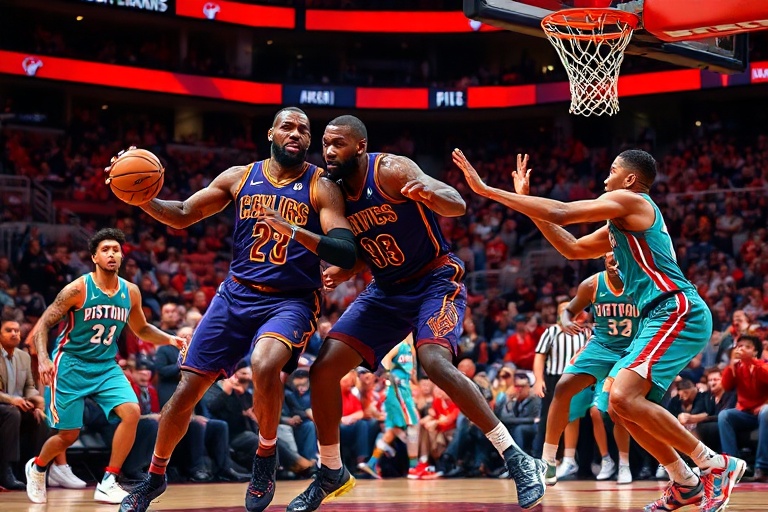
The Cleveland Cavaliers and Detroit Pistons faced off in a pivotal Eastern Conference matchup that showcased contrasting approaches to modern basketball. Both teams entered the game with playoff aspirations, but the Cavaliers brought a faster pace while the Pistons relied on physical defense and interior scoring. The game unfolded in layers, revealing strengths and weaknesses that could define their seasons.
The Cavaliers’ offense, led by Darius Garland, moved with purpose early. Garland connected with Evan Mobley and Jarrett Allen in the paint, creating quick second-chance opportunities. Meanwhile, the Pistons countered with a deliberate half-court set, using Cade Cunningham’s playmaking to generate open threes for Jaden Ivey and Isaiah Stewart’s rolling screens. What began as a balanced contest soon tilted toward Cleveland as Detroit’s turnovers mounted.
The Defensive Adjustments That Changed the Game
Detroit’s defensive identity relies on disruptive rotations and rim protection. Evan Mobley anchored the middle, altering shots without fouling, while Garland pressured ball handlers into mistakes. The Pistons struggled to counter this aggression, particularly in transition where Cleveland’s guards outran their recovery efforts. Detroit’s best defensive possession came late in the fourth quarter when Stewart and Ausar Thompson combined for a crucial stop.
Cleveland’s defensive scheme emphasized switching everything to prevent open threes. This approach worked until the Pistons exploited mismatches with Stewart bullying smaller forwards. The Cavaliers adjusted by blitzing pick-and-rolls, forcing Detroit into contested mid-range shots. The defensive chess match revealed how small adjustments could swing momentum in either direction.
Key Defensive Plays That Shifted Momentum
- Mobley’s block on Cunningham: With 6:42 left in the third quarter, Mobley timed his jump perfectly to deny a layup, sparking a 9-0 run.
- Allen’s rim protection: The Pistons managed just 6 points in the paint during the third quarter after Allen altered multiple attempts.
- Garland’s steal: A gambling steal by Garland led to a fast-break layup, cutting Detroit’s lead to single digits.
Offensive Breakdown: Efficiency vs. Volume
Cleveland’s offense thrived on ball movement and quick decisions. Garland distributed 8 assists, while Mobley capitalized on cuts for easy buckets. The Pistons, meanwhile, relied heavily on Cunningham’s isolation scoring, which became predictable in the second half. Detroit shot 41% from the field, with Stewart leading the team in scoring but struggling with foul trouble.
The Cavaliers’ bench provided a spark, with Dean Wade and Sam Merrill combining for 14 points in the third quarter. Detroit’s reserves couldn’t match this energy, allowing Cleveland to build a double-digit lead. The Pistons’ offensive struggles stemmed from poor shot selection, particularly in the fourth quarter where they forced contested threes instead of working for high-percentage looks.
Shooting Splits That Told the Story
The game’s shooting splits revealed the contrasting philosophies:
- Cleveland: 48% FG, 38% 3P, 82% FT
- Detroit: 41% FG, 32% 3P, 76% FT
Detroit’s inability to generate open threes proved costly, while Cleveland’s balanced attack kept the Pistons’ defense scrambling. The Cavaliers’ free-throw rate highlighted their aggression, drawing 18 fouls compared to Detroit’s 12.
Coaching Decisions That Altered the Outcome
Detroit’s coach opted for a starting lineup of Cunningham, Ivey, Stewart, Jaden McDaniels, and Killian Hayes. This group struggled to space the floor, which limited Cunningham’s playmaking. Cleveland’s coach countered by shortening the bench rotation, relying on Garland, Mobley, and Allen for extended minutes.
In the fourth quarter, Detroit’s coach adjusted by inserting Ausar Thompson into the lineup for defensive purposes. The move paid off temporarily, but Thompson’s offensive limitations became apparent. Cleveland’s coach maintained trust in his starters, and the result was a decisive finish.
Timeouts and Adjustments That Mattered
- Detroit’s timeout at 4:12 in the fourth: The Pistons’ final timeout came too late, with Cleveland already holding a 15-point lead.
- Cleveland’s no-timeout play: Garland and Mobley executed a designed isolation for a crucial bucket, extending the lead to 20.
The Aftermath and Season Implications
The Cavaliers’ victory solidified their position as a top-four seed in the East, while the Pistons fell further behind in the playoff race. Cleveland’s balanced attack and defensive resilience suggest they could contend for a deep postseason run. Detroit, meanwhile, must address their offensive inconsistencies if they hope to climb the standings.
For Cleveland, the game reinforced the chemistry between Garland and Mobley, a partnership that could define their season. Detroit’s struggles highlighted the need for better shot selection and defensive rotations. Both teams now turn their attention to upcoming matchups that will shape their playoff hopes.
As the season progresses, this game will serve as a reference point. Cleveland’s ability to sustain their momentum will be tested, while Detroit must regroup quickly. The contrast in styles—Cleveland’s fluid offense versus Detroit’s grind-it-out approach—will continue to define their respective paths.
For fans of sports analysis and breaking news, this matchup offered a glimpse into the evolving strategies of the NBA. Whether you prefer the fast-paced excitement of Cleveland or the methodical grit of Detroit, one thing is clear: playoff races will be decided by these kinds of tight battles.