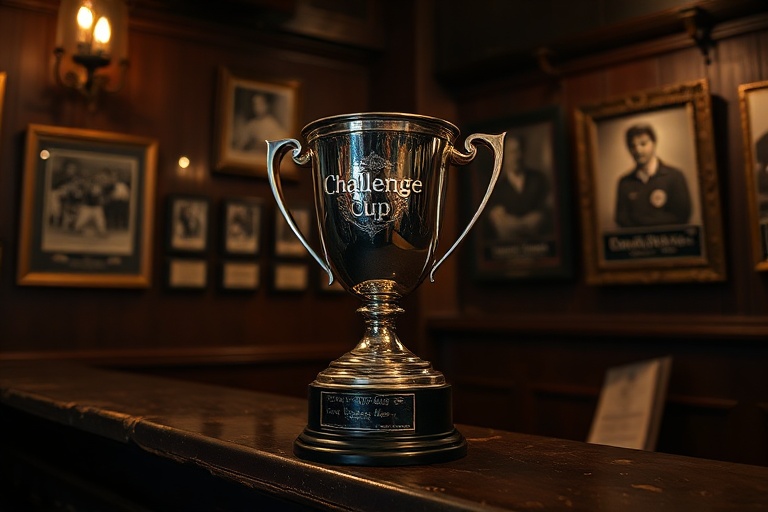
The Challenge Cup stands as one of the most storied and enduring competitions across multiple sports, blending tradition with adaptability. While often associated with rugby league, its influence extends to other athletic disciplines where endurance, strategy, and community spirit take center stage. The tournament’s rich history reflects broader shifts in how sports are organized, celebrated, and consumed by audiences worldwide.
The Origins and Foundational Years
The Challenge Cup was first contested in 1896, emerging from the rugby league movement in Northern England. It was created to provide a knockout competition that could showcase club rivalries and elevate the standard of play. The inaugural final, held at Headingley Stadium in Leeds, featured Batley against St Helens, with Batley claiming the first-ever title. This match set a precedent for drama and unpredictability that has defined the competition ever since.
Unlike league structures that emphasize consistency over a season, the knockout format introduces a single-elimination element where underdogs can topple favorites on any given day. This egalitarian spirit helped the Challenge Cup develop a reputation as a true test of grit and adaptability, not just technical skill. The early decades saw the competition expand beyond its regional roots, drawing teams from across England and later Wales and France.
Cultural Significance and Community Role
Beyond the sporting spectacle, the Challenge Cup holds deep cultural significance in communities where rugby league is woven into local identity. Towns like Wigan, Leeds, and Hull have seen their identities shaped by historic Challenge Cup triumphs. The competition often serves as a focal point for civic pride, especially during finals weekend at Wembley Stadium, which draws over 80,000 fans and millions more through broadcast coverage.
In many working-class communities, rugby league—and by extension the Challenge Cup—functions as a social anchor. Clubs serve not only as athletic hubs but as community centers, offering youth programs, health initiatives, and social cohesion. The tournament’s ability to unite families, schools, and neighborhoods under a shared banner of competition has helped sustain its relevance across generations.
The Challenge Cup final itself is a cultural institution. Known as “The Greatest Day Out in Sport,” it blends sporting drama with pre-match entertainment, family activities, and post-match celebrations. The famous “White Rose” trophy, presented by the Rugby Football League, is a symbol of excellence and tradition, passed down through generations of players.
The Evolution of the Competition
The Challenge Cup has undergone several transformations to remain relevant in a changing sporting landscape. In the 1960s and 1970s, the competition expanded to include teams from Australia and New Zealand, reflecting rugby league’s international growth. These tours added prestige and raised the competitive bar, culminating in the famous 1970 final where Australia’s St George Dragons defeated Leeds in a thrilling upset.
In the 1990s, the introduction of sponsorship and commercial broadcasting reshaped the tournament’s structure and visibility. Sky Sports began televising matches, bringing the Challenge Cup to a national audience and increasing prize money. This financial boost allowed clubs to invest in facilities and youth development, strengthening the competition’s long-term viability.
The 21st century brought further innovation. In 2015, the competition adopted a revised format, introducing preliminary rounds and a play-off system for Championship and League 1 teams to qualify for the main draw. This change ensured broader participation while maintaining the knockout drama. The inclusion of international sides like Toronto Wolfhounds and Fiji Bati in the 2010s also signaled rugby league’s ambition to globalize the Challenge Cup.
Digital platforms have also played a role. Clubs now leverage social media to engage fans, share behind-the-scenes content, and build anticipation for key ties. The Challenge Cup’s digital presence has broadened its appeal, particularly among younger audiences who consume sport through streaming and interactive content.
Notable Moments and Legendary Performances
The Challenge Cup’s history is rich with moments that transcend sport. One of the most iconic came in 1982, when Widnes defeated the mighty Hull KR in a final replayed three times due to draws—a rare instance of extreme drama in a knockout competition. The resilience displayed by Widnes, a club from a small town, became a symbol of the Cup’s underdog appeal.
Another defining era came in the 1990s, when Wigan dominated the competition with five consecutive wins. Their 1994 final against Leeds is still cited for its intensity, with a record crowd of 78,348 witnessing a 20-14 victory. Wigan’s dominance reflected the club’s golden age and the Cup’s role as a stage for dynasties.
More recently, the 2019 final between Warrington and Hull FC provided a masterclass in tactical nuance. Warrington, coached by the innovative Steve Price, used a structured kicking game and disciplined defense to neutralize Hull’s attacking threats. The 18-14 victory was celebrated not just for its result but for its demonstration of modern rugby league tactics.
Individual performances have also etched themselves into Challenge Cup lore. Players like George Fairbairn, Ellery Hanley, and more recently, James Roby and Kevin Sinfield, have delivered Cup finals that are remembered for personal brilliance as much as team success. Their contributions highlight how the competition serves as a proving ground for legends.
The Future of the Challenge Cup
As rugby league continues to evolve, so too does the Challenge Cup. One key trend is the increasing integration of the competition with the Super League and Championship structures. While the knockout format remains sacred, discussions persist about expanding the tournament to include more international teams or even franchises from emerging rugby league nations like Spain or Canada.
Sustainability is another pressing concern. Clubs face financial pressures from rising costs and fluctuating attendances. The Challenge Cup’s role in generating revenue and fan engagement is more critical than ever. Initiatives like the “Magic Weekend,” where multiple rounds are played over a single weekend in a neutral venue, have helped boost visibility and ticket sales.
Technological innovation may also shape the future. Video refereeing, real-time fan engagement through apps, and augmented reality experiences during broadcasts could enhance how audiences interact with the competition. These tools could make the Challenge Cup more accessible to global fans while preserving its traditional appeal.
Most importantly, the Challenge Cup’s future depends on its ability to remain rooted in community values. While commercial pressures grow, the tournament must continue to celebrate local heroes, inspire grassroots clubs, and deliver moments of pure sporting emotion. It is this balance between heritage and innovation that will determine whether the Challenge Cup remains a cornerstone of rugby league for another century.
Key Takeaways
- The Challenge Cup began in 1896 as a knockout competition rooted in Northern England’s rugby league culture.
- It serves as both a sporting event and a cultural touchstone, uniting communities and preserving local identities.
- The tournament has evolved through international expansion, commercialization, and digital engagement.
- Legendary matches and players have cemented its legacy as a stage for drama and excellence.
- Its future hinges on balancing tradition with innovation, sustainability, and global growth.
For fans looking to explore more about rugby league history and culture, visit our Sports and Culture sections on Dave’s Locker. Whether you’re interested in the evolution of the sport or the stories behind its most iconic moments, these pages offer deep insights and expert analysis.
The Challenge Cup is more than a tournament—it is a living archive of rugby league’s past, present, and future. As clubs and fans gather each spring for another chapter in its storied history, one thing remains clear: the magic of the Challenge Cup shows no signs of fading.