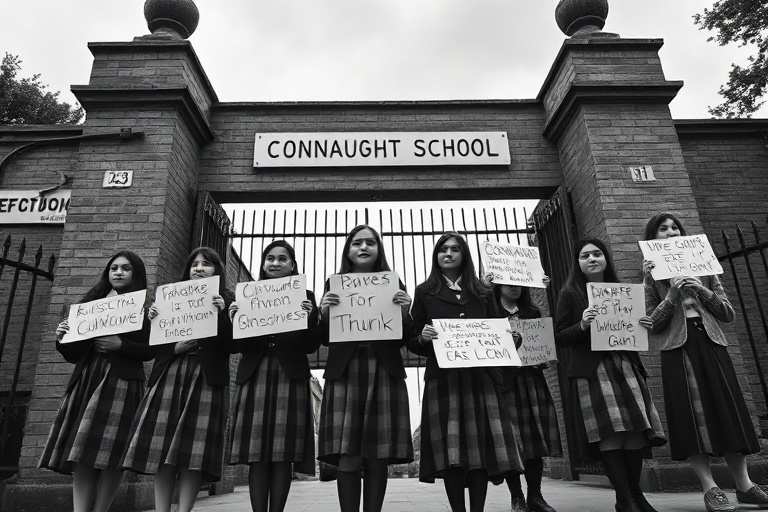
Connah’s Quay High School Strike: A Student-Led Movement for Change
The recent strike at Connah’s Quay High School in Wales has drawn international attention, not just for its scale but for what it represents in the broader landscape of youth activism. Students walked out of classes on multiple occasions, demanding improvements in school facilities, mental health resources, and a more inclusive curriculum. This isn’t an isolated incident; it reflects a growing trend where young people globally are asserting their right to quality education and institutional accountability.
Connah’s Quay High School, like many institutions worldwide, has faced criticism for outdated infrastructure and insufficient support systems. The strike highlighted these issues, with students organizing protests that gained traction on social media under hashtags like #CQHSStrike. Their actions have sparked conversations about how schools can better serve their communities, especially in regions where resources are stretched thin.
The Roots of the Protest: Why Students Took to the Streets
The strike didn’t emerge overnight. For months, students had raised concerns with school administration about crumbling buildings, overcrowded classrooms, and a lack of mental health services. When these concerns were met with delays or dismissals, frustration grew. The breaking point came when a student-led survey revealed that nearly 70% of pupils felt their school environment was negatively impacting their well-being.
This isn’t unique to Connah’s Quay. In recent years, student strikes have become a global phenomenon, from Chile’s 2019 protests over education inequality to the Fridays for Future movement advocating for climate action. The Connah’s Quay strike aligns with this broader trend, where youth are leveraging collective action to demand systemic change. The students’ demands were clear:
- Immediate repairs to school buildings, including heating systems and classrooms
- Mandatory mental health training for staff and counselors on-site
- A review of the curriculum to include more diverse perspectives and modern subjects
- Greater transparency in decision-making processes affecting students
What makes this strike particularly notable is the students’ ability to mobilize quickly. Social media played a crucial role, with videos of the protests shared widely across platforms like TikTok and Instagram. This digital organizing reflects a shift in how youth movements operate, blending online activism with on-the-ground action.
A Global Perspective: How Student Strikes Are Reshaping Education
Connah’s Quay’s situation mirrors challenges faced by schools in other parts of the world. In the United States, for example, underfunded public schools have long been a point of contention, with teachers’ strikes often making headlines. However, the Connah’s Quay strike stands out because it’s led by students, not educators. This generational shift in activism signals a new era where young people are no longer waiting for adults to solve their problems—they’re taking the lead.
In countries like Finland and South Korea, where education systems are often held up as models, students still face pressures that can lead to protests. In Finland, for instance, debates about standardized testing have fueled student-led movements demanding more holistic approaches to learning. Meanwhile, in South Korea, youth protests have targeted issues like school violence and the pressure-cooker environment of college entrance exams. These examples show that the fight for educational reform isn’t confined to any one country—it’s a universal struggle.
The Connah’s Quay strike also raises questions about the role of technology in modern activism. Unlike past generations, today’s students have grown up with digital tools at their fingertips. They’re using these tools not just to organize but to document their struggles and share their stories with a global audience. This ability to bypass traditional media gatekeepers has democratized activism, allowing marginalized voices to be heard in ways that were previously unimaginable.
Challenges and Criticisms: The Pushback Against Student Activism
Not everyone has welcomed the Connah’s Quay strike with open arms. Some critics argue that students are too young to fully understand the complexities of school administration or that protests disrupt the learning environment. Others claim that the strike is being fueled by external influences, such as political groups or social media algorithms designed to amplify dissent.
School officials have responded cautiously. While they’ve acknowledged some of the students’ concerns, they’ve also emphasized the logistical challenges of implementing immediate changes. For example, repairing buildings requires funding that may not be readily available, and staff training programs take time to develop. This tension between urgency and feasibility is a common hurdle in student-led movements.
Yet, the strike has also forced a reckoning. Administrators at Connah’s Quay have since agreed to a series of town halls with students, parents, and staff to discuss the issues raised. This dialogue, while overdue, represents a step toward greater collaboration. It’s a reminder that even when protests are contentious, they can open doors to conversations that might otherwise never happen.
What’s Next for Connah’s Quay and Student Activism?
The outcome of the Connah’s Quay strike remains uncertain, but its impact is already being felt. The protest has inspired similar actions in nearby schools, creating a ripple effect of activism across Wales. It’s also prompted local officials to pledge additional funding for school repairs and mental health programs, though whether these promises will translate into tangible results remains to be seen.
For student activists, the strike has been a learning experience. They’ve gained skills in organizing, public speaking, and media relations—skills that will serve them well beyond the schoolyard. For adults, the strike is a wake-up call. It’s a reminder that the next generation isn’t content to sit quietly while their futures are decided for them. They want a seat at the table, and they’re willing to fight for it.
As global education systems continue to evolve, the Connah’s Quay strike serves as a case study in how youth activism can drive change. It’s a testament to the power of collective action and the importance of listening to those who are most affected by the systems we build. Whether this moment leads to lasting reform or fades into memory, one thing is clear: the students of Connah’s Quay have made their voices heard.
Lessons for Schools and Communities Everywhere
The Connah’s Quay strike offers several key takeaways for educators, parents, and policymakers. First, it underscores the need for open lines of communication between students and school leadership. When students feel their concerns are ignored, they’re more likely to take drastic measures. Second, it highlights the role of mental health in education. Schools that fail to address the emotional well-being of their students risk losing their trust—and their engagement.
Finally, the strike is a reminder that activism isn’t just about protests. It’s about persistence, adaptability, and the willingness to engage in uncomfortable conversations. For schools looking to avoid similar conflicts, the message is clear: prioritize student voices, invest in resources, and be willing to adapt.
As for the students of Connah’s Quay, their fight is far from over. But they’ve already achieved something remarkable: they’ve shown the world that young people can—and will—shape the future of their education.