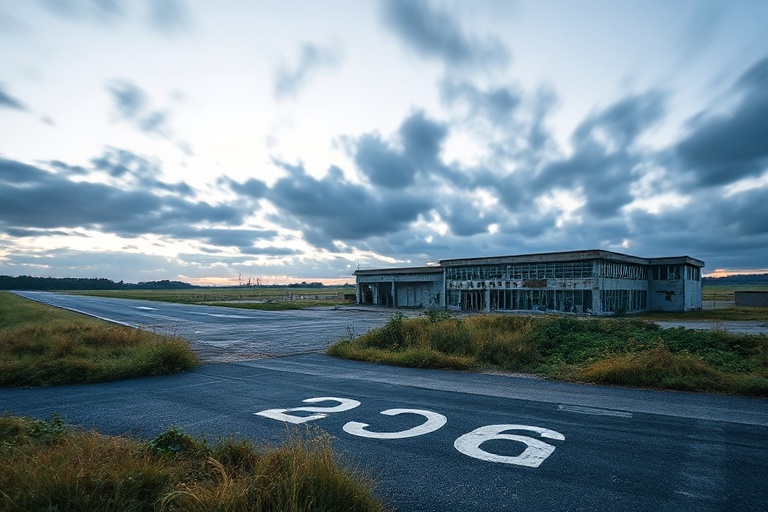
From Midlands Hub to Silent Runway: The Rise and Fall of Coventry Airport
Coventry Airport, once a bustling regional gateway in the heart of England, stands today as a quiet monument to changing times in global aviation. Officially closing its doors in 2023 after decades of operation, the airport’s story is not unique—but its rapid transformation reflects broader shifts in travel, economics, and environmental policy that are reshaping airports worldwide.
Opened in 1936 as RAF Baginton, the site evolved from a military airfield into a civilian airport serving the West Midlands and beyond. At its peak in the 1990s and early 2000s, Coventry Airport handled over 500,000 passengers annually, offering routes to destinations across Europe. Its proximity to Coventry, Birmingham, and the Warwickshire countryside made it a practical choice for business travelers and tourists alike.
But like many small and mid-sized airports across Europe, Coventry found itself caught between rising costs, competition from larger hubs, and the post-pandemic reality of reduced air travel demand. The final scheduled commercial flight departed on December 10, 2023, marking the end of scheduled passenger services. Today, the airport operates only as a base for private aviation, cargo, and emergency services—while the future of its 1,500-meter runway remains uncertain.
The Global Context: Why Regional Airports Are Disappearing
The closure of Coventry Airport is part of a larger trend affecting regional airports worldwide. In the United States, over 50 airports have closed since 2010 due to declining passenger numbers and financial unsustainability. In Europe, countries like France, Germany, and the Netherlands have seen dozens of small airports reduce or eliminate commercial flights. Even in Asia, once a region of rapid expansion, smaller airports are facing consolidation as low-cost carriers pivot to major hubs.
Several key factors are driving this shift:
- Rising operational costs: Fuel prices, airport fees, and maintenance expenses have surged, squeezing profit margins for smaller airports.
- Consolidation in airline industry: The rise of low-cost carriers like Ryanair and easyJet has favored large, efficient hubs over smaller regional fields.
- Environmental pressure: Aviation is under scrutiny for carbon emissions, and smaller airports often lack the infrastructure or funding to adopt sustainable practices.
- Post-pandemic travel patterns: Remote work and shifting tourism trends have reduced demand for short-haul flights from secondary airports.
This global squeeze has led to a paradox: while aviation contributes over 2% of global CO₂ emissions, the industry is simultaneously trimming its most inefficient nodes—often the very airports that once connected rural and peripheral regions to the world.
Cultural and Economic Ripples in the West Midlands
The closure of Coventry Airport is more than a logistical change—it’s a cultural and economic turning point for the region. The airport was more than just a transportation hub; it was a symbol of local ambition, a training ground for pilots, and a venue for air shows that drew thousands of visitors each year.
Local businesses that relied on airport traffic—hotels, car rental agencies, and catering services—have had to adapt. Some have shifted focus to nearby Birmingham Airport, which continues to expand with new long-haul routes. Others have pivoted to supporting private aviation or drone delivery services, areas now seen as potential growth sectors.
The loss of the airport also raises questions about regional connectivity. Coventry is one of the UK’s fastest-growing cities, yet without direct flights, residents must travel over an hour to reach Birmingham International. This disconnect could affect inward investment, tourism, and the ability to attract international talent—especially in sectors like advanced manufacturing and technology, where Coventry has a strong presence.
Community groups have proposed repurposing the site as a logistics hub, green energy research center, or even a cultural venue. One proposal suggests converting part of the runway into a solar farm, aligning with the UK’s net-zero ambitions. Such ideas highlight how former airports are becoming blank canvases for innovation in a post-industrial economy.
The Future of Airports: From Concrete to Carbon
As Coventry Airport transitions from a commercial hub to a blank slate, it mirrors a global reimagining of airport spaces. Around the world, former airports are being transformed into parks, housing developments, data centers, and even urban farms. Berlin’s Tempelhof Airport, once a Cold War symbol, is now a public park used for cycling and festivals. Denver’s Stapleton Airport became one of the largest residential communities in the U.S.
But the most urgent challenge is environmental. Aviation accounts for about 2.5% of global CO₂ emissions, and while large airports are investing in sustainable aviation fuels and electrification, smaller airports often lack the resources. Coventry’s closure may be an early example of how climate policy and economic reality intersect to reshape aviation infrastructure.
Looking ahead, the aviation industry is likely to consolidate further. Experts predict that within 20 years, the number of commercial airports in Europe could shrink by 20–30%, with only the largest and most strategically located facilities surviving. This trend will likely benefit major hubs like London Heathrow, Frankfurt, and Istanbul, while smaller cities may rely on rail networks or virtual connectivity to maintain global links.
For Coventry, the path forward remains unclear. Yet its story serves as a case study in resilience—how a community adapts when a vital piece of infrastructure is lost. Whether through green innovation, industrial reinvention, or cultural reimagining, the legacy of Coventry Airport will not vanish; it will simply take on new forms.
Conclusion: Lessons from a Quiet Runway
The closure of Coventry Airport is a quiet revolution in how we move, connect, and sustain ourselves. It reflects a world where the economics of scale, climate imperatives, and shifting travel habits are reshaping mobility itself. While the loss of a local airport can feel like a step backward, it also opens space for creativity and renewal.
As cities like Coventry redefine their relationship with air travel, they remind us that infrastructure is not destiny—it is a choice. And in an era of rapid change, the most resilient communities will be those that see endings not as failures, but as invitations to reimagine what comes next.