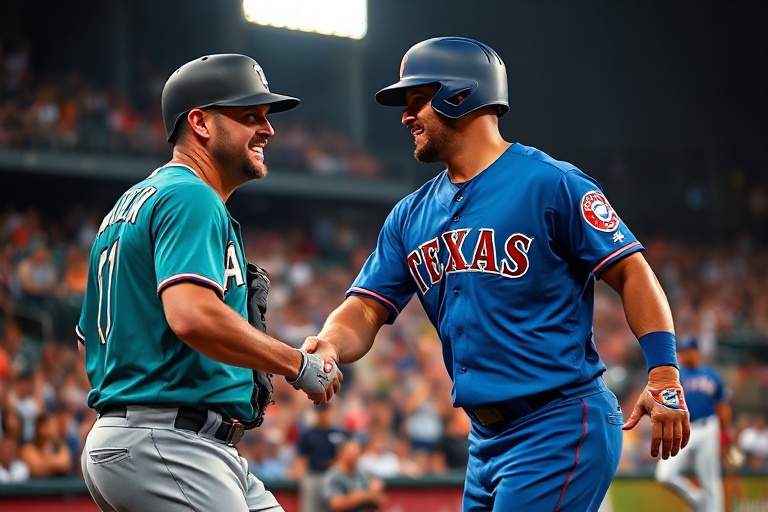
Arizona Diamondbacks vs. Texas Rangers: A Global Showdown in the Making
The Arizona Diamondbacks and Texas Rangers have quietly assembled one of the most intriguing matchups in Major League Baseball this season. While not the flashiest rivalry, this interleague series carries weight beyond the diamond. It reflects broader trends in sports culture, from the globalization of baseball talent to the financial powerhouses reshaping team strategies. The Diamondbacks, with their aggressive roster construction, face the Rangers, who blend veteran savvy with young talent. This clash isn’t just about wins and losses; it’s a microcosm of how modern baseball is played, marketed, and consumed worldwide.
The Diamondbacks’ Bold Vision: From Underdogs to Contenders
The Arizona Diamondbacks have spent the past few seasons defying expectations. Once dismissed as a rebuilding project, the team has leveraged analytics and international scouting to build a roster that punches above its weight. Their farm system, once barren, now produces homegrown talent like Corbin Carroll and Zac Gallen, while strategic trades have filled gaps. The Diamondbacks’ approach mirrors the broader shift in MLB, where small-market teams increasingly compete by outsmarting larger franchises with deeper pockets.
This philosophy extends beyond the field. The Diamondbacks have cultivated a passionate, albeit niche, fanbase. Their social media presence, particularly on platforms like TikTok and Instagram, highlights the team’s personality—mixing humor with behind-the-scenes access. This digital-first strategy resonates with younger fans globally, especially in markets like Japan and Latin America, where baseball’s popularity is surging. The Diamondbacks aren’t just a team; they’re a brand built for the 21st century.
The Rangers’ Lone Star Dominance: A Model of Consistency
By contrast, the Texas Rangers represent the opposite end of the spectrum: a franchise with financial might and a clear blueprint for success. Under the ownership of a billionaire investor group, the Rangers have invested heavily in analytics, player development, and international signings. Their farm system has churned out talent like Adolis García and Marcus Semien, while veteran acquisitions like Jacob deGrom have stabilized the pitching rotation. The Rangers’ success isn’t accidental; it’s the result of a long-term vision that prioritizes stability over flash.
Culturally, the Rangers embody the Lone Star State’s ethos: big, bold, and unapologetic. Their home stadium, Globe Life Field, is a marvel of modern engineering, with retractable roof and climate control designed to maximize comfort. The team’s marketing leans into Texas pride, from cowboy-themed promotions to collaborations with local legends like Nolan Ryan. This regional identity has helped the Rangers build a fanbase that spans beyond baseball purists, appealing to casual sports fans and even non-sports audiences.
The Global Lens: How Baseball’s Changing Landscape Shapes the Rivalry
The Diamondbacks vs. Rangers isn’t just a regional matchup; it’s a global statement. Baseball’s growth in international markets has transformed how teams scout, develop, and market talent. The Diamondbacks, for instance, have invested heavily in Latin American academies, while the Rangers have tapped into the Asian market with signings like Japan’s Yusei Kikuchi. This globalization isn’t just about finding talent; it’s about creating a product that appeals to diverse audiences.
Consider the cultural nuances at play. In Japan, baseball is a national obsession, and players like Shohei Ohtani have become global icons. In Latin America, baseball is a path to the American Dream for countless young players. The Diamondbacks and Rangers, by embracing this diversity, are positioning themselves not just as teams, but as ambassadors for the sport. Their rivalry reflects baseball’s evolving identity—one that’s less about geography and more about opportunity.
What’s at Stake: More Than Just a Series
The upcoming series between the Diamondbacks and Rangers isn’t just another interleague slate. It’s a chance for both teams to assert themselves on the national stage. For the Diamondbacks, it’s about proving that their model works against a traditional powerhouse. For the Rangers, it’s about validating their financial investments with tangible results. The stakes are high, but the implications go beyond wins and losses.
Here’s what to watch:
- Pitching Matchups: The Rangers boast one of the deepest rotations in baseball, while the Diamondbacks rely on young arms like Brandon Pfaadt. The bullpen battles could decide tight games.
- Offensive Firepower: Both teams have explosive lineups. The Rangers’ speed and power contrast with the Diamondbacks’ speed and contact-heavy approach.
- Defensive Grit: In an era of analytics, defense matters more than ever. The Diamondbacks’ infield has been a strength, while the Rangers’ outfield is a wildcard.
- Cultural Storylines: From international players to regional pride, this series transcends the diamond. It’s a clash of philosophies as much as talent.
Beyond the field, the series offers a glimpse into baseball’s future. The Diamondbacks represent the scrappy underdog, while the Rangers embody the financial powerhouse. Their rivalry isn’t just about who wins; it’s about how the sport evolves. Will the small-market model prevail, or will the deep-pocketed approach dominate? The answer could shape MLB for years to come.
A Broader Perspective: Baseball’s Place in the Global Sports Landscape
To understand the significance of the Diamondbacks vs. Rangers series, it’s worth zooming out. Baseball, once the undisputed king of American sports, now competes in a crowded marketplace. The NFL, NBA, and Premier League dominate headlines, while esports and streaming services pull younger audiences away from traditional sports. In this environment, MLB must innovate to stay relevant.
The Diamondbacks and Rangers are doing their part. The Diamondbacks’ digital-first approach appeals to Gen Z, while the Rangers’ star power and stadium experience cater to families and casual fans. Their rivalry isn’t just about baseball; it’s about the future of the sport. If MLB can replicate this kind of engagement across its franchises, the league’s global appeal could soar.
For fans, this series is a reminder of why baseball still matters. It’s a sport rich with history, strategy, and drama. The Diamondbacks vs. Rangers isn’t just another matchup; it’s a celebration of what makes baseball unique. Whether you’re a die-hard fan or a casual observer, there’s something here for everyone.
Conclusion: A Rivalry for the Modern Era
The Arizona Diamondbacks vs. Texas Rangers series is more than a battle between two teams. It’s a reflection of baseball’s global evolution, a clash of cultures, and a test of strategies. The Diamondbacks represent the future—agile, innovative, and unafraid to take risks. The Rangers embody the present—powerful, polished, and built for sustained success. Together, they offer a glimpse into baseball’s next chapter.
As the series unfolds, fans around the world will watch not just for the wins, but for the story. This is what makes baseball special: the blend of competition, culture, and character. The Diamondbacks and Rangers may not be the most storied rivals, but their matchup could become one of the most meaningful in years. It’s a reminder that in sports, as in life, the most exciting stories aren’t always the ones we expect.