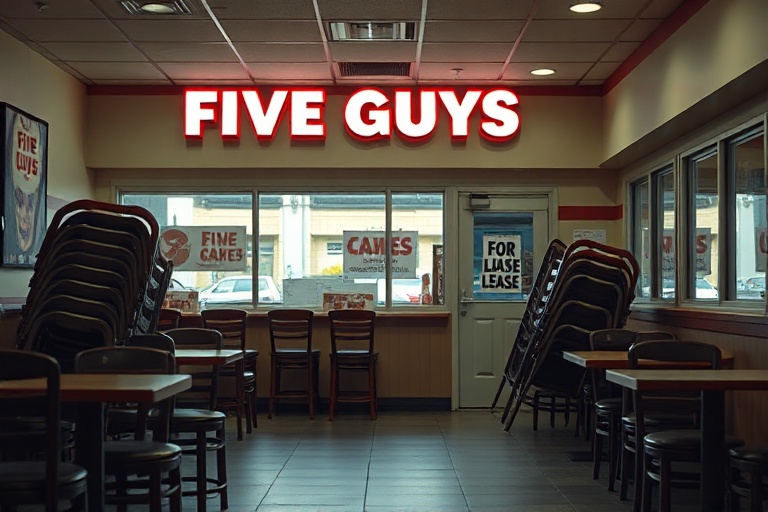
Five Guys to Close 150 Stores by 2026: A Strategic Shift or Market Retreat?
The fast-casual burger chain Five Guys has announced a sweeping store closure plan, with 150 locations set to shut their doors by the end of 2026. This decision marks one of the most significant strategic pivots in the brand’s 30-year history, raising questions about its long-term viability in an increasingly competitive market. While Five Guys has cultivated a dedicated fanbase for its no-frills, high-quality burgers and fries, the company’s leadership appears to be recalibrating its global footprint in response to shifting consumer habits and economic pressures.
The closures will affect stores across the United States, Canada, Europe, and the Middle East, with the most substantial cuts occurring in urban markets where real estate costs and operating expenses have surged. Analysts suggest that the move aligns with a broader trend among legacy brands to streamline operations and focus on high-performing locations. Yet, for a company that once expanded aggressively, the decision also signals a potential retreat from markets where it struggled to gain traction.
The Economic and Operational Factors Behind the Closures
Five Guys’ decision to close 150 stores is not an isolated incident but part of a larger recalibration in the fast-casual dining sector. Rising labor costs, supply chain disruptions, and changing consumer preferences have squeezed profit margins for many chains. The COVID-19 pandemic accelerated these trends, forcing even stalwart brands to rethink their strategies. For Five Guys, which has long prided itself on its “no bells and whistles” approach, the closures may reflect a need to cut losses in markets where growth has stagnated.
According to internal company documents obtained by Restaurant Business Online, the closures will prioritize underperforming stores, particularly those in high-rent urban centers where foot traffic has not met expectations. The company’s leadership has emphasized that the closures are part of a “phased optimization strategy” rather than a full-scale retreat. However, the scale of the cuts—nearly 10% of its global store count—suggests a more fundamental shift in how Five Guys views its future.
The economic pressures facing Five Guys are not unique. Competitors like Shake Shack, Chipotle, and Sweetgreen have also faced challenges in maintaining profitability amid rising costs. Yet, Five Guys’ approach stands out for its bluntness. Unlike some chains that rely on aggressive marketing or menu innovation to drive sales, Five Guys has historically relied on word-of-mouth and a loyal customer base. The closures may indicate that this strategy is no longer sufficient in a market where convenience and affordability are increasingly critical.
A Global Perspective: Where Are the Closures Happening?
The geographic distribution of Five Guys’ closures offers a revealing snapshot of the brand’s struggles in certain markets. While the United States will bear the brunt of the cuts—with approximately 100 locations slated for closure—international markets are also affected. In Canada, where Five Guys has a strong presence, around 20 stores will close, primarily in secondary cities where competition from local chains has intensified. The Middle East, once a key growth market for the brand, will see 15 closures, with most locations in Dubai and Riyadh shuttered due to high operational costs.
Europe presents a particularly interesting case. Five Guys entered the European market in 2013 with much fanfare, opening its first location in London. However, the brand has struggled to gain traction in a region dominated by established fast-casual and quick-service players. The company will close all 15 of its European stores by 2026, signaling a complete withdrawal from the continent. This decision reflects broader challenges faced by American brands in Europe, where cultural preferences for local cuisine and a preference for smaller, independent eateries often clash with the standardized offerings of international chains.
In contrast, Five Guys will maintain a strong presence in its core markets, including the U.S. East Coast and select Midwestern and Southern cities. The brand’s leadership has indicated that it will focus on stores with high sales volumes and strong customer loyalty. This approach mirrors strategies employed by other legacy brands, such as McDonald’s, which has shifted its focus to franchise-owned locations and high-traffic urban hubs.
The Cultural Impact: What Does This Mean for Five Guys’ Legacy?
Five Guys’ rise to prominence in the 2000s and 2010s was fueled by a combination of high-quality ingredients, customizable menus, and a no-nonsense brand ethos. The chain became a darling of the fast-casual sector, often cited as a model for how to build a successful restaurant brand without relying on gimmicks. Yet, the decision to close 150 stores suggests that even a brand with such a strong identity is not immune to the pressures of modern dining.
The closures may also reflect a generational shift in consumer preferences. Younger diners, particularly millennials and Gen Z, are increasingly drawn to brands that emphasize sustainability, transparency, and convenience. While Five Guys has made strides in sourcing local ingredients and offering customizable options, its reliance on a traditional fast-casual model may not resonate with a demographic that prioritizes speed and digital integration. The rise of delivery apps and ghost kitchens has further complicated the landscape, forcing even well-established brands to adapt or risk obsolescence.
For longtime fans of Five Guys, the closures could evoke a sense of nostalgia. The brand’s simple menu, generous portions, and focus on quality over frills made it a staple for families, college students, and burger enthusiasts alike. Yet, nostalgia alone cannot sustain a business in an era of rapid change. The closures may signal the end of an era for Five Guys, but they also present an opportunity for the brand to reinvent itself—perhaps by doubling down on its strongest markets or exploring new formats, such as smaller, kiosk-style locations or expanded delivery options.
What’s Next for Five Guys and the Fast-Casual Industry?
The closure of 150 Five Guys stores by 2026 is more than just a business decision; it’s a bellwether for the fast-casual industry as a whole. The move underscores the challenges facing even the most established brands in a market where consumer habits, economic conditions, and competitive pressures are in constant flux. For Five Guys, the closures represent a necessary but painful step toward long-term sustainability. Whether the brand can emerge stronger from this process remains to be seen.
For the broader industry, the Five Guys closures serve as a reminder that no brand is too big to fail. The fast-casual sector, once hailed as the future of dining, is now facing a reckoning. Chains that fail to adapt—whether by embracing technology, rethinking their menus, or streamlining their operations—risk being left behind. Five Guys’ decision to close stores may be a sign of retreat, but it could also be the first step toward a more resilient future.
As the dining landscape continues to evolve, one thing is clear: the brands that thrive will be those that can balance tradition with innovation, quality with convenience, and nostalgia with progress. For Five Guys, the road ahead is uncertain, but the closures may ultimately pave the way for a stronger, more focused brand.