Florentino Pérez: The Architect of Modern Real Madrid
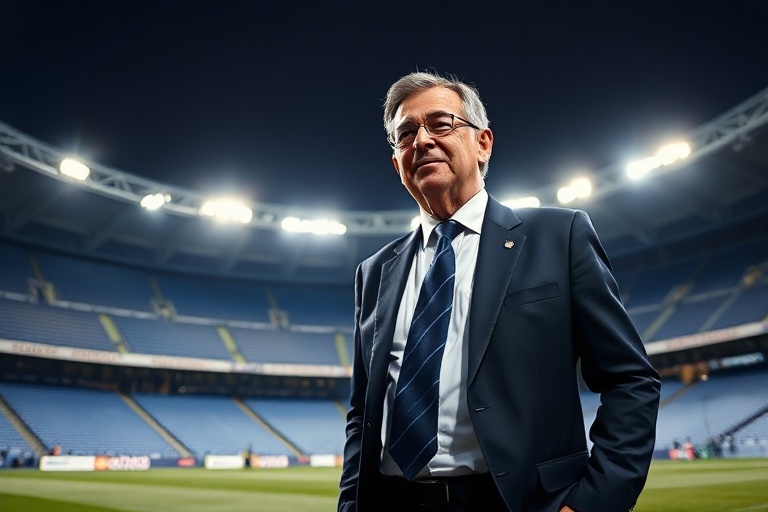
Florentino Pérez has reshaped Real Madrid into a global football empire, blending business acumen with sporting ambition. Since his first tenure as president in 2000, and again after his return in 2009, Pérez has overseen a transformation that extends beyond trophies. His leadership style—characterized by bold financial strategies, charismatic public persona, and an unyielding pursuit of “Galácticos”—has redefined what it means to run a football club. While his methods have sparked debate, there’s little doubt that Pérez’s vision has cemented Real Madrid’s dominance both on and off the pitch.
From Construction to the Bernabéu
Born in 1947 in Madrid, Pérez initially built his reputation as a construction magnate before entering politics. His political career included serving as a councilman in Madrid during the late 1970s, but it was his business ventures that laid the foundation for his later success. By the 1990s, Pérez’s company, ACS Group, had become a major player in infrastructure and energy projects across Spain and Latin America. This financial prowess would later prove crucial in his pursuit of the Real Madrid presidency.
Pérez first ran for president in 1995, narrowly losing to incumbent Ramón Mendoza. His platform focused on reducing debt and modernizing the club’s operations—issues that resonated with members frustrated by years of financial mismanagement. Though he fell short, Pérez’s persistence paid off in 2000 when he defeated Lorenzo Sanz, inheriting a club burdened by debt but rich in history. His victory marked the beginning of a new era, one defined by ambition, spectacle, and a relentless drive for success.
The Galácticos Era: A New Model for Football
Pérez’s most defining strategy was the “Galácticos” policy, which prioritized signing the world’s biggest stars—not just for their talent, but for their marketability. His first term saw the arrivals of Luís Figo, Zinedine Zidane, Ronaldo Nazário, and David Beckham, among others. These signings weren’t merely sporting investments; they were global branding moves. The strategy paid immediate dividends, culminating in the Champions League triumph in 2002, Real Madrid’s ninth European title.
However, the Galácticos approach was not without criticism. Detractors argued that Pérez’s spending prioritized glamour over sustainability, leading to financial instability in later years. The club’s debt ballooned to over €200 million by 2006, prompting Pérez to step down. Yet, his return in 2009—amid another financial crisis—proved that his vision still held sway. This time, Pérez refined his model, balancing marquee signings with younger talents like Cristiano Ronaldo and Sergio Ramos while leveraging Real Madrid’s commercial appeal to reduce reliance on debt.
The results speak for themselves. Under Pérez, Real Madrid has won five Champions League titles since 2014, including three consecutive triumphs from 2016 to 2018. The club’s revenue has also soared, making it the highest-earning football club in the world for years. Pérez’s ability to merge sporting success with financial growth has set a new standard for football governance.
A Vision Beyond the Pitch
Pérez’s influence extends far beyond transfers and trophies. He has positioned Real Madrid as a global brand, expanding its reach through strategic partnerships and digital innovation. The club’s official YouTube channel, for example, boasts over 10 million subscribers, while its social media presence is among the most engaged in sports. Pérez has also championed the renovation of the Santiago Bernabéu, a €1.2 billion project that will transform the stadium into a state-of-the-art entertainment hub.
His commitment to modernizing infrastructure is matched by his political savvy. Pérez has cultivated relationships with world leaders, from Spain’s monarchy to global business elites, ensuring Real Madrid remains a symbol of prestige. This diplomatic finesse was evident during the club’s role in the 2022 FIFA World Cup bid, where Pérez’s connections in Qatar helped secure the tournament’s hosting rights.
Yet, Pérez’s leadership is not without controversy. His close ties to FIFA and UEFA have drawn scrutiny, particularly regarding the club’s role in the controversial European Super League proposal in 2021. Critics accused Pérez of prioritizing financial gain over the integrity of the sport, a charge he has consistently denied. His response—framing the Super League as a necessary evolution for football—highlighted his willingness to challenge the status quo, even at significant reputational cost.
The Legacy of a Football Mogul
As Florentino Pérez approaches his eighth decade, his legacy is still being written. At 77, he shows no signs of slowing down, with Real Madrid continuing to dominate under his leadership. The club’s recent Champions League triumph in 2024, coupled with its record-breaking revenue, underscores the enduring power of his model. Yet, questions linger about the long-term sustainability of his approach. Can Real Madrid maintain its financial health without risking another debt crisis? Will the next generation of players live up to the Galácticos’ legacy?
What is undeniable is Pérez’s impact on football as a whole. He has redefined the role of a football president, blending the responsibilities of a CEO, a marketer, and a sporting director into a single, uncompromising vision. Clubs across Europe now emulate his commercial strategies, while his blend of ambition and pragmatism has set a new benchmark for success.
For fans of Real Madrid, Pérez’s leadership has delivered unparalleled success. For the football world, he has offered a blueprint for how a club can transcend sport to become a global institution. Whether admired or criticized, Florentino Pérez’s place in football history is secure—and his influence will be felt for decades to come.
Key Takeaways from Florentino Pérez’s Leadership
- Financial Innovation: Pérez transformed Real Madrid from a debt-ridden club into a financial powerhouse through strategic investments and commercial partnerships.
- Galácticos Strategy: His policy of signing the world’s biggest stars reshaped football economics, prioritizing marketability alongside sporting excellence.
- Infrastructure Development: The ongoing Bernabéu renovation project reflects his commitment to modernizing the club’s facilities and fan experience.
- Political Acumen: Pérez’s global network has elevated Real Madrid’s profile, from diplomatic engagements to high-profile sporting events.
For those interested in the business side of football, Pérez’s career offers a masterclass in leadership. To explore more on this topic, visit our Sports category, where we delve deeper into the intersection of football and finance. For a broader look at football governance, check out our Analysis section.
Florentino Pérez’s journey is far from over, but his place in football’s pantheon is already assured. As Real Madrid continues to chase glory, one thing is certain: the world’s most famous club would not be what it is today without him.