Francis Scott Key Bridge Collapse: Tragedy and Lessons for U.S. Infrastructure
The Francis Scott Key Bridge, spanning the Patapsco River in Baltimore, Maryland, stands as both a vital transportation artery and a poignant reminder of industrial might and human vulnerability. Completed in 1977 and named after the composer of “The Star-Spangled Banner,” the bridge was a marvel of modern engineering—until its sudden collapse in March 2024. This tragedy not only disrupted one of the nation’s busiest ports but also raised urgent questions about infrastructure safety, maritime security, and the legacy of American industrial ambition.
The Bridge’s Origins and Engineering Legacy
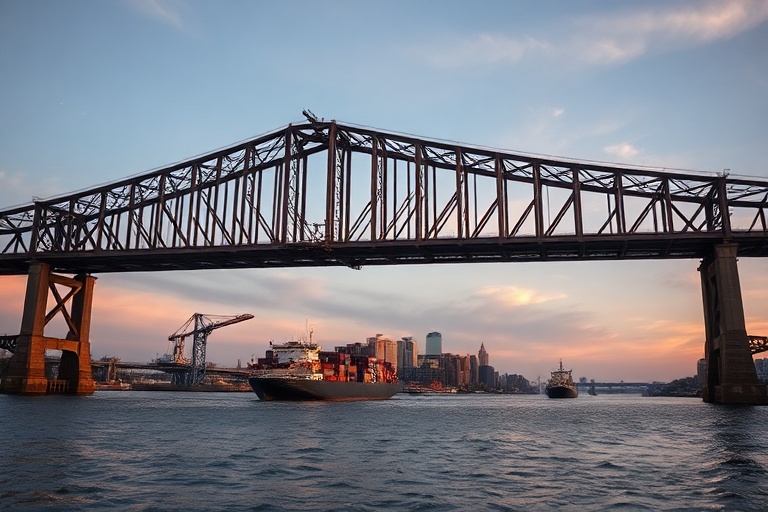
Designed as a continuous steel truss bridge, the Francis Scott Key Bridge was part of Interstate 695, a critical segment of Baltimore’s beltway system. Its 1.6-mile span connected the bustling Port of Baltimore to the surrounding region, supporting over 30,000 vehicles daily. The bridge’s construction was a response to the growing need for efficient freight movement in the mid-20th century, a period when American infrastructure was expanding rapidly to meet post-war economic demands.
The bridge’s continuous truss design allowed for long spans without intermediate supports, a feature that minimized disruption to river traffic. Its three main spans, including a 750-foot-long center section, were built to withstand the pressures of heavy load-bearing and harsh weather conditions. For decades, it operated with remarkable reliability, earning its place as a key component of the region’s economic backbone.
National Significance in the Port Economy
The Port of Baltimore, where the bridge once stood, is one of the largest in the United States, particularly for automobile imports and coal exports. The Francis Scott Key Bridge was not just a roadway—it was a lifeline for thousands of businesses, from local manufacturers to international shipping companies. The bridge’s collapse in March 2024, triggered by a collision with the container ship Dali, severed this critical link overnight.
In the aftermath, the port’s closure led to rerouted shipments, delayed deliveries, and financial losses estimated in the hundreds of millions. Truckers, commuters, and logistics companies scrambled to adapt, while economists warned of ripple effects across supply chains. The incident underscored how deeply modern commerce relies on single points of failure—even in an era of advanced logistics.
The Collapse: What Happened and Why It Matters
On March 26, 2024, at approximately 1:30 AM, the container ship Dali—a 984-foot vessel operated by Maersk—lost power while passing under the Francis Scott Key Bridge. The ship veered off course, striking one of the bridge’s piers with catastrophic force. The impact caused a catastrophic structural failure, sending the entire bridge into the river below within seconds. The disaster claimed six construction workers’ lives and left two others missing, presumed dead.
Investigations by the National Transportation Safety Board (NTSB) and the FBI revealed multiple contributing factors. Preliminary findings suggest that the Dali’s sudden loss of propulsion, possibly due to an electrical failure, played a central role. However, questions remain about whether pilot error, mechanical malfunctions, or systemic oversight contributed to the tragedy. The incident also highlighted vulnerabilities in bridge design, particularly the lack of protective barriers around vulnerable piers—a flaw that has been noted in other recent bridge failures.
Human Toll and Community Response
The collapse left a deep scar on Baltimore’s community. The six workers who perished were part of a crew repairing potholes on the bridge—an irony not lost on residents. Vigils were held along the waterfront, and local leaders called for a moment of silence at baseball games and city council meetings. The tragedy became a symbol of the fragility of human life in an era where progress often feels unstoppable.
In the days following the disaster, volunteers and first responders worked tirelessly to recover victims and clear debris. The U.S. Army Corps of Engineers and Navy divers joined the effort, navigating the murky waters of the Patapsco River. Meanwhile, Maryland Governor Wes Moore declared a state of emergency, and President Joe Biden pledged federal support for rebuilding efforts.
Rebuilding and the Future of American Infrastructure
As of mid-2024, plans to rebuild the Francis Scott Key Bridge are already underway. Maryland transportation officials have proposed a new structure that incorporates lessons learned from the collapse, including enhanced pier protection and real-time structural monitoring systems. The project is expected to take years and cost billions, raising debates about funding and prioritization in an era of tight budgets.
This disaster has reignited conversations about the state of America’s aging infrastructure. The American Society of Civil Engineers (ASCE) gave U.S. bridges a C grade in its 2021 Infrastructure Report Card, noting that over 40% of bridges are more than 50 years old. The Francis Scott Key Bridge collapse serves as a stark reminder of the cost of neglect—financial and human.
Policy Changes and Maritime Safety Reforms
The Biden administration has signaled support for stronger maritime safety regulations, including mandatory pilot escorts for large vessels in high-risk areas and improved vessel tracking systems. The Coast Guard has already announced new guidelines for bridge protection zones, requiring enhanced structural reinforcements for bridges deemed critical to national commerce.
Meanwhile, Congress is considering legislation to create a federal infrastructure safety fund, aimed at preventing similar tragedies. Bills like the Rebuild America’s Bridges Act propose dedicating billions to repair and modernize at-risk structures. However, political gridlock and competing budget priorities threaten to delay progress.
Lessons and Legacy
The Francis Scott Key Bridge collapse is more than an isolated tragedy—it is a turning point for how America views its infrastructure. The disaster has forced a reckoning with the consequences of deferred maintenance, underfunded agencies, and the intersection of industrial progress and human safety. It has also highlighted the resilience of communities like Baltimore, which have come together in grief and determination.
As reconstruction begins, the bridge’s legacy will evolve. It will no longer be just a symbol of engineering prowess but also a cautionary tale. The lessons learned—about safety, accountability, and the true cost of progress—will shape the future of American infrastructure for decades to come.
For now, the empty span over the Patapsco River stands as a silent memorial to what was lost and a reminder of what must be rebuilt—not just in steel and concrete, but in policy and purpose.
To learn more about infrastructure safety initiatives, visit our News section. For deeper analysis on economic impacts of supply chain disruptions, explore our Analysis category.