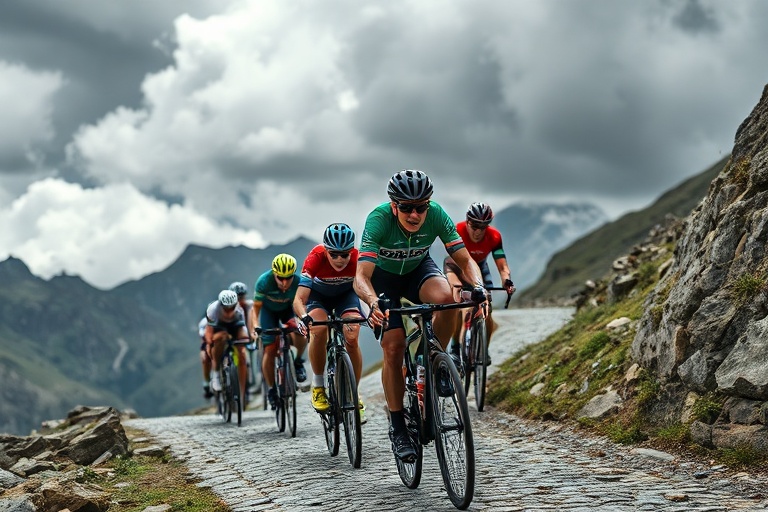
Giro d’Italia: The Legendary Race Shaping Cycling’s Future
Giro d’Italia: A Century of Cycling Excellence and Enduring Tradition
The Giro d’Italia stands as one of the most prestigious and grueling events in professional cycling. Founded in 1909 by the newspaper La Gazzetta dello Sport, this three-week Grand Tour has grown from a regional race into a global spectacle that captures the imagination of millions. Unlike its counterparts, the Tour de France and Vuelta a España, the Giro is uniquely Italian in its soul—its routes often weave through the dramatic landscapes of the Dolomites and Apennines, while its culture mirrors the country’s passion for drama, suffering, and redemption.
The race’s origins trace back to a rivalry between two Milan-based newspapers. La Gazzetta, printed on pink paper, sought to boost circulation by launching a race that would outshine the Corriere della Sera‘s Milan-San Remo event. Within days of the first edition in May 1909, 127 riders set off from Milan, covering 2,448 kilometers over eight stages. Only 49 finished. This spirit of endurance and unpredictability has defined the Giro ever since.
The Route: A Test of Human and Mechanical Limits
The Giro’s parcours is meticulously designed to challenge the world’s best cyclists. Each year, the race traverses Italy from north to south or vice versa, incorporating a mix of flat stages for sprinters, rolling hills for puncheurs, and high mountain passes that decide the overall classification. Iconic climbs like the Stelvio, Gavia, and Mortirolo have become synonymous with suffering and glory.
The 2024 edition, for instance, featured the Passo dello Stelvio—a 27-kilometer ascent with gradients up to 14%. Such stages are not just physical tests but tactical puzzles. Teams must decide when to attack, when to conserve energy, and how to support their leaders through relentless pressure. The Giro’s unpredictable weather, from scorching heat to sudden snowfall, adds another layer of complexity.
In recent years, the race has increasingly ventured beyond Italy’s borders. The 2023 Giro began in Hungary, while the 2020 edition started in Sicily to accommodate COVID-19 restrictions. These international starts broaden the Giro’s appeal but also spark debates about tradition versus innovation.
- Key Elements of the Giro’s Route:
- Mountain stages (often featuring multiple Cima Coppi climbs, the highest point of the race)
- Time trials, including individual and team efforts
- Sprint finishes in cities like Naples, Turin, and Rome
- Rest days strategically placed to manage fatigue
The Jerseys: Symbols of Triumph and Legacy
The Giro’s iconic jerseys are more than just uniforms—they represent history, rivalry, and ambition. The Maglia Rosa (pink jersey) is awarded to the overall leader, a tradition dating back to 1931 when it was introduced to match La Gazzetta’s pink pages. Wearing the Maglia Rosa is a lifelong dream for many riders, a badge of honor earned through suffering and strategy.
The Maglia Ciclamino (cyclamen jersey) rewards the best sprinter, while the Maglia Azzurra (blue jersey) goes to the King of the Mountains. These jerseys often become the focal point of intense battles. For example, in 2023, Primož Roglič wore the Maglia Rosa for 11 stages before Tadej Pogačar seized it in a dramatic mountain stage. Such moments encapsulate the Giro’s unpredictable drama.
Beyond the jerseys, the Giro has produced legendary rivalries. The 1980s battles between Francesco Moser and Giuseppe Saronni, or the more recent duel between Vincenzo Nibali and Nairo Quintana, have cemented the race’s reputation as a theater of heroes and antiheroes. The Giro doesn’t just crown champions; it writes stories that endure for generations.
The Giro’s Cultural Impact: More Than Just a Race
The Giro d’Italia is deeply embedded in Italian culture. It’s a national obsession, a rite of passage for young cyclists, and a source of pride for local communities. Towns along the route shut down for entire days as spectators line the roads, waving flags and shouting encouragement. The race’s pink inflatable arches, known as cimelle, are as recognizable as the jerseys themselves.
Yet the Giro’s influence extends far beyond Italy. It has launched international careers, such as that of Colombian climber Nairo Quintana, who won the Giro in 2014 and became a global star. The race has also been a platform for activism, with riders like Fabio Aru and Gianni Moscon using their visibility to advocate for social causes. In 2021, the Giro dedicated stages to frontline workers during the COVID-19 pandemic, blending sport with solidarity.
The Giro’s media coverage has evolved dramatically. In the early 20th century, fans relied on newspaper bulletins to follow the race. Today, live streaming, social media, and drone footage bring the action to millions worldwide. However, this digital transformation has also raised concerns about commercialization and the erosion of the Giro’s grassroots charm.
Challenges and Controversies: The Giro’s Complex Legacy
Despite its glamour, the Giro has faced its share of controversies. Doping scandals have marred its history, from Marco Pantani’s infamous 1999 disqualification to more recent investigations into team practices. The pressure to perform, combined with the extreme demands of the race, has led to ethical dilemmas that continue to spark debate.
Another challenge is sustainability. The Giro’s massive caravan of team cars, journalists, and spectators leaves a significant carbon footprint. In response, organizers have introduced greener initiatives, such as using electric support vehicles and reducing single-use plastics. These efforts reflect a growing awareness of the race’s environmental impact.
The Giro has also grappled with its identity in the modern cycling calendar. With the rise of new races like the Tour of Flanders and Strade Bianche, the Giro must balance tradition with innovation. Some argue that the race’s length (three weeks) is unsustainable in an era of compressed schedules, while others insist that its endurance test is what sets it apart.
For those interested in exploring cycling gear or apparel inspired by the Giro’s iconic designs, check out our Sports section for curated recommendations.
What the Future Holds for the Giro d’Italia
The Giro’s future appears bright, but not without challenges. Organizers are increasingly focusing on fan engagement, using augmented reality and interactive apps to enhance the viewing experience. There’s also a push to diversify the race’s narrative, highlighting stories from lesser-known riders and regions.
Technological advancements will continue to shape the Giro. From aerodynamic bike frames to real-time performance analytics, innovation is redefining what’s possible in professional cycling. Yet, the race’s soul remains rooted in its past—its cobblestone roads, its unpredictable weather, and its unyielding spirit of perseverance.
The Giro d’Italia is more than a sporting event; it’s a celebration of human resilience, a testament to teamwork, and a living museum of cycling history. As it enters its second century, the Giro continues to inspire new generations of riders and fans alike, proving that the road to glory is as much about the journey as the destination.
For a deeper look at cycling’s most iconic races, visit our Entertainment section, where we explore the intersection of sport and culture.