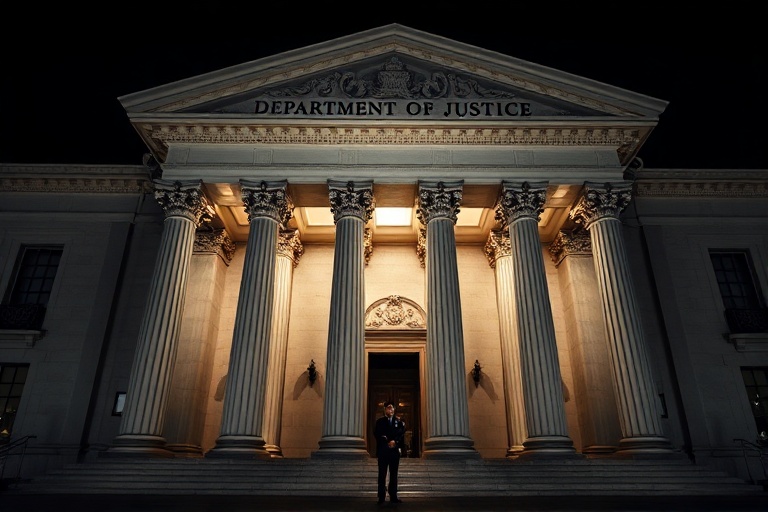
How the U.S. Department of Justice Shapes Global Law and Justice
The Founding and Evolution of the DOJ
The United States Department of Justice (DOJ) stands as one of the most powerful federal agencies in the world. Established in 1870, its creation marked a deliberate effort to centralize law enforcement and legal authority under a single cabinet-level department. Before its formation, federal law enforcement was fragmented, with agencies like the U.S. Marshals Service operating independently. The DOJ’s establishment was driven by the need for a cohesive legal strategy, particularly in the post-Civil War era when the federal government sought to assert its authority over Reconstruction and civil rights enforcement.
Over the decades, the DOJ has expanded its scope far beyond its original mandate. It now oversees everything from antitrust enforcement to civil rights protections, reflecting the evolving priorities of American governance. The department’s influence extends into global affairs, where it collaborates with international bodies like Interpol and Europol to combat transnational crime. This dual domestic-international role has made the DOJ a key player in shaping not just American law, but global legal standards as well.
Key Divisions and Their Global Reach
The DOJ’s organizational structure is divided into several critical divisions, each with specialized functions that ripple across borders. The Criminal Division handles federal crimes, including cybercrime, human trafficking, and corruption—areas where international cooperation is essential. The Antitrust Division monitors global mergers and monopolistic practices, often clashing with foreign governments over jurisdiction. Meanwhile, the Civil Rights Division addresses discrimination worldwide, intervening in cases that set precedents for international human rights law.
One of the DOJ’s most visible arms is the Federal Bureau of Investigation (FBI), which operates as its investigative wing. The FBI’s reach extends into cybersecurity, counterterrorism, and espionage, often working with foreign intelligence agencies. For example, the FBI’s role in dismantling cybercriminal networks has led to joint operations with European and Asian counterparts. This interconnected approach underscores how the DOJ’s divisions don’t just enforce American law—they shape global security frameworks.
Notable Divisions Within the DOJ
- National Security Division (NSD): Focuses on counterterrorism, espionage, and cyber threats, often collaborating with NATO and the UN.
- Environment and Natural Resources Division: Handles cases involving international environmental crimes, such as illegal wildlife trafficking.
- Tax Division: Pursues global tax evasion schemes, working with organizations like the OECD to combat financial crimes.
- Office of Justice Programs: Funds research and initiatives that influence law enforcement practices worldwide.
The DOJ’s Role in Shaping International Law
The DOJ doesn’t just enforce laws—it helps create them. Through its involvement in treaties, extradition requests, and legal precedents, the department plays a pivotal role in defining international justice. One of its most significant contributions is the Foreign Corrupt Practices Act (FCPA), enacted in 1977 to combat bribery in global business. The FCPA has inspired similar laws in countries like the UK and Germany, demonstrating how American legal frameworks can influence global governance.
The DOJ also wields significant soft power through its Office of Overseas Prosecutorial Development, which trains foreign prosecutors in best practices. These programs have been particularly impactful in regions like Latin America and Africa, where weak judicial systems often hinder justice. By exporting legal expertise, the DOJ strengthens its influence while fostering international stability.
However, this global reach isn’t without controversy. Critics argue that the DOJ’s extraterritorial jurisdiction—such as its enforcement of sanctions against foreign entities—can overstep sovereign boundaries. Cases like the prosecution of foreign banks for violating U.S. sanctions have sparked diplomatic tensions, highlighting the delicate balance between enforcement and international relations.
Cultural and Political Impact
The DOJ’s work resonates far beyond courtrooms and legislative halls. Its decisions often spark public debates about justice, accountability, and the limits of government power. High-profile cases, such as the prosecution of corporate executives or the investigation into foreign election interference, frequently dominate headlines, shaping public opinion on issues like corporate ethics and national security.
Internationally, the DOJ’s actions can influence how other nations perceive the United States. For instance, its aggressive pursuit of tech giants like Google and Apple over antitrust violations has led some countries to adopt similar stances, viewing the U.S. as a model for regulatory enforcement. Conversely, the DOJ’s role in controversies—such as the handling of whistleblowers or the use of controversial legal tactics—has drawn criticism from global human rights organizations.
The department’s cultural footprint extends into popular media as well. From documentaries about landmark civil rights cases to fictionalized portrayals in crime dramas, the DOJ’s work has seeped into the public imagination. This visibility reinforces its role not just as an enforcer of laws, but as a symbol of justice—or, for some, a symbol of institutional overreach.
Conclusion: A Department That Defines Justice, Locally and Globally
The United States Department of Justice remains one of the most consequential legal institutions in the world. Its ability to adapt to emerging threats—from cybercrime to climate-related crimes—ensures its relevance in an ever-changing global landscape. Whether through prosecuting corrupt officials, shaping international treaties, or training foreign legal professionals, the DOJ’s impact is undeniable.
Yet, its power also invites scrutiny. The DOJ’s expansive reach raises questions about sovereignty, accountability, and the ethical boundaries of legal enforcement. As globalization continues to blur the lines between domestic and international law, the department will need to navigate these complexities carefully. For now, the DOJ stands as a testament to the enduring influence of American legal principles—even as it grapples with the contradictions of its own power.
For those interested in exploring how the DOJ’s work intersects with other areas of global governance, consider reading about its collaborations with international organizations or its role in sports integrity, where legal enforcement intersects with ethical controversies.