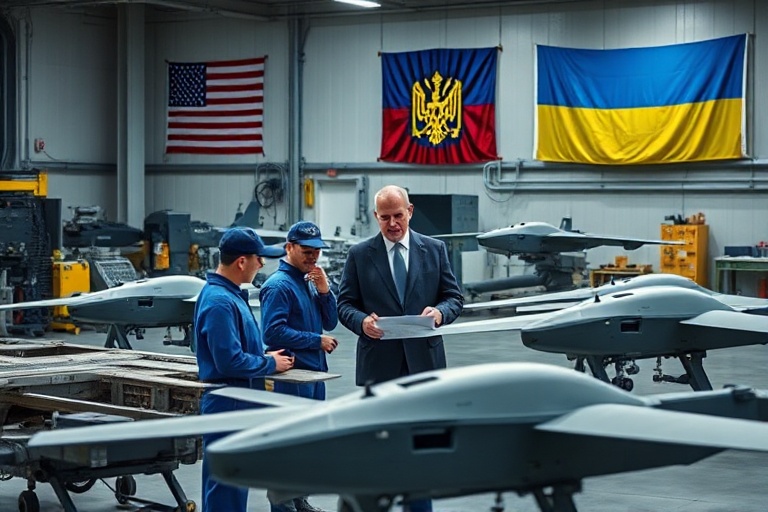
Joint Drone Manufacturing Between Ukraine and the US Gains Momentum
The collaboration between Ukraine and the United States in drone manufacturing has become a defining feature of the 21st century’s defense industry. As global conflicts reshape priorities, the partnership has evolved from a strategic necessity to a model of international cooperation. This alliance is not only strengthening military capabilities but also fostering technological innovation and economic growth in both nations.
The roots of this collaboration trace back to the early 2010s, when Ukraine’s defense sector began seeking foreign partnerships to modernize its military. The Maidan Revolution in 2014 and subsequent conflicts with Russia accelerated the need for advanced defense technologies. Meanwhile, the United States identified Ukraine as a key partner in Eastern Europe, particularly as tensions with Russia escalated. The result was a series of agreements and joint ventures aimed at producing drones tailored to modern warfare.
The Evolution of the Partnership
The joint drone manufacturing initiative has undergone significant changes since its inception. Initially focused on surveillance and reconnaissance, the scope expanded to include first-person view (FPV) drones, loitering munitions, and electronic warfare capabilities. These advancements were driven by the urgent demands of the war in Ukraine, where drones have become a critical tool on the battlefield.
Ukraine’s expertise in drone technology, honed through years of conflict, has complemented the United States’ manufacturing prowess and financial resources. The partnership has also benefited from Ukraine’s growing IT sector, which has produced a new generation of engineers and software developers. Meanwhile, American companies have contributed cutting-edge components, such as advanced sensors, communication systems, and propulsion technologies.
One of the most notable projects under this partnership is the production of the Bayraktar TB2, a medium-altitude, long-endurance drone originally developed by Turkey. While not manufactured jointly, its deployment in Ukraine highlighted the potential for international collaboration in drone warfare. More recently, Ukrainian and American firms have focused on developing indigenous solutions, such as the Ukrainian-made PD-2 and the American Switchblade 600, both designed for precision strikes and reconnaissance.
Key Players and Industrial Contributions
The success of this collaboration hinges on the contributions of both governments and private-sector entities. In Ukraine, companies like Aerorozvidka and Ukroboronprom have played pivotal roles in designing and producing drones. These firms have leveraged local resources and international partnerships to accelerate production.
On the American side, defense contractors such as General Atomics and Lockheed Martin have provided critical technologies and funding. These companies have decades of experience in aerospace and defense, making them ideal partners for Ukraine’s burgeoning drone industry. The U.S. government has also supported the initiative through the Ukraine Security Assistance Initiative (USAI), which allocates funds for joint defense projects.
The partnership extends beyond traditional defense contractors. Startups and tech firms have entered the fray, bringing fresh ideas and agility to the industry. For example, SparkCognition, an Austin-based AI company, has collaborated with Ukrainian engineers to develop autonomous drone systems capable of operating in contested environments. Meanwhile, Ukrainian firms like Ukrspecsystems have focused on miniaturizing drone components to enhance portability and stealth.
Challenges and Ethical Considerations
Despite its successes, the joint drone manufacturing initiative faces several challenges. Supply chain disruptions, particularly in the wake of the COVID-19 pandemic and Russia’s invasion of Ukraine, have slowed production. Additionally, the ethical implications of drone warfare remain a contentious issue. The use of drones in civilian areas has raised concerns about collateral damage and the psychological impact on local populations.
Another challenge is the need for standardization. Different drone systems operate on varying frequencies and protocols, complicating interoperability between Ukrainian and American forces. Efforts are underway to develop common communication frameworks, but progress has been uneven. Meanwhile, the rapid pace of technological advancement means that drones can quickly become obsolete, requiring constant innovation and investment.
Ethical concerns have also prompted discussions about regulation. The proliferation of drones has led to calls for international treaties to govern their use in warfare. The United Nations has convened multiple meetings on the subject, but no binding agreements have been reached. For now, the Ukraine-US partnership operates under a framework of mutual trust and shared strategic interests.
The Global Impact of the Partnership
The Ukraine-US drone manufacturing collaboration has reverberated beyond its immediate participants. Other nations, including Poland, the United Kingdom, and the Baltic states, have expressed interest in joining the initiative or developing similar partnerships. The success of this model has demonstrated that smaller countries can leverage their technological strengths to secure international support.
Economically, the partnership has revitalized Ukraine’s defense industry, creating thousands of jobs and attracting foreign investment. The country’s drone exports have surged, with countries in Africa and the Middle East expressing interest in Ukrainian-made systems. Meanwhile, the United States has strengthened its foothold in Eastern Europe, countering Russian influence and expanding its defense industrial base.
Culturally, the partnership has fostered a sense of resilience and innovation among Ukrainians. The war has galvanized the population, with civilians and engineers alike contributing to the drone effort. This spirit of collaboration has also influenced the tech community, where open-source projects and hackathons have become commonplace. The result is a new wave of Ukrainian tech talent, many of whom are now working in the defense sector.
The global drone market is projected to grow exponentially in the coming years, with military applications driving much of the demand. The Ukraine-US partnership is well-positioned to capitalize on this trend, serving as a blueprint for future collaborations. As drones become increasingly integral to modern warfare, the lessons learned from this initiative will shape the industry for decades to come.
What’s Next for the Ukraine-US Drone Alliance?
The future of the joint drone manufacturing initiative looks promising, but it is not without risks. One of the most pressing questions is whether the partnership can maintain its momentum after the war in Ukraine ends. Historically, defense collaborations have waned once immediate threats subside, but the technological and economic benefits of this alliance may ensure its longevity.
Another critical factor is the role of artificial intelligence. AI-driven drones are expected to revolutionize warfare, enabling autonomous targeting and swarm tactics. Both Ukraine and the United States are investing heavily in AI research, and joint projects in this field could yield groundbreaking advancements. However, the ethical implications of AI in warfare will require careful consideration to prevent unintended consequences.
The partnership also presents opportunities for civilian applications. Drones are increasingly used in agriculture, logistics, and disaster response, and Ukrainian-American collaboration could lead to innovations in these sectors. For example, drones equipped with advanced sensors could monitor crop health or deliver medical supplies to remote areas.
As the world watches the Ukraine-US drone alliance unfold, it serves as a reminder of the power of international cooperation. In an era of geopolitical tension, this partnership offers a model for how nations can work together to address shared challenges. Whether through defense, economic growth, or technological innovation, the collaboration is poised to leave a lasting impact on the global stage.
For those interested in the intersection of technology and geopolitics, Technology and Analysis on Dave’s Locker provide further insights into how these trends are shaping the world.