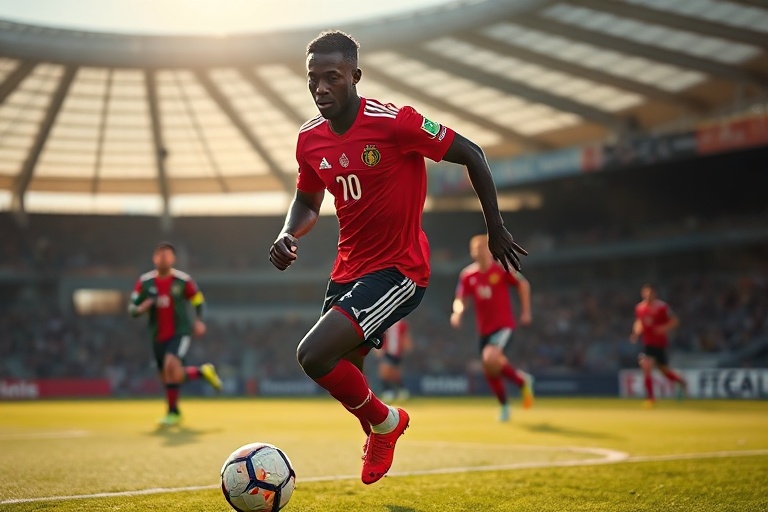
Ismaïla Sarr has quietly emerged as one of Africa’s most exciting football talents, a player whose blend of pace, technique, and tactical intelligence is reshaping expectations for wingers in Europe’s top leagues. At just 26 years old, the Senegalese international has already left his mark in Ligue 1 and the English Premier League, while anchoring Senegal’s golden generation that claimed the 2021 Africa Cup of Nations. His journey from Dakar’s dusty streets to the hallowed pitches of Europe is more than a personal triumph—it reflects broader trends in African football development and the increasing value placed on technical, versatile forwards.
The Early Years: From Dakar to Rennes
Born on February 25, 1998, in Saint-Louis, Senegal, Sarr’s footballing foundation was laid in the country’s youth academies, where raw talent is often nurtured in challenging conditions. He began his professional career at Génération Foot, a famed Senegalese academy that has produced stars like Sadio Mané and Ismaïla N’Diaye. His rapid development caught the attention of European scouts, leading to a move to Stade Rennais in France’s Ligue 1 in 2016 at the age of 18.
Sarr’s integration into European football wasn’t immediate. His first season in Rennes was marked by limited playing time, but a loan spell at Metz in 2017-18 provided the breakthrough he needed. Returning to Rennes, he became a key figure in a team that defied expectations by finishing third in Ligue 1 during the 2018-19 season and reaching the Coupe de France final. His performances—characterized by explosive dribbling, precise crossing, and an eye for goal—earned him a reputation as a player with the potential to shine on the biggest stages.
Key Attributes of Sarr’s Playing Style
- Pace and Dribbling: Sarr’s acceleration and close control allow him to take on multiple defenders in one-on-one situations, a trait that makes him particularly dangerous in transitional play.
- Versatility: While primarily deployed as a right winger, he has also played on the left and even as a false nine, showcasing his adaptability within different tactical systems.
- Crossing and Finishing: His delivery from wide areas is consistently accurate, and his improved composure in front of goal has increased his goal tally in recent seasons.
- Work Rate: Sarr’s defensive contributions—pressing high and tracking back—reflect the modern winger’s dual role as both creator and disruptor.
Breakthrough at Club and International Level
The 2019-20 season was a turning point. Sarr scored 11 goals and provided 5 assists in Ligue 1, helping Rennes reach the UEFA Champions League group stage. His goal against Paris Saint-Germain in a 2-1 win became a symbol of his growing influence—a moment that underlined his ability to deliver in high-pressure environments.
On the international stage, Sarr has been integral to Senegal’s rise. He made his debut for the national team in 2017 and was part of the squad that reached the 2019 Africa Cup of Nations final. His breakthrough came in the 2021 edition, hosted in Cameroon, where he played a pivotal role in Senegal’s first-ever AFCON triumph. Though overshadowed by Sadio Mané’s leadership, Sarr’s contributions—including assists in key matches—were vital in a tournament that showcased African football’s depth.
Sarr’s Role in Senegal’s Golden Era
Senegal’s 2021 AFCON victory was more than a sporting achievement; it was a cultural milestone for a nation with a rich footballing tradition but limited major trophies. Sarr, alongside teammates like Mané, Kalidou Koulibaly, and Saliou Ciss, represented a generation that bridged the gap between Africa’s raw talent and Europe’s tactical sophistication. Their success has inspired a new wave of young Senegalese players to aim for European clubs, reinforcing the idea that African football is no longer just a source of raw athleticism but of complete, technically gifted footballers.
Challenges and the Path Forward
Despite his progress, Sarr’s career has not been without challenges. Injuries have disrupted his momentum at critical times, and his move to Watford in the Premier League in 2023—while a career milestone—has coincided with the club’s struggles in the Championship. Adapting to the physicality and intensity of English football took time, but his performances in the 2023-24 season suggest he is settling in, with goals and assists contributing to Watford’s push for promotion.
Looking ahead, Sarr’s next steps could define the latter part of his prime. A return to the Premier League or a move to a top European club remains a possibility, particularly if he continues to refine his end product. His contract situation at Watford will be closely watched, as clubs across Europe monitor his progress. Equally important is his role in Senegal’s 2023 and 2026 World Cup campaigns, where expectations will be high following their AFCON success.
Broader Implications for African Football
Sarr’s career trajectory offers insights into the evolving landscape of African football. Clubs are increasingly scouting beyond the traditional powerhouses like Nigeria and Ivory Coast, with Senegal now a prime hunting ground. Sarr’s rise reflects a shift toward valuing players who combine technical skill with tactical awareness—qualities that are in high demand in modern football.
Moreover, Sarr’s success underscores the importance of development pathways. Academies like Génération Foot and partnerships between European clubs and African academies are proving critical in nurturing talent. The growth of leagues like the South African PSL and Morocco’s Botola also provides alternative routes for players who may not immediately break into Europe.
For young African players, Sarr’s journey is a blueprint: develop at home, earn a move to Europe, adapt quickly, and use international tournaments to showcase your abilities on the global stage. His story is a reminder that African football is not just a source of physical talent but of complete footballers capable of thriving in any league.
Conclusion: A Star on the Rise
Ismaïla Sarr’s career is still in ascent. At 26, he is entering what could be his peak years, with the potential to become one of Africa’s most decorated wingers in European football history. His blend of skill, intelligence, and resilience makes him a player to watch—not just for his club performances, but for the broader implications his career holds for African football’s future.
As Senegal continues to produce world-class talent and clubs increasingly value technical versatility, Sarr represents the new face of African football: polished, adaptable, and capable of shining on the biggest stages. Whether he lifts another trophy with Senegal, secures a dream move back to the Premier League, or continues to excel in the Championship, one thing is clear—Sarr is not just a rising star; he is helping redefine what African footballers can achieve.
For fans of the game, his story is a reminder that talent, when nurtured with the right opportunities, can transcend continents and leave a lasting legacy.
To explore more about African football talent pathways and rising stars, visit Dave’s Locker Sports and Dave’s Locker Analysis.