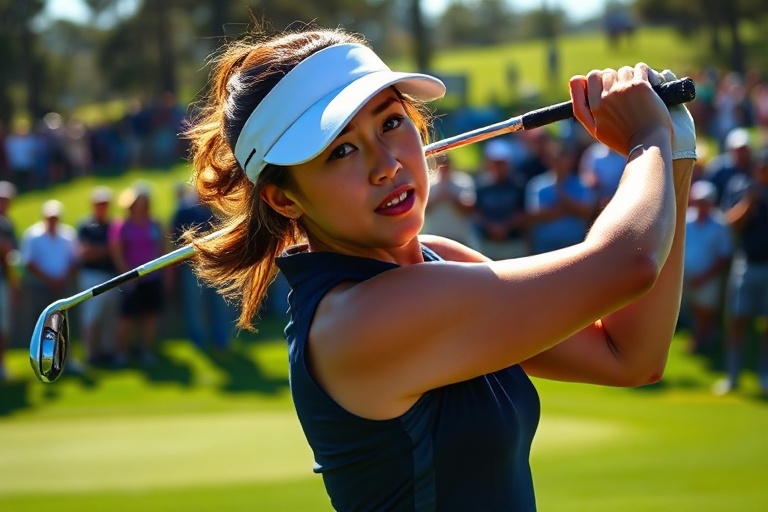
Michelle Wie West: A Legacy of Resilience and Global Golf Influence
Michelle Wie West: A Career Defined by Perseverance and Global Influence
Michelle Wie West stands as one of the most recognizable figures in women’s golf, her career spanning more than two decades across amateur and professional ranks. Born in Honolulu, Hawaii, in 1989 to Korean immigrant parents, Wie’s journey from prodigy to champion reflects not only athletic excellence but also the evolving role of Asian-American athletes in global sports. While she has not always dominated headlines in recent years, her impact on the game—and on perceptions of Asian representation in athletics—remains profound.
Wie turned professional at age 15 in 2005, becoming the youngest player ever to compete on the LPGA Tour at the time. Her early career was marked by intense media scrutiny, in part due to her rapid rise and the pressure of being hailed as the “next big thing.” Though she faced challenges adapting to the physical demands of professional golf, Wie’s resilience became a defining trait. Over time, she matured into a steady competitor, winning five LPGA Tour events, including her first major championship at the 2014 U.S. Women’s Open.
Wie’s success resonated deeply in both the United States and South Korea, where golf enjoys significant popularity. Her dual-heritage background made her a cultural bridge, inspiring young athletes across Asia to pursue the sport. At the same time, her journey highlighted the difficulties faced by teenage phenoms navigating fame, expectations, and the mental pressures of elite competition.
The Early Years: From Child Prodigy to Professional Debut
Wie’s golf career began at age four, inspired by her parents, who introduced her to the game as a recreational activity. By age 10, she was already competing in national junior tournaments and gaining attention for her powerful swing and precocious skill. Her amateur career included a series of record-breaking performances, such as becoming the youngest player to qualify for the U.S. Women’s Amateur Public Links at 13.
Her decision to turn professional at 15 was met with both excitement and skepticism. Critics questioned whether she was physically prepared for the rigors of the LPGA Tour, while fans saw her as the future of women’s golf. Wie’s presence brought new visibility to the LPGA, particularly in markets like South Korea, where women’s golf was growing rapidly.
Her early years on tour were a mix of breakthroughs and setbacks. In 2005, she made headlines by becoming the first female golfer to compete in a PGA Tour event since Babe Zaharias in 1945. Though she missed the cut at the Sony Open, the moment underscored her crossover appeal and the media’s fascination with her story.
Wie’s journey also reflected broader trends in women’s sports during the 2000s—an era when athletes like Serena Williams and Annika Sörenstam were redefining athletic excellence and commercial potential. Wie’s presence helped normalize the idea of Asian-American women competing at the highest level in a traditionally Western-dominated sport.
Major Triumphs and the Weight of Expectations
Wie’s breakthrough major win at the 2014 U.S. Women’s Open at Pinehurst No. 2 was a defining moment not only for her career but for the sport. The victory came after years of close calls and setbacks, including multiple runner-up finishes. Her emotional post-round interview, where she spoke about perseverance and faith, resonated widely and symbolized a matured athlete ready to claim her place among the game’s elite.
That win also marked a turning point in public perception. For years, Wie had been viewed through the lens of potential rather than achievement. But with the major title, she shifted the narrative from “the next big thing” to “a champion who delivered when it mattered.” The victory was particularly significant in South Korea, where it was broadcast nationally and celebrated as a milestone for Korean-American athletes.
Wie’s career highlights include:
- 2009: Won the Lorena Ochoa Invitational, becoming the youngest winner on the LPGA Tour at the time.
- 2010: Claimed the CN Canadian Women’s Open, further establishing herself among the top players.
- 2014: Secured her first major at the U.S. Women’s Open, defeating Stacy Lewis in a playoff.
- 2018: Won the LPGA Mediheal Championship, proving her longevity in a physically demanding sport.
Despite these accomplishments, Wie’s career was also marked by injuries and inconsistent form, common challenges in professional golf. Her ability to return to competitive play after surgeries and setbacks demonstrated the kind of mental toughness required to sustain a career at the highest level.
Beyond the Fairways: Michelle Wie’s Global and Cultural Impact
Wie’s influence extends beyond tournament scores and leaderboards. As one of the most prominent Asian-American athletes in golf, she has played a role in expanding the sport’s reach in Asia. Her success inspired a generation of young golfers, particularly girls in South Korea and the United States, to take up the game. Organizations and junior programs in both countries have cited Wie as a key figure in their growth strategies.
In South Korea, where golf is a mainstream sport with deep corporate sponsorship ties, Wie’s achievements helped legitimize the LPGA as a viable career path. Her presence on tour contributed to increased media coverage of the LPGA in Asian markets, which in turn attracted more Asian players to the professional ranks.
Wie has also been vocal about diversity and inclusion in golf, a sport often criticized for its lack of racial and ethnic representation. She has participated in initiatives aimed at growing the game among underserved communities and has spoken openly about the challenges of being a minority athlete in a predominantly white sport.
Her marriage to Jonnie West, son of NBA legend Jerry West, in 2019 brought further attention to her personal life, though she has maintained a focus on her career and charitable work. Wie has supported causes related to children’s health and education, reflecting her commitment to giving back to communities that supported her journey.
A Lasting Legacy in Golf and Sports Culture
Michelle Wie West’s career offers a case study in the complexities of athletic stardom—where raw potential meets the realities of performance, media scrutiny, and cultural expectations. While she may not be the most decorated golfer of her generation, her contributions to the sport are undeniable. She helped expand the global footprint of women’s golf, particularly in Asia, and served as a role model for young athletes navigating dual identities and high-pressure environments.
Her journey also reflects the evolution of women’s sports in the 21st century, where athletes are increasingly judged not only by their achievements but also by their influence and authenticity. Wie’s willingness to speak about her struggles—with injuries, confidence, and public pressure—has made her a relatable figure in a sport often seen as reserved and elite.
As the LPGA continues to grow its international presence, Wie’s story remains relevant. It reminds fans and aspiring players alike that success is not linear, and that perseverance often matters as much as talent. Though she announced in 2023 that she would step away from full-time competition, her legacy is secure—not just as a golfer, but as a cultural bridge and a symbol of resilience.
For those interested in the broader impact of Asian-American athletes in sports, Wie’s career offers valuable insights. It highlights how representation shapes participation, how media narratives influence perception, and how individual athletes can drive cultural change.
As golf continues to evolve, Michelle Wie West’s contributions will be remembered as part of a larger movement—one that has redefined what it means to be a champion on and off the course.