The disappearance of six Moroccan soldiers near the disputed Western Sahara border has escalated into a national crisis, drawing sharp criticism of the military’s handling of the situation and reigniting debates over territorial security. The soldiers, all from the same unit, vanished on March 12 during a routine patrol near the town of Guerguerat, a flashpoint in the decades-long conflict between Morocco and the Polisario Front. Their vehicles were found abandoned, with no signs of struggle or forced entry, leaving authorities and families grappling with unanswered questions.
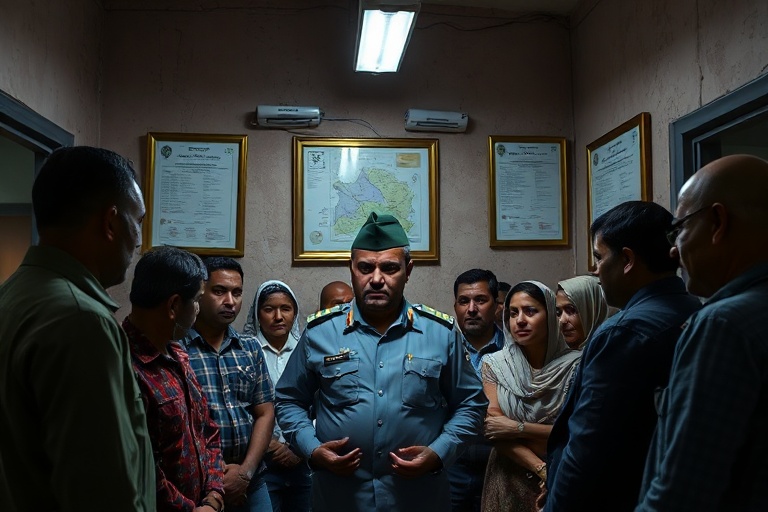
This incident is not an isolated case. Morocco has faced persistent challenges in securing its southern borders, where porous terrain and the presence of armed groups complicate military operations. The Western Sahara dispute, which has simmered since 1975, continues to strain regional stability, and the soldiers’ disappearance has thrust this issue back into the spotlight. For families, the uncertainty is unbearable. One mother of a missing soldier told local media, “Every day without answers is another day of agony. We just want to know if he is alive or if we should prepare for the worst.”
The Context: Western Sahara and Military Tensions
Western Sahara, a former Spanish colony, has been a point of contention since Morocco annexed it in 1975. The Polisario Front, which seeks independence for the territory, has fought a guerrilla war against Moroccan forces, culminating in a ceasefire in 1991. The United Nations has maintained a peacekeeping mission in the region since then, but tensions have flared periodically, particularly around Guerguerat, a strategic corridor linking Morocco to Mauritania.
The Moroccan military has long positioned itself as the guardian of national sovereignty, yet the disappearance of the soldiers has exposed vulnerabilities in its operational security. Analysts suggest that the incident may reflect broader systemic issues within the military, including outdated surveillance technology and insufficient coordination between ground and aerial units. “This is a wake-up call,” said military expert Dr. Hassan El Ouardi. “The terrain is unforgiving, and the enemy—whether Polisario factions or smugglers—is highly mobile. The military must adapt or face more such incidents.”
Key Factors Contributing to the Crisis
- Terrain and Weather: The Sahara Desert’s extreme conditions make search and rescue operations exceptionally difficult. Temperatures can exceed 50°C (122°F) during the day, while nights are frigid. Sandstorms can erase tracks within hours, complicating efforts to locate the missing soldiers.
- Armed Group Activity: The region is home to various armed factions, including remnants of the Polisario Front and criminal networks involved in smuggling. These groups operate with near impunity, exploiting the vast, sparsely populated area to evade detection.
- Communication Breakdowns: Reports indicate that the soldiers’ last known radio transmission was garbled, possibly due to interference or technical failure. This has raised concerns about the reliability of communication equipment in remote areas.
- Public Distrust: The military’s delayed response and lack of transparency have fueled skepticism among the public. Social media is rife with theories, from abductions by hostile forces to desertions, further complicating the search efforts.
Broader Implications for Morocco
The disappearance of the soldiers has reverberated beyond military circles, threatening to destabilize public confidence in Morocco’s leadership. King Mohammed VI, who holds significant authority over the military, has yet to address the nation directly, a decision that some analysts interpret as a sign of internal divisions or uncertainty about how to proceed. The monarchy’s legitimacy is closely tied to its ability to ensure national security, and prolonged inaction could erode trust.
Economically, the crisis has cast a shadow over Morocco’s ambitions in the region. The country has invested heavily in infrastructure projects in Western Sahara, including a $1 billion highway and a new port in Dakhla, positioning the territory as a gateway to sub-Saharan Africa. However, ongoing instability threatens these investments, as foreign companies may hesitate to commit to long-term projects in a conflict zone.
Internationally, the incident has drawn attention from global powers, including the United States and France, both of which have strategic interests in North Africa. The U.S. has historically supported Morocco’s autonomy plan for Western Sahara, but the soldiers’ disappearance could complicate diplomatic relations, particularly if evidence emerges of foreign involvement.
What Happens Next?
Moroccan authorities have deployed ground troops, drones, and helicopters in an expanded search operation, but progress has been slow. The military has also sought assistance from neighboring countries, including Mauritania and Algeria, though cooperation remains tentative due to the region’s complex geopolitics. Meanwhile, families of the missing soldiers have organized protests in Rabat, demanding greater transparency and accountability.
The Moroccan government faces a critical juncture. If the soldiers are found alive, the military must address the operational failures that led to their disappearance. If the worst is confirmed, the state will need to manage the fallout, both domestically and internationally. For now, the nation holds its breath, united in grief and frustration.
The soldiers’ families are not alone in their anguish. Across Morocco, citizens are asking difficult questions about the cost of territorial disputes and the sacrifices demanded of those who serve. The answers may redefine the country’s future in ways no one can yet predict.
Potential Outcomes
- Positive Resolution: The soldiers are found alive, either in Moroccan-controlled territory or in negotiations with the Polisario Front. This scenario would allow the military to salvage its reputation and refocus on other security challenges.
- Tragic Confirmation: Despite extensive efforts, the soldiers are confirmed dead. This outcome would necessitate a national reckoning with the military’s preparedness and the human cost of the Western Sahara conflict.
- Prolonged Uncertainty: The search drags on without resolution, leaving families in limbo and eroding public trust in the government’s ability to protect its citizens.
- Escalation: If evidence emerges of foul play by hostile forces, Morocco may retaliate militarily, reigniting full-scale conflict in Western Sahara and drawing international condemnation.
For now, the fate of the six soldiers remains a haunting mystery. Their disappearance is more than a military failure; it is a crisis of confidence that demands urgent answers. Until those answers come, Morocco will continue to grapple with the consequences of a conflict that refuses to fade into history.
For further reading on military and geopolitical issues, explore our News and Analysis sections on Dave’s Locker.