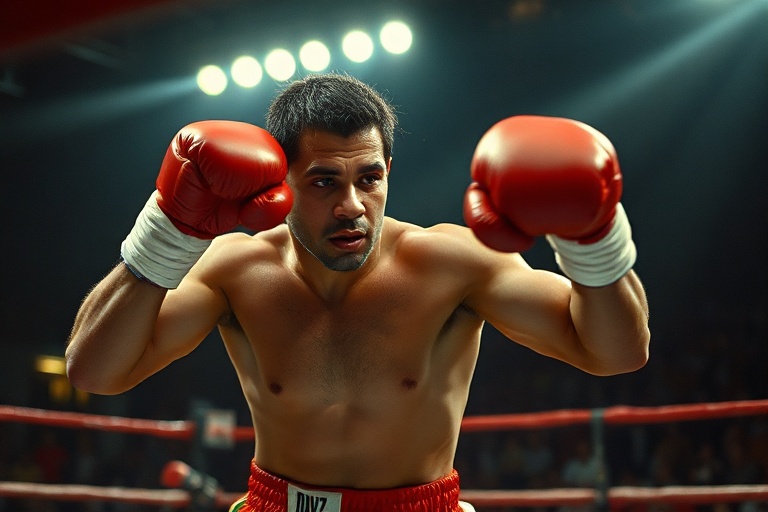
Oscar De La Hoya stands as one of the most recognizable and accomplished figures in boxing history. Known as “The Golden Boy,” he transcended the sport to become a global icon whose influence extended far beyond the ring. De La Hoya’s career spanned two decades, during which he captured world titles in six different weight classes, a record that cemented his legacy as one of the greatest fighters of all time.
Born on February 4, 1973, in East Los Angeles, De La Hoya grew up in a family deeply connected to boxing. His grandfather, Vicente, was a professional boxer in Mexico, and his father, Joel Sr., managed a boxing gym where young Oscar trained relentlessly. By the time he was 15, De La Hoya had already won the National Golden Gloves championship, foreshadowing the dominance he would soon display on the amateur circuit and, eventually, the professional stage.
The Amateur Dominance That Forged a Champion
De La Hoya’s amateur career was nothing short of spectacular. He won a gold medal at the 1992 Barcelona Olympics as a lightweight, defeating Marco Rudolph of Germany in a closely contested final. The victory made him the first American boxer to win Olympic gold since 1984, and it catapulted him into the professional ranks with immediate credibility. His amateur record stood at 234 wins and 16 losses, a testament to his skill, discipline, and work ethic.
What set De La Hoya apart during his amateur days was his ability to blend power, speed, and technical precision. His footwork was fluid, his jab crisp, and his combinations relentless. These attributes would later define his professional style, allowing him to adapt seamlessly as he moved up in weight classes. The lessons learned in the amateur ranks—mental toughness, strategic thinking, and the importance of conditioning—became the bedrock of his success.
The Professional Rise: Breaking Records and Barriers
De La Hoya turned professional in November 1992, just months after his Olympic triumph. His early years in the pro ranks were marked by rapid success. He won his first world title—a super featherweight championship—just two years into his professional career, knocking out Jimmi Bredahl in the tenth round. This victory made him one of the youngest fighters to win a world title at the time, further solidifying his reputation as a prodigy.
By the late 1990s, De La Hoya had captured world titles in five weight classes, including welterweight, light middleweight, middleweight, super middleweight, and light heavyweight. His 1999 victory over Ike Quartey for the WBC welterweight title was a masterclass in patience and precision, showcasing his ability to outthink and outmaneuver elite competition. Each weight class presented new challenges, but De La Hoya adapted with a rare combination of athleticism and ring IQ.
One of the defining moments of his career came in 1996 when he faced Julio César Chávez, a legend in his own right, for the WBC super lightweight title. The fight was a grueling, technical battle that ended in a controversial majority draw. Many believed De La Hoya had done enough to win, and the decision sparked debates about judging in boxing. Despite the setback, the fight elevated De La Hoya’s status, proving he could compete with the sport’s most storied fighters.
The Six-Division World Champion
In 2001, De La Hoya added a sixth world title to his collection by defeating Fernando Vargas for the WBA super middleweight championship. This victory made him the first boxer in history to win world titles in six different weight classes, a record that still stands today. The fight was a brutal display of power and endurance, with De La Hoya dropping Vargas twice en route to a unanimous decision.
The achievement cemented De La Hoya’s place among the all-time greats, joining the likes of Sugar Ray Leonard, Thomas Hearns, and Roberto Durán. Yet, despite his success, De La Hoya faced criticism for his defensive lapses and occasional struggles against elite competition. Critics argued that his chin wasn’t as ironclad as other legends, and that his reliance on hand speed and combinations left him vulnerable to hard punchers. However, De La Hoya’s ability to overcome these weaknesses through sheer will and preparation demonstrated his greatness.
The Rivalries That Defined an Era
De La Hoya’s career was defined as much by his rivalries as it was by his accomplishments. His fights against Shane Mosley, Fernando Vargas, and especially Floyd Mayweather Jr. and Manny Pacquiao became cultural touchstones, drawing massive pay-per-view audiences and captivating fans worldwide. These matchups weren’t just about titles; they were about legacy, pride, and the clash of contrasting styles.
The rivalry with Shane Mosley was particularly intense. Their first fight in 2000 ended in a controversial split decision in favor of De La Hoya, a decision many believed Mosley had won. The rematch in 2003 was a grueling, tactical battle that Mosley won by majority decision, handing De La Hoya his first professional loss in nearly a decade. The rivalry highlighted De La Hoya’s resilience but also exposed the vulnerabilities that would later define his later years in the sport.
Perhaps the most anticipated fight of De La Hoya’s career was his 2008 bout against Floyd Mayweather Jr. The fight, billed as “The World Awaits,” pitted two of boxing’s biggest stars against each other. Mayweather’s defensive mastery and counterpunching style proved too much for De La Hoya, who struggled with the younger, faster fighter. The fight ended in a unanimous decision for Mayweather, but it also marked the beginning of the end for De La Hoya’s prime years.
The Final Years and Legacy
De La Hoya’s last major fight came in 2008 against Manny Pacquiao, a bout many hoped would crown the true pound-for-pound king of boxing. Pacquiao’s speed and power overwhelmed De La Hoya, who was visibly hurt in the eighth round before the fight was stopped. The loss was a stark reminder of the generational gap between fighters, but it also underscored De La Hoya’s courage in facing a generational talent on short notice.
After retiring in 2009 with a record of 39 wins (30 by knockout), 6 losses, and 0 draws, De La Hoya transitioned into promoting. He co-founded Golden Boy Promotions, a promotional company that has become one of the most influential forces in boxing. Under his leadership, Golden Boy has helped launch the careers of fighters like Canelo Álvarez and Gervonta Davis, further cementing De La Hoya’s legacy as a builder as well as a fighter.
Beyond the ring, De La Hoya has been a philanthropist and a cultural icon. He has supported numerous charitable initiatives, particularly those focused on youth and education, reflecting his own humble beginnings. His influence extends to music and entertainment, where he has collaborated with artists and appeared in films, further blurring the lines between sports and mainstream culture.
The Businessman and Cultural Icon
De La Hoya’s post-boxing career has been equally impressive. As the CEO of Golden Boy Promotions, he has revolutionized the business side of boxing, leveraging his star power to secure lucrative television deals and partnerships. His promotional company has become a bridge between American and international boxing, bringing top-tier talent to global audiences.
In addition to his work in boxing, De La Hoya has ventured into entertainment. He appeared in films like The Hangover Part II and has made cameo appearances in television shows, showcasing his charisma and versatility. His crossover appeal is a testament to his ability to connect with audiences beyond the confines of the ring.
De La Hoya’s influence is also evident in his role as a mentor. He has guided fighters like Canelo Álvarez, helping them navigate the complexities of the sport while maintaining their cultural relevance. His insights into the business and technical aspects of boxing have made him a sought-after voice in the sport, sought after by both fans and aspiring fighters alike.
A Legacy That Transcends Boxing
Today, Oscar De La Hoya is remembered as much for his contributions outside the ring as he is for his achievements within it. His career spanned an era of transition in boxing, from the gritty, untelevised fights of the 1990s to the globalized, pay-per-view spectacles of the 2000s. He was a bridge between generations, a fighter who could engage with both purists and casual fans alike.
De La Hoya’s legacy is also one of resilience. Despite facing setbacks and criticism, he always found a way to bounce back, whether through sheer determination or strategic adaptation. His ability to reinvent himself—from Olympic gold medalist to six-division world champion to global promoter—demonstrates a rare versatility that few athletes can match.
For those who grew up watching him, De La Hoya was more than just a boxer; he was an inspiration. His story—of humble beginnings, relentless work ethic, and unparalleled success—resonates with anyone who has ever chased a dream against the odds. As boxing continues to evolve, De La Hoya’s career serves as a blueprint for what it means to be a champion, both inside and outside the ring.
In an era where athletes are often defined by their social media presence or off-field controversies, De La Hoya’s focus has remained steadfast: excellence, integrity, and a commitment to the sport he loves. His career may be in the rearview mirror, but his influence will continue to shape boxing for decades to come.
Explore more about boxing legends and the sport’s rich history on Dave’s Locker Sports.
For in-depth analysis and commentary, visit Dave’s Locker Analysis.