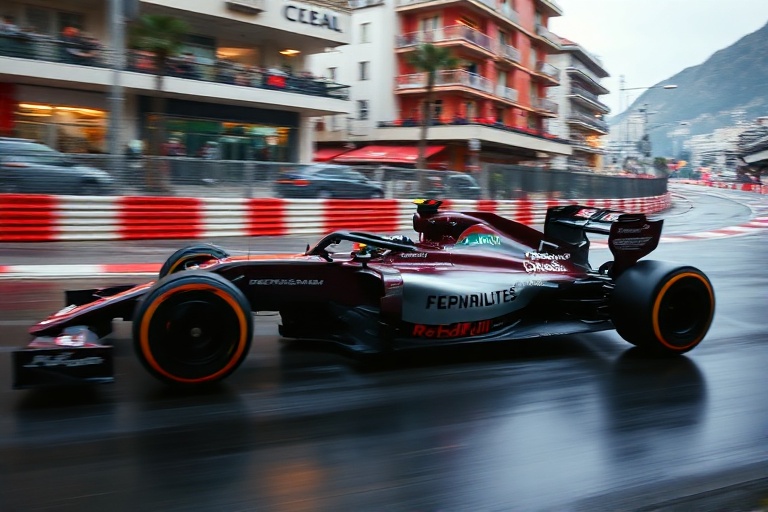
The roar of engines, the blur of colors on the track, the calculated risks taken at breakneck speeds—racing is more than just a sport. It’s a blend of engineering precision, human skill, and sheer adrenaline. From the earliest days of automobile invention to today’s high-tech Formula 1 circuits, racing has evolved into a global spectacle that captivates millions. But what makes this sport so enduring, and how has it shaped both culture and technology?
Racing isn’t just about the drivers. Behind every victory lies a team of engineers, strategists, and designers working tirelessly to shave off milliseconds. The sport has pushed the boundaries of what’s possible, influencing everything from consumer car technology to aerospace innovation. Whether on four wheels, two wheels, or even boats, racing remains a proving ground for human ambition and mechanical ingenuity.
The Roots of Racing: From Humble Beginnings to Global Stages
Racing’s origins trace back to the late 19th century, not long after the automobile was invented. The first organized automobile race took place in 1894, covering a distance of 50 miles from Paris to Rouen. This event, organized by a Parisian newspaper, set the stage for what would become a worldwide phenomenon. The cars of that era were little more than motorized carriages, but the competitive spirit was already alive.
By the early 20th century, racing had spread across Europe and America. The Indianapolis 500, first held in 1911, became one of the most iconic races in history. Its combination of speed, danger, and spectacle drew massive crowds, cementing racing as a major spectator sport. Meanwhile, European events like the Targa Florio in Italy and the Le Mans 24 Hours in France showcased endurance racing, pushing both man and machine to their limits.
The post-World War II era marked another turning point. Formula 1, conceived in 1950, standardized racing rules and introduced a global championship. This series became the pinnacle of motorsport, attracting top drivers and manufacturers. Racing was no longer just a pastime; it was a professional endeavor with high stakes and even higher rewards.
A Timeline of Milestones
- 1894: First organized automobile race (Paris to Rouen)
- 1906: First Grand Prix in Le Mans, France
- 1911: Inaugural Indianapolis 500
- 1950: Inception of Formula 1 World Championship
- 1960s-70s: Rise of iconic drivers like Ayrton Senna and Niki Lauda
- 2000s: Introduction of hybrid power units in Formula 1
The Human Element: Drivers, Teams, and the Psychology of Speed
Drivers are often romanticized as lone wolves, but racing is a team sport. The relationship between a driver and their team is built on trust, strategy, and split-second decision-making. A driver’s ability to read the track, manage tire wear, and adapt to changing conditions can mean the difference between victory and defeat. Yet, the psychological toll is immense. The pressure to perform, the fear of failure, and the constant need for perfection create a high-stress environment few can endure.
Consider the case of Formula 1’s Ayrton Senna, whose intensity and focus made him one of the greatest drivers of all time. His rivalry with Alain Prost was as much a mental battle as it was a physical one. Senna’s ability to push his car—and himself—to the absolute limit redefined what it meant to be a racing driver. Today, drivers like Max Verstappen and Lewis Hamilton continue to push boundaries, but the mental game remains as critical as ever.
Teams, too, play a crucial role. Engineers analyze data in real-time, pit crews execute flawless tire changes, and strategists plot race-day tactics. A single miscalculation can cost a race. The synergy between driver and team is what turns raw talent into championship-winning performances. This dynamic is why racing is often compared to chess played at 200 mph.
The Technology Behind the Thrill: How Racing Drives Innovation
Racing has always been a laboratory for automotive technology. Innovations developed on the track often trickle down to consumer cars, making them safer, faster, and more efficient. For example, disc brakes, originally used in racing, became standard in production vehicles by the 1960s. Similarly, aerodynamic advancements like spoilers and diffusers, once exclusive to race cars, now enhance everyday driving.
Formula 1 is particularly notable for its technological contributions. The sport has pioneered hybrid power units, energy recovery systems, and advanced aerodynamics. In 2014, F1 introduced turbocharged hybrid engines, a move that significantly reduced fuel consumption while increasing power. These technologies are now being adapted for hybrid and electric road cars, proving that racing isn’t just about speed—it’s about sustainability.
Beyond engines, racing has also advanced materials science. Carbon fiber, now common in supercars and even mainstream vehicles, was first widely used in Formula 1. Its lightweight and strength properties revolutionized both racing and automotive design. Even tire technology has seen massive improvements, with compounds now tailored for specific track conditions and weather scenarios.
Technological Innovations Born from Racing
- Disc Brakes: Introduced in racing, now standard in most vehicles.
- Hybrid Engines: Developed in F1, now used in road cars for efficiency.
- Carbon Fiber: First used in racing, now found in supercars and even bicycles.
- Energy Recovery Systems: Pioneered in F1, now used in hybrid and electric vehicles.
- Aerodynamics: Racing’s wing designs and spoilers improve downforce and stability.
Racing’s Cultural Impact: More Than Just a Sport
Racing has seeped into the cultural fabric in ways few other sports have. It’s not just about the races; it’s about the stories, the rivalries, and the larger-than-life personalities that emerge from the sport. Films like Rush (2013), which chronicled the rivalry between Niki Lauda and James Hunt, and Ford v Ferrari (2019), which celebrated the 24 Hours of Le Mans, have brought racing to mainstream audiences. These stories highlight the drama, passion, and human drama behind the sport.
Racing also has a significant economic impact. Major events like the Monaco Grand Prix or the Daytona 500 attract thousands of tourists, boosting local economies. Sponsorships and broadcasting deals generate billions, making racing a lucrative industry. Brands like Red Bull, Rolex, and Mercedes-Benz have built their reputations on racing, using it as a platform to showcase their products and values.
Moreover, racing has inspired generations of engineers and drivers. Many F1 champions, including Fernando Alonso and Sebastian Vettel, have cited motorsport as their childhood dream. Universities now offer specialized programs in motorsport engineering, further cementing racing’s role in education and innovation. The sport’s influence extends beyond the track, shaping industries and careers worldwide.
Looking Ahead: The Future of Racing
The future of racing is poised to be as dynamic as its past. Electric racing series like Formula E have emerged as the new frontier, challenging traditional notions of speed and power. With regulations mandating fully electric powertrains, these series are not only showcasing sustainability but also pushing the boundaries of electric vehicle technology. The Gen3 era of Formula E, introduced in 2022, brought even faster charging and increased efficiency, proving that electric racing can be as thrilling as its gasoline-powered counterpart.
Autonomous racing is another frontier. While still in its infancy, self-driving car competitions are testing AI’s ability to handle high-speed decision-making. The Roborace series, for instance, features autonomous vehicles competing on the same tracks as human drivers. Though controversial, these innovations could redefine racing—and transportation—as a whole.
Yet, despite these advancements, the core of racing remains unchanged: speed, skill, and spectacle. The human element will always be central, whether it’s a driver pushing a car to its limit or a team strategizing for victory. Racing’s ability to adapt while retaining its essence ensures its longevity. As technology evolves, so too will the sport, but the thrill of the race will endure.
For fans, racing offers an escape—a chance to witness the extraordinary. For engineers, it’s a challenge to innovate. And for drivers, it’s the ultimate test of skill and courage. Racing is more than a sport; it’s a celebration of human ambition, a testament to what can be achieved when passion meets precision.
To explore more about the intersection of technology and sports, visit our Sports category. For deeper analysis on motorsport trends, check out our Technology section.