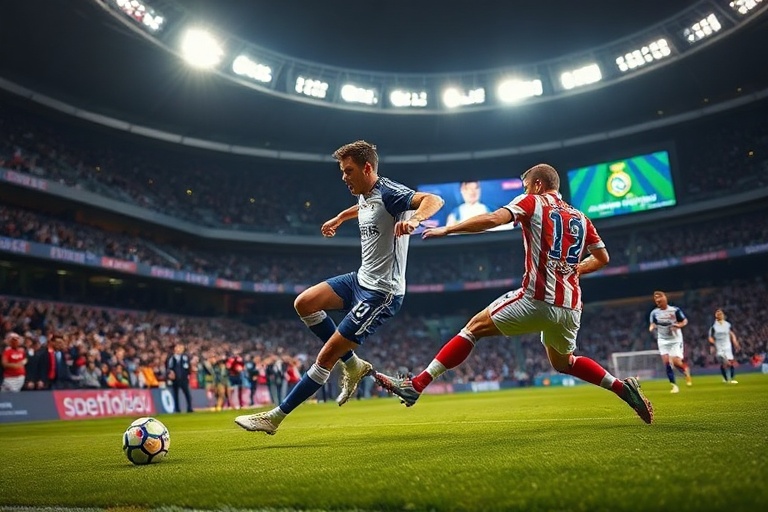
Real Madrid vs Atlético Madrid: The Global Impact of the Madrid Derby
The Madrid Derby: Real Madrid vs. Atlético Madrid Through a Global Lens
Few fixtures in world football carry the weight and prestige of the Madrid Derby. When Real Madrid and Atlético Madrid step onto the pitch, they don’t just play for three points—they represent two distinct identities of Spain’s capital. This rivalry transcends sport, embedding itself in the cultural and social fabric of Madrid and, by extension, the global football community.
The Derby is more than a football match; it’s a clash of philosophies. Real Madrid, with its Galácticos tradition, embodies the allure of superstars and continental dominance. Atlético Madrid, known for its gritty, collective ethos, represents resilience and underdog spirit. This dynamic has made the fixture one of the most compelling narratives in European football, drawing attention from fans across continents.
The History: From Humble Beginnings to Global Spectacle
The rivalry traces its roots to the early 20th century, when both clubs were founded within a year of each other—Real Madrid in 1902 and Atlético Madrid in 1903. Initially, the divide was not just sporting but social. Real Madrid was often associated with the elite, while Atlético emerged as a club of the working class. This origin story still lingers in the identities of both teams, shaping their fanbases and playing styles.
Over the decades, the rivalry has evolved into a tactical and cultural battleground. The 1950s and 60s saw Real Madrid dominate European football under the leadership of Alfredo Di Stéfano and Ferenc Puskás, while Atlético’s rise in the 2010s under Diego Simeone brought a new dimension to the fixture. Simeone’s Atlético, in particular, redefined the Derby by prioritizing defensive solidity and counterattacks, frustrating Real’s more flamboyant approach.
Cultural Significance: Madrid’s Identity in the Balance
The Madrid Derby is a microcosm of the city itself. Madrid is a city of contrasts—opulent boulevards meet gritty neighborhoods; royal palaces stand beside industrial zones. Real Madrid, with its Santiago Bernabéu stadium in the heart of the city, symbolizes Madrid’s cosmopolitan and aspirational side. Atlético’s Wanda Metropolitano, located in the eastern part of the city, reflects the working-class spirit of neighborhoods like La Latina and Lavapiés.
This cultural duality extends beyond Madrid. The Derby resonates globally because it mirrors the broader tensions in football: individual brilliance versus collective effort, glamour versus grit, and tradition versus innovation. Fans from Tokyo to Buenos Aires tune in not just for the result, but for the spectacle of two contrasting philosophies colliding on the pitch.
Key Moments That Defined the Rivalry
The Madrid Derby has produced some of the most dramatic moments in football history. These moments are not just about goals or wins; they capture the essence of the rivalry and its impact on the global football landscape.
- 2014 UEFA Champions League Final: The first all-Madrid Champions League final saw Real Madrid triumph 4-1 in extra time. Sergio Ramos’ equalizer in stoppage time and the subsequent goals from Gareth Bale, Marcelo, and Cristiano Ronaldo cemented Real’s dominance, but Atlético’s valiant effort—especially Diego Godín’s header—left a lasting impression.
- 2016 La Liga Clash: Atlético’s 1-0 victory at the Bernabéu, courtesy of Antoine Griezmann’s header, was a statement. It showcased Atlético’s ability to grind out results against their more illustrious rivals, a theme that has defined many of their Derby wins.
- 2021 Copa del Rey Final: Real Madrid’s 2-1 win over Atlético in the final was a tale of two halves. Atlético dominated the first 45 minutes, but Real’s second-half surge, including a decisive goal by Rodrygo, demonstrated their ability to rise to the occasion in high-pressure moments.
Global Influence: A Rivalry That Transcends Borders
The Madrid Derby’s appeal is undeniable far beyond Spain’s borders. In regions like Latin America, where football is a religion, the Derby is a gateway to understanding European football’s tactical and cultural nuances. In Asia, where football is rapidly growing, the fixture serves as an introduction to the beauty and complexity of the sport.
Social media amplifies the Derby’s global reach. Fans from around the world engage in debates about formations, player performances, and historical legacies. The rivalry’s storytelling potential makes it a magnet for content creators, journalists, and broadcasters, ensuring its presence in the digital sphere long after the final whistle.
For sports enthusiasts and casual observers alike, the Madrid Derby offers a masterclass in football’s ability to reflect broader societal themes. It’s a reminder that football is not just a game, but a cultural artifact that shapes and is shaped by the communities it serves.
Conclusion: Why the Madrid Derby Matters
The Madrid Derby is more than a football match; it’s a cultural institution. It encapsulates the spirit of Madrid, the evolution of football tactics, and the global appeal of the sport. Whether viewed through the lens of history, culture, or pure entertainment, the Derby offers something for everyone.
As football continues to evolve, the Madrid Derby remains a constant. It’s a fixture that transcends generations, nationalities, and playing styles. In a sport often criticized for its commercialization and homogeneity, the Derby stands as a testament to football’s power to reflect and celebrate diversity.
For fans, the Derby is a reminder of why they fell in love with football in the first place. For neutrals, it’s an opportunity to witness two distinct philosophies collide in a spectacle that is as much about artistry as it is about competition. And for the city of Madrid, it’s a celebration of its identity—a city of dreams, grit, and unyielding passion.