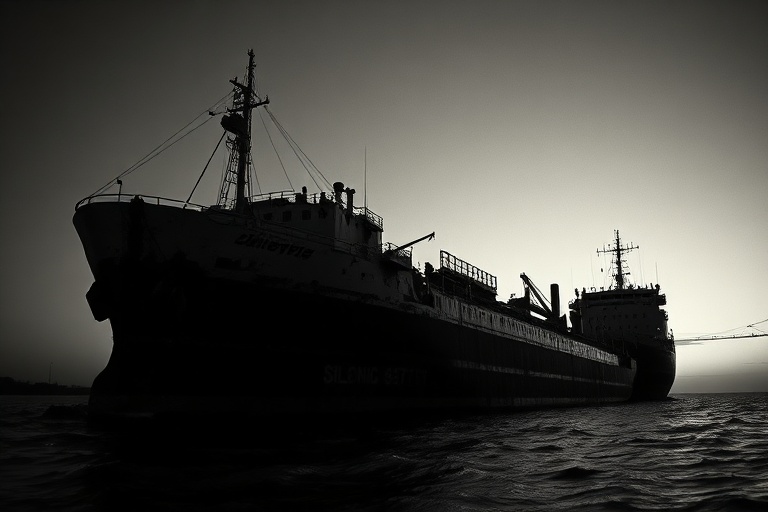
The maritime industry has quietly witnessed the rise of a parallel fleet operating beyond the scrutiny of regulators and traditional trade routes. Known as the “shadow fleet,” these vessels—often aged tankers and cargo ships—have become a critical yet controversial component of global oil and commodity trade. Their existence challenges international sanctions, bypasses price caps, and complicates efforts to track sanctioned regimes’ exports.
While the shadow fleet’s operations remain largely invisible to the public, its impact on global markets is undeniable. From Russian oil shipments to North Korean coal exports, these vessels navigate a legal gray zone, exploiting loopholes in maritime law and insurance practices. Understanding this phenomenon requires examining its origins, the risks it poses, and the geopolitical tensions it fuels.
Origins: Why the Shadow Fleet Exists
The shadow fleet emerged as a direct response to economic sanctions and regulatory pressures. After Russia’s invasion of Ukraine in 2022, Western nations imposed a $60 per barrel price cap on Russian oil, aiming to limit Moscow’s revenue while allowing trade to continue. However, the cap relied on enforcement mechanisms that proved easy to circumvent.
Older vessels, often over 15 years old and flagged in countries with lax oversight, became prime candidates for this shadow network. These ships lack modern tracking systems, making them harder to trace. Many are purchased by shell companies registered in jurisdictions known for financial opacity, such as the Marshall Islands or Panama.
According to a recent report by maritime intelligence firm Windward, the number of shadow vessels increased by 30% between 2022 and 2024. The fleet’s size remains difficult to pin down, but estimates suggest it includes hundreds of tankers capable of carrying millions of barrels of oil at any given time.
The Role of Sanctions and Price Caps
The price cap mechanism, while innovative, created unintended incentives. Buyers in China, India, and other regions sought discounted Russian oil, but shipping it required vessels willing to operate outside conventional insurance and regulatory frameworks. The shadow fleet filled this void, offering “dark fleet” services that include ship-to-ship transfers, falsified documentation, and transshipment hubs in remote waters.
These operations are not without risk. Older ships are more prone to accidents, and their environmental impact is severe. A 2023 incident involving a shadow tanker off the coast of Malaysia resulted in a major oil spill, highlighting the ecological dangers of this unregulated sector.
How the Shadow Fleet Operates
The shadow fleet’s modus operandi relies on a combination of deception and operational sophistication. Vessels frequently “go dark” by turning off their Automatic Identification Systems (AIS), which are mandatory for most commercial ships. This tactic makes them nearly invisible to public tracking platforms like MarineTraffic or FleetMon.
Another common strategy is the use of “flags of convenience.” Ships registered in countries like Liberia or Comoros undergo minimal oversight, enabling owners to obscure their true identities. Many vessels change hands multiple times within a short period, further complicating ownership trails.
A typical shadow fleet operation might involve the following steps:
- Acquisition: An aging vessel is purchased through a series of shell companies, often for a fraction of its original cost.
- Refitting: The ship undergoes minimal repairs to meet basic safety standards, though it remains vulnerable to mechanical failures.
- Insurance Fraud: Operators secure coverage through unregulated or complicit insurers who overlook the vessel’s true condition.
- Transfers: Oil is loaded in sanctioned ports, then transferred to another vessel mid-sea to obscure its origin.
- Delivery: The final buyer, often in Asia, receives the cargo without a clear paper trail linking it to the original source.
The sophistication of these operations has grown alongside the fleet itself. Some shadow vessels now use spoofed GPS signals to mimic legitimate routes, making them appear as if they’re operating in compliant waters. Others rely on complex networks of intermediaries, including brokers, traders, and financiers, who facilitate transactions while maintaining plausible deniability.
The Geopolitical and Economic Fallout
The shadow fleet’s growth has intensified geopolitical tensions, particularly between Western nations and countries seeking to evade sanctions. Russia, for instance, has become heavily reliant on these vessels to sustain its oil exports despite Western efforts to curtail them. In 2023, Russian shadow tankers accounted for nearly 70% of its seaborne crude exports, according to data from the International Energy Agency.
This reliance underscores a broader challenge: the limits of economic coercion in a globalized world. Sanctions, while effective in some cases, often push trade into the shadows, where enforcement becomes nearly impossible. The shadow fleet thus represents a loophole that authoritarian regimes and sanctioned entities exploit to maintain revenue streams.
Impact on Global Markets
The shadow fleet also distorts commodity markets. By enabling sanctioned oil to reach global buyers, it keeps supply higher than it would be under strict embargoes. This, in turn, can suppress prices and undermine the intended economic pressure on target regimes.
For example, Russian Urals crude, which trades at a discount due to sanctions, has consistently found buyers in Asia. The shadow fleet ensures these transactions occur with minimal disruption, allowing Moscow to circumvent the price cap and fund its war efforts.
Environmental advocates warn that the shadow fleet’s operations pose significant risks. Older vessels are more likely to suffer structural failures or engine malfunctions, increasing the likelihood of spills. The International Maritime Organization (IMO) has struggled to address this issue, as many shadow fleet operators operate outside its regulatory reach.
Can the Shadow Fleet Be Stopped?
Addressing the shadow fleet requires a multi-faceted approach that combines technological innovation, international cooperation, and stricter enforcement. Some experts advocate for the use of blockchain-based tracking systems to create immutable records of oil shipments. Others propose expanding the scope of sanctions to target entities involved in facilitating shadow fleet operations, including insurers and port authorities.
The Biden administration has taken steps to curb the fleet’s growth, including imposing sanctions on specific vessels and their owners. However, these measures often have limited impact, as new ships quickly replace those targeted. The European Union has also explored stricter due diligence requirements for oil importers, but enforcement remains inconsistent.
Another potential solution lies in the insurance industry. Traditional insurers, such as Lloyd’s of London, have begun to distance themselves from shadow fleet operations by tightening underwriting standards. However, the rise of unregulated or state-backed insurers in countries like China and Russia has created a parallel system that undermines these efforts.
The Future of the Shadow Fleet
As long as sanctions and price caps remain in place, the shadow fleet is likely to persist. Its growth may even accelerate if global tensions continue to rise, prompting more countries to seek alternative trade routes. The maritime industry, meanwhile, faces a reckoning: how to balance the demands of sanctions compliance with the realities of a shadow economy that thrives on opacity.
For policymakers, the challenge is clear. Effective enforcement will require unprecedented levels of international coordination, as well as the willingness to confront the systemic weaknesses that allow the shadow fleet to operate. Until then, this hidden armada will continue to sail beneath the radar, reshaping global trade in ways that few fully understand.
The shadow fleet is not merely a footnote in the story of global sanctions—it is a central character, one that exposes the fragility of international economic measures in an era of fractured alliances and opportunistic trade.