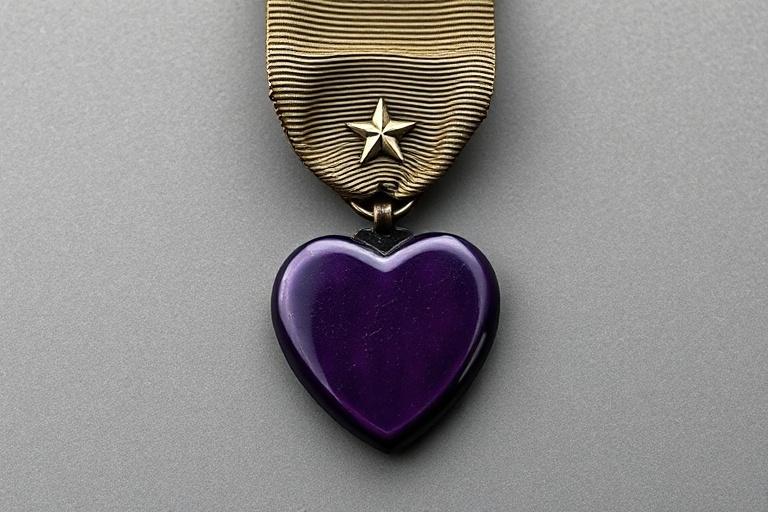
The Purple Heart stands as one of the most recognizable military decorations in the United States, awarded to those wounded or killed in action. Its crimson heart, bordered by a purple ribbon, symbolizes courage under fire and the high cost of service to the nation. While often associated with bravery, the medal carries layers of history, tradition, and evolving significance.
A Legacy Woven Through American History
Established by General George Washington in 1782, the original “Badge of Military Merit” was the first military decoration in the U.S. and one of the oldest in the world. Only 3 recipients are known from the Revolutionary War, and the badge faded into obscurity after the conflict. It wasn’t until 1932—on the bicentennial of Washington’s birth—that the modern Purple Heart emerged, reinvented as an honor for those wounded in combat.
World War II marked a turning point for the medal’s distribution. President Franklin D. Roosevelt signed an executive order in 1942 expanding eligibility to all branches of the military, not just the Army. This shift transformed the Purple Heart from a rare honor into a widely recognized symbol of sacrifice. By the end of the war, nearly 1 million medals had been issued, cementing its place in American military culture.
Key Milestones in the Purple Heart’s Evolution
- 1782: General George Washington creates the Badge of Military Merit.
- 1932: The Purple Heart is revived as a medal for combat wounds.
- 1942: President Roosevelt expands eligibility to all military branches.
- 1952: Eligibility is extended to prisoners of war who suffered physical abuse.
- 2019: The U.S. Navy begins awarding Purple Hearts to service members injured in non-combat incidents during training.
The Criteria: Who Qualifies and Why It Matters
Today, the Purple Heart is awarded to military personnel wounded or killed by enemy action, as well as those injured in certain non-combat situations, such as training accidents or terrorist attacks. The medal is unique in that it is awarded based on documented injuries, not acts of valor alone—though many recipients have also earned higher decorations for bravery.
One of the most controversial aspects of the Purple Heart is its criteria for non-combat injuries. In 2019, the Navy began awarding the medal to service members injured in training exercises, a move that sparked debate. Critics argue it dilutes the medal’s meaning, while supporters contend it reflects the realities of modern warfare, where preparation is just as perilous as combat.
Who Can Receive the Purple Heart?
- Members of the U.S. Armed Forces wounded or killed by enemy action.
- Service members injured in terrorist attacks or during duty in hostile zones.
- Those wounded in training accidents (as of 2019, per Navy policy).
- Posthumous awards for those killed in action.
Beyond the Medal: The Human and Cultural Impact
The Purple Heart is more than a piece of metal—it is a lifelong mark of service. Recipients often face lifelong physical and emotional challenges, from chronic pain to PTSD. Yet many also find a sense of pride and camaraderie in their shared experience. The medal serves as a bridge between generations of veterans, connecting those who have endured similar trials.
In popular culture, the Purple Heart appears in films, literature, and video games, often symbolizing sacrifice. However, its portrayal is not always accurate. Movies like Saving Private Ryan and games like Call of Duty have helped cement its place in the public imagination, but they sometimes oversimplify its significance. The medal’s true weight lies in the stories of those who wear it—not the fiction that surrounds it.
The Purple Heart is a reminder that war does not end when the battle stops. It lingers in the bodies and minds of those who fought, and the medal is both a badge of honor and a burden of memory.
The Future of the Purple Heart: Challenges and Adaptations
As warfare evolves, so too must the criteria for the Purple Heart. The rise of cyber warfare, drone strikes, and other non-traditional conflicts presents new questions: Should a service member injured in a cyberattack be eligible? What about those exposed to chemical agents without visible wounds? The military is grappling with these questions, balancing tradition with the need to recognize all forms of sacrifice.
Another challenge is ensuring the medal retains its dignity. With over 2 million issued since World War II, some argue it has become too common. Yet for those who wear it, the Purple Heart remains a deeply personal symbol. Organizations like the Veterans Advocacy page on Dave’s Locker highlight the ongoing efforts to support recipients and preserve the medal’s meaning.
What Lies Ahead for the Purple Heart?
- Expanding eligibility: Could psychological injuries qualify? The debate continues.
- Modernizing criteria: How will new forms of warfare be recognized?
- Preserving dignity: Balancing inclusivity with the medal’s historical weight.
- Supporting recipients: Programs to assist wounded veterans remain critical.
Conclusion: A Medal That Endures
The Purple Heart is a testament to resilience, a physical reminder of battles fought and lives altered. Its history reflects the changing face of war, from the battlefields of the 18th century to the training grounds of the 21st. While its criteria may evolve, its core purpose remains: to honor those who have paid the price for freedom.
For those who wear it, the Purple Heart is more than an award—it is a legacy. And as long as there are wars, there will be need for symbols like this one to remember the cost of service.