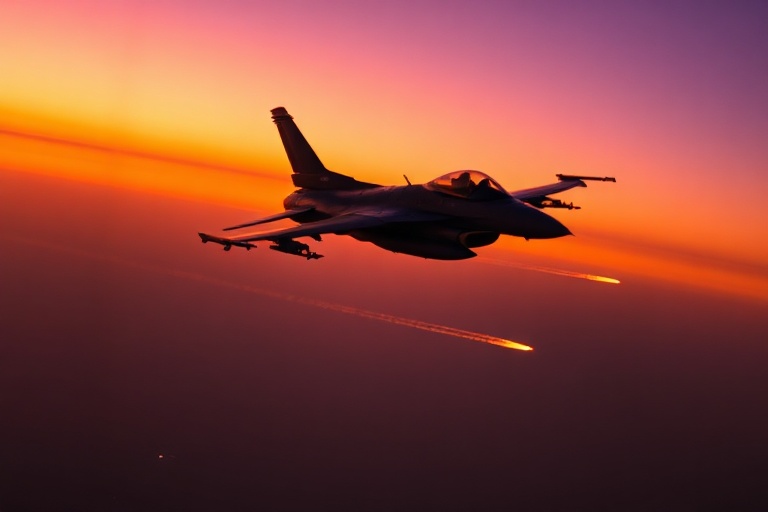
The United Arab Emirates has recently intensified its rhetoric and actions against Iran, marking a significant shift in its diplomatic and military posture. This escalation comes amid a backdrop of regional instability, including attacks on shipping lanes, cyber warfare, and proxy conflicts across the Middle East. While the UAE has historically maintained a delicate balancing act between its Western allies and regional powers like Iran, recent developments suggest a more confrontational approach.
The tensions follow a series of incidents that have strained relations between the two nations. From maritime disputes to allegations of Iranian-backed militant activities, the UAE’s actions reflect broader concerns about Iran’s expanding influence in the Gulf. Analysts argue that these moves could reshape alliances in the region, particularly as the UAE seeks to strengthen its security partnerships with the United States and other Gulf Cooperation Council (GCC) states.
Recent Incidents Fueling Hostilities
The most visible flashpoint has been the series of attacks on commercial shipping in the Gulf of Oman and the Strait of Hormuz. In June 2024, three commercial vessels—two Emirati-owned and one Norwegian—were targeted in what UAE officials described as “Iranian-sponsored aggression.” The UAE’s foreign ministry swiftly condemned the attacks, labeling them a direct threat to regional stability. While Iran denied involvement, the incident underscored the fragility of maritime security in one of the world’s most critical shipping corridors.
Cyber warfare has also emerged as a key battleground. In May 2024, UAE cybersecurity agencies reported a sophisticated attack on critical infrastructure, allegedly originating from Iranian state-sponsored groups. The UAE’s National Cyber Security Centre attributed the breach to APT34, a hacking collective linked to Iran’s Islamic Revolutionary Guard Corps (IRGC). This followed a pattern of digital espionage and sabotage that has escalated in recent years, with both nations accusing each other of destabilizing cyber operations.
Beyond maritime and cyber conflicts, the UAE has also accused Iran of supporting militant groups operating near its borders. In a statement released in April 2024, the UAE Ministry of Foreign Affairs highlighted the interception of arms shipments allegedly destined for Houthi rebels in Yemen, whom Iran has been accused of backing. While Iran has consistently denied these claims, the UAE’s accusations align with a broader regional narrative of Iranian expansionism.
The UAE’s Strategic Calculus: Why Now?
The UAE’s hardening stance against Iran can be traced to several strategic factors. First, the country’s leadership appears to be recalibrating its foreign policy in response to perceived Iranian provocations. The election of a new hardline Iranian president in 2024 has further strained relations, as Tehran’s rhetoric has grown increasingly confrontational. UAE officials have expressed concerns that Iran’s nuclear program, though currently paused, remains a long-term threat to Gulf security.
Second, the UAE is leveraging its growing military and economic influence to position itself as a counterbalance to Iran. The country has invested heavily in advanced defense systems, including the acquisition of F-35 fighter jets from the United States and the development of indigenous missile defense technologies. These capabilities are being deployed not only for deterrence but also to signal resolve to both allies and adversaries.
Third, the UAE’s alignment with Israel through the Abraham Accords has introduced a new dynamic into the regional power struggle. The normalization of relations between the UAE and Israel has drawn strong condemnation from Iran, which views the agreement as a betrayal of the Palestinian cause. This alignment has further emboldened the UAE to take a more assertive stance against Iran, particularly in areas where Israeli and Emirati interests overlap.
Military Posturing and Alliances
The UAE’s military strategy has evolved to include joint exercises with regional allies, particularly the United States. In March 2024, the UAE hosted a large-scale naval drill with the U.S. Fifth Fleet, aimed at demonstrating readiness to counter Iranian aggression. These exercises, codenamed “Iron Spear,” included live-fire drills and simulated anti-ship missile defense scenarios. The drills sent a clear message to Tehran: the UAE is prepared to defend its interests with both diplomatic and military means.
The UAE’s partnerships extend beyond the U.S. to include other Gulf states and global powers. In a joint statement with Bahrain and Saudi Arabia in May 2024, the UAE reaffirmed its commitment to collective security in the face of regional threats. This trilateral alliance, known as the “Abraham Strategic Cooperation,” has become a cornerstone of the UAE’s approach to countering Iranian influence.
Regional and Global Implications
The escalation between the UAE and Iran carries significant implications for the broader Middle East. A direct military confrontation remains unlikely, given the high costs and the deterrent effects of mutual assured destruction. However, the risk of miscalculation or unintended escalation is a growing concern. Analysts warn that even localized conflicts could spiral into a larger regional crisis, drawing in other players like Israel, Saudi Arabia, and the United States.
The UAE’s actions also reflect a broader trend of Gulf states adopting more assertive foreign policies. Saudi Arabia, for instance, has recently engaged in direct talks with Iran under Chinese mediation, signaling a more pragmatic approach. The UAE, however, appears to be taking a harder line, possibly to differentiate itself from its neighbors and assert its leadership in the region.
Globally, the tensions have raised questions about the stability of global oil supplies. The Gulf of Oman and the Strait of Hormuz are critical chokepoints for oil shipments, and any disruption could have far-reaching economic consequences. The U.S. and European Union have both expressed concern over the escalating tensions, urging restraint and dialogue to prevent a wider conflict.
Potential Paths Forward
Despite the hostilities, there are still avenues for de-escalation. Backchannel diplomacy, facilitated by neutral third parties like Oman or Qatar, could provide a platform for dialogue. The UAE has historically valued pragmatic engagement, and there may yet be room for negotiation on issues like maritime security and cyber norms.
Another potential avenue is economic engagement. The UAE and Iran share significant trade ties, particularly in energy and construction. While political tensions have strained these relations, there is still potential for economic cooperation to serve as a stabilizing force. For example, the UAE could explore limited trade concessions in exchange for Iranian commitments to reduce militant activities in the region.
Finally, multilateral frameworks such as the GCC or the Arab League could play a role in mediating the dispute. A unified Gulf stance against Iranian aggression could strengthen the UAE’s position while also providing Iran with a clear incentive to de-escalate. However, achieving such unity remains a challenge, given the divergent interests of Gulf states.
Conclusion: A Pivotal Moment for Gulf Security
The UAE’s recent actions against Iran mark a turning point in Gulf geopolitics. While the immediate risk of a full-blown conflict remains low, the stakes are undeniably high. The UAE’s assertive posture reflects a broader shift in regional dynamics, driven by concerns over Iran’s ambitions and the evolving security landscape. As the Gulf navigates this period of uncertainty, the choices made by the UAE, Iran, and their allies will shape the future of the region for years to come.
For now, the focus remains on deterrence and dialogue. Whether these efforts will succeed in preventing further escalation remains to be seen. One thing is certain: the Gulf is at a crossroads, and the path forward will be determined by the actions—and restraint—of those involved.
For more insights into regional security dynamics, explore our Analysis and Politics sections.